Air Force Veteran Cole a steadying force in SHS


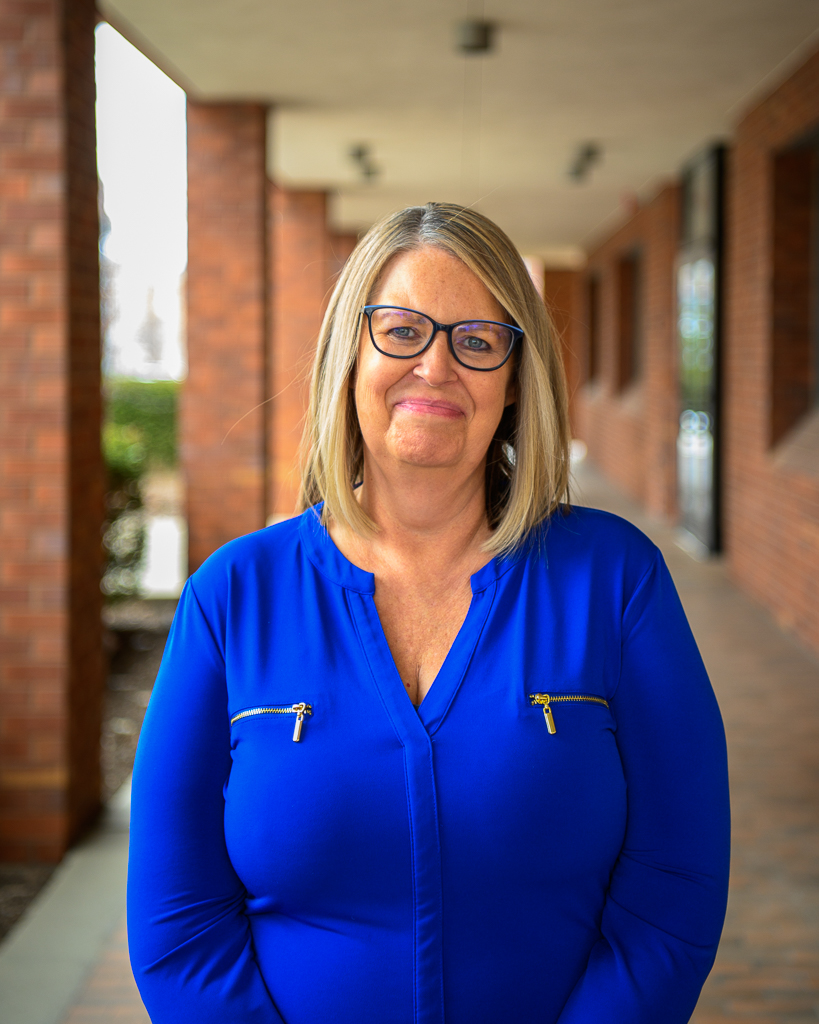
‘I love my job. I love my faculty,’ Stefanie Cole said. (Photo by Ethan Simmons)

At the University of Illinois Urbana-Champaign, where academic reputations are built on research breakthroughs and classroom innovation, much of the daily work that keeps departments moving forward happens quietly. In the Department of Speech and Hearing Science, that steady presence for more than a decade has been Stefanie Cole.

Cole did not set out to build a long career in higher education administration. Having just completed her service in the U.S. Air Force, she was working as a medical office assistant at the Carle Cancer Center. She was a new wife, a new mother and new to the Champaign-Urbana area. Raised in a university town, she understood the rhythm of campus life and was looking for broader options with greater flexibility and room to grow professionally.

“The University of Illinois seemed like a great fit,” she said, adding that it offered stability, opportunities to advance and a chance to build on the skills she had developed in the military and in healthcare settings.

Thirteen years into her campus career, the opportunity to join Speech and Hearing Science found her. “It was the perfect time to explore some new challenges,” she said.

At the outset, Cole imagined she might stay in the role for five years, long enough to see her son through high school. Instead, she found a professional home. “I love my job. I love my faculty,” she said. When health issues arose within her family, the predictability and support of her department made staying an easy decision.

During her tenure, SHS has seen significant change. This semester marks the arrival of the department’s fourth head since she joined. The unit has undergone an extensive building remodel, and its audiology clinic operations were relocated and combined with speech-language pathology into a shared facility at Research Park. Faculty members have come and gone, reflecting national searches and shifting research priorities.

Yet some things, she says, have remained constant.

“Although some faculty have left and new faculty have arrived, the collegiality and cohesiveness has always remained outstanding,” Cole said.

As administrative aide, she occupies a role that is at once central and largely invisible. She describes her job as ensuring that the department’s work runs as smoothly as possible. Budgets, faculty searches, promotion and tenure dossiers, award programs and the daily churn of academic paperwork all pass through her office.

Georgia Malandraki, who replaced Pamela Hadley as department head of SHS in January 2026, said Cole’s steadiness has been immeasurable in her transition.

“In just a short time, Stefanie has become one of the people I rely on most. Stepping into a new leadership role is never easy, but she welcomed me with warmth and immediately made me feel supported. Her calm presence, deep knowledge of the department and genuine care for the people here have been invaluable. I already can’t imagine navigating this transition without her. She is the quiet strength behind so much of what we do, and I feel incredibly lucky to work with her.”

There is no typical day, Cole said. The academic calendar dictates a certain ebb and flow—admissions cycles, graduation, the annual student awards program each spring—but any carefully constructed to-do list can be upended by last-minute requests or unexpected crises.

“I come in the morning with the best laid plans of a set agenda of tasks for my day,” she said. “But I usually leave having accomplished many different tasks than I had originally planned.”

I enjoy having a front-row seat to the growth within the department.”

Stefanie Cole

SHS administrative aide

When deadlines tighten or complications arise, Cole holds herself to high standards. “I expect more from myself than anyone else specifically expects,” she said. “When things don’t go as planned, I want the best for the department and I am willing to step in to fill whatever hole that I can, however I can.”

Though her primary interactions are with faculty, students remain a meaningful part of her work. Planning the department’s annual student awards program is, she said, “such a treat.” The ceremony offers a rare pause in the academic year and a chance to meet families and celebrate achievements that represent years of clinical training and research.

The department’s clinical graduate programs are complex and often stressful. Cole believes students know they can walk into the administrative office with questions and feel comfortable doing so. “If we don’t have the answer, we work hard to point them in the right direction,” she said.

One of the most consequential aspects of her role involves shepherding faculty through promotion and tenure. The process is detailed, exacting and often years in the making. Watching those efforts culminate in successful promotion milestones, she said, reaffirms the importance of her work.

“I enjoy having a front-row seat to the growth within the department,” Cole said.

Her years across multiple campus roles have also given her insight into how a large public university functions. Policies, approvals and budget decisions move more slowly than they might in private industry, she said, not because of inefficiency but because of the many moving parts involved.

“The wheels of the university turn slower than other places,” she said. “There are a lot of moving parts and pieces that make up the ‘how’ and the ‘why’ we do what we do. Please be patient.”

Institutional memory is another quiet responsibility she carries. When she first arrived at SHS, much of the department’s history and procedural knowledge was undocumented, passed along informally from one person to the next. Today, only a handful of faculty members remain from those early years.

“It was ‘learn as we go,’” she said. Over the next few years, she hopes to document as much departmental history and practice as possible, preserving traditions and unwritten rules for the next generation of staff and faculty.

Of all her accomplishments, Cole said she is most proud of the support she provides to her department head and faculty and of the streamlined processes that have taken shape during her tenure. With a new department head now at the helm, she looks forward to the department’s next chapter.

Through stressful or thankless stretches, she credits the people around her for keeping her motivated. “Our faculty, staff and students are always gracious and appreciative of the work that we do,” she said.

In a university environment where recognition often centers on those at the lectern or in the lab, Cole’s work underscores another truth: institutions run on dedication as much as distinction. For more than a decade at Illinois, she has made sure that when others succeed, the path behind them is clear.

Editor’s note:

To reach Vince Lara-Cinisomo, email vinlara@illinois.edu

Related news

Illinois researchers aim to develop more realistic hearing tests to improve clinical outcomes


Sadie Braun, left, is working to develop more accurate and meaningful hearing assessments (Photo by Brian Stauffer)

Imagine sitting in a busy café, struggling to follow a conversation as voices and background clatter blend together. For many people with hearing loss, this is a daily challenge—yet traditional hearing tests, conducted in silent rooms with isolated tones, fail to reflect these real-world difficulties. At the University of Illinois, a team of researchers is working to bridge that gap by developing more accurate and meaningful hearing assessments that simulate everyday listening environments. 

Sadie Braun, an audiologist and clinical assistant professor in the Department of Speech and Hearing Science in the College of Applied Health Sciences, is the team’s primary investigator and recently received a $30,000 pilot grant from the Center for Health, Aging, and Disability. She is working with Dan Fogerty, an SHS associate professor, on a project titled “Creation of Speech-in-Noise Profiles for Clinical Fitting of Hearing Technologies.” 
 
The project has two goals, the first being to analyze and better understand speech-in-noise testing results from clinical environments. 

“Instead of simply pressing a button when you hear a tone, we’re trying to get more out of tests that already exist which mirror real-world scenarios,” Braun said. “For example, it is fairly common now to play full sentences while background voices are talking at the same time—more like what someone might hear at a party or in a restaurant. We want to use these results to help understand the nuances in what causes understanding-in-noise difficulties on an individual basis.” 

The second goal of the project goes a step further: not just measuring how many mistakes a person makes during a hearing test, but understanding what kind of mistakes—and why they happen. 

“Right now, clinical hearing tests can tell you that someone misunderstood a sentence, but not how they misunderstood it,” Fogerty said. “Our approach focuses on the types of errors people make and the conditions under which those errors occur.” 

By analyzing these mistakes—called error profiles—the team hopes to gain new insights into what’s actually causing the difficulty. For example, one person might confuse similar sounds, like saying “cat” instead of “cats,” which could suggest a problem with sound clarity. Another person might only repeat the second half of a sentence, pointing to a possible cognitive issue like memory or processing speed. 

“We’re identifying patterns across different types of errors,” Braun said. “Then we compare those patterns with results from standard hearing tests to see if there are connections. That could help us predict which patients need which kinds of interventions.” 
 
Data collection will begin in the fall and participants will come from patients who come to the Audiology & Speech-Language Pathology Clinic and have consented to their audio recordings being used for this study. Braun said the tests focus more on adults, primarily those in their 50s and upward. 
 
With those error profiles, the team hopes to use those to improve hearing aid fittings and outcomes for patient satisfaction.  
 
“Different types of errors can have different real-life consequences,” Fogerty said. “Identifying the reasons why someone misunderstands speech will help the clinician identify recommendations to address those specific difficulties.” 

With support from CHAD, the pilot grant will allow Braun and Fogerty to gather foundational data, refine their testing protocols and begin developing detailed error profiles. Their ultimate goal is to translate this information into better hearing aid fittings, more accurate diagnoses and improved quality of life for patients. 

Looking ahead, the team plans to apply for additional funding to expand the project and validate their findings across broader patient populations. 

Braun emphasized the strength of the partnership at the core of this work. 

“This is a true collaboration between research and clinical practice,” she said. “Dr. Fogerty brings deep expertise in auditory research, while I bring the day-to-day clinical experience. Together, we’re approaching the same problem from different angles—and that’s what gives this project real potential to move the field forward.” 

Related news

Global opportunities


Jemimah Bakare, right, Emmanuel Dubure and Byron Juma, left, are parts of a growing contingent of Illinois students from Africa (Photo by Michelle Hassel)

The Republic of Ghana has the second-largest population in West Africa. Until recently, Emmanuel Dubure was one of its more than 32 million inhabitants. He said the part of the country where he grew up faces many health challenges, and he wanted to develop the expertise to make a difference. He chose to study in the United States, he said, because “the U.S. has the best educational system at the graduate level and is a hub for research and experts in many fields.”

Dubure aspires to work at the community level to improve health back home. He learned of Illinois on LinkedIn and liked the idea of obtaining his master’s degree in community health from a well-ranked Research 1 university. 

“Most importantly, I chose to come here because the College of Applied Health Sciences had faculty doing good research in my area of interest, which is the use of nutrition education to improve health, particularly in relation to chronic conditions,” he said.

Dubure described his experience at Illinois as “amazing” and said he would strongly recommend it to other international students.

“I have met a lot of wonderful people, both students and professors. The environment here is very stimulating and supportive of learning,” he said. “AHS is very multicultural, which gives you an opportunity to learn about different cultures. It also helps you feel at home because you meet other people from your home country.”

A common sense of humanity

The University of Illinois Urbana-Champaign boasts one of the largest international student populations among public institutions in the United States. According to the university’s Vision 2030 Global Strategy document, the first international students arrived on campus just four years after the university was founded. In 1907, the University of Illinois Urbana-Champaign became the first university in the nation to create the position of international student advisor, an early recognition of the benefits of worldwide perspectives in education and scholarship. 

Marta Schneider, associate director for global communication at Illinois International, said the university’s global strategy puts a high priority on intentional engagement in Global South countries. 

“The number of students from the African continent have indeed been increasing, with Nigeria being among the top 10 represented countries at Illinois in 2021 and 2022,” she said. “The university also is committing resources to increasing ties with Latin America and underrepresented parts of Asia.”

Bill Stewart, interim head of the Department of Recreation, Sport and Tourism, thinks encouraging international enrollments is a good idea.

“A world-class university needs a world-class student body to prepare future professionals for careers that will involve advancing relationships across international and cultural boundaries,” he said. “International students elevate class discussions and activities and research programs by sharing insights and cultural values.”

As a result, he adds, domestic students often better understand cultural differences and similarities and reflect on their own cultural heritage. International students can increase understanding of a common sense of humanity.

This has certainly been the case for Sandraluz Lara-Cinisomo, associate professor of kinesiology and community health. Her research addresses disparities in the mental health of women and mothers in different racial, ethnic and immigrant groups and the military. In her Laboratory for Emotion and Stress Assessment, she has graduate students from Nigeria, Ethiopia and The Republic of The Gambia. She said the insights that international students provide on perinatal mental health disparities are critical for addressing the diverse needs of mothers not only globally but also within the United States.

The University of Illinois Urbana-Champaign is a prestigious institution, and I am extremely proud of being a student here. I wouldn’t want other international students to miss out on these crucial opportunities.

MaryEllen Mendy

Doctoral candidate, Community Health

“International students have lived experiences that are valuable when considering risk factors for perinatal mental health, barriers to care and innovative strategies that respect diverse communities’ cultural and linguistic needs,” Lara-Cinisomo said. 

Domestic students also benefit from learning, she added, that while public health crises abroad may appear identical to ones in the United States, they may actually involve layers of complex cultural and political systems that aren’t observed here.

One of Lara-Cinisomo’s mentees, Mary Ellen Mendy, hails from the smallest country within mainland Africa, the Republic of The Gambia. Women in The Gambia face many challenges to their physical and mental health. After completing her Ph.D. in community health, Mendy hopes to apply all that she has learned from this program and her Master of Public Health program at the University of Illinois Springfield to making a difference back home.

“The skills I am developing are already paving the way for my future career as a researcher,” Mendy said. “I have received so much training in the Laboratory for Emotion and Stress Assessment lab, which I greatly value.”

Mendy said she already has recommended the program to friends back in The Gambia: “The University of Illinois Urbana-Champaign is a prestigious institution, and I am extremely proud of being a student here. I wouldn’t want other international students to miss out on these crucial opportunities.”

A wholehearted recommendation

Like their domestic colleagues, international students also benefit from the exposure to different cultures. Kenyan student Byron Juma said he has seen the months fly by as he’s grown “leaps and bounds” from his interactions with students from different parts of the world.

“I have taken classes from different departments and appreciated the opportunities to interact with students from diverse academic and social backgrounds and nationalities,” he said. “Such interactions have enriched my academic life and allowed me to view my research from different perspectives. Furthermore, these interactions have allowed me to learn and appreciate other cultures, thus building my emotional and social intelligence.”

Juma, who is pursuing a Ph.D. in recreation, sport and tourism, has researched doping in sport in Africa and Europe. The unique closed-league system and heavy commercialization of sport in the United States offered an exciting new perspective for his research. The possibility of studying with RST Assistant Professor Julian Woolf, one of the world’s leading scholars on the topic, was also enticing. 

“I firmly believe that AHS has some of the best faculty in the country,” Juma said. “Getting a degree in the college counts as a prestigious achievement.” 

Juma also noted that the outstanding diversity of the student body in AHS, where 33 percent of the students belong to historically underrepresented racial and ethnic groups and 149 students are from other countries, makes it easy to feel at home.
Nigerian student Jemimah Bakare, who is pursuing a master’s degree in community health, agrees.

“The campus’ commitment to diversity and inclusion makes it an attractive choice for an international student,” she said. “The sense of belonging and the opportunities for cultural exchange are enriching aspects of the university experience that I believe are essential for personal growth and academic success.”

Bakare’s interests focus on the management of type 2 diabetes and chronic kidney disease in older adults. She was drawn to the strong academic and research reputation of the campus and the college as well as the student body diversity. 

“The academic rigor and quality of instruction have exceeded my expectations,” she said. “Furthermore, the university’s emphasis on research and practical application of knowledge has provided me with valuable hands-on experiences that will undoubtedly contribute to my future career in community health.”

Because of this combination of academic excellence, diversity and translational research opportunities, Bakare would “wholeheartedly” recommend the University of Illinois Urbana-Champaign and the College of Applied Health Sciences to other Nigerian students. In addition, she said, the support services and resources available to international students at the university help to ensure a smooth transition to life in the United States.

Related news

Message from the SHS Department Head


Pamela Hadley

Dear Students, Faculty, Alumni and Friends of the Department of Speech and Hearing Science,

As we step into the energy of spring 2025, I’m excited to share the latest updates from our department. It’s been a remarkable year, and we have so much to celebrate!

Our commitment to advancing the field of communication sciences and disorders continues to grow. In this edition, we highlight the inspiring achievements of our faculty, students and alumni. We have stories on a newly established aphasia group, multiple grants on understanding and improving hearing in noise, how our research translates to the lives of friends and family and an introduction to one of our new faculty members.

Take a moment to explore the stories in this newsletter and reflect on the incredible work in SHS. Together, we’re pushing boundaries, advancing new approaches to treatment, and improving lives of children and adults.

A heartfelt thank you to our dedicated faculty, staff and students—your passion and perseverance are the heart of our success.

Wishing you a vibrant and inspiring spring season!

Sincerely,
Pamela Hadley, Ph.D.
Charles and Kay Stenberg Professor and Head

Related news

Message from Professor Pamela Hadley, Head


Dear students, faculty, alumni and friends of the Department of Speech and Hearing Science,

As the vibrant colors of fall start to grace our campus, I am delighted to welcome you all to the latest edition of our departmental newsletter. It is with immense pride that I share the remarkable strides we have taken over the past few months and offer a glimpse into the exciting opportunities that lie ahead.

Our commitment to further the fields of audiology and speech language pathology remains unwavering. In this issue, we highlight stories of faculty, students and staff making their mark in diverse corners of the field. These narratives illuminate the strength of our community and the profound impact we have.

I am thrilled to introduce our new faculty and staff members who bring a wealth of expertise to our department. Their diverse backgrounds and innovative research interests promise to enrich our academic environment and push the boundaries of our knowledge. Additionally, you’ll read about the well-earned promotions of three faculty members, an amazing overseas experience for a doctoral student, and see photos and videos of campus and community events led by students and faculty.

Lastly, I would like to express my gratitude to each member of our department for your dedication and passion. Your contributions are the driving force behind our accomplishments, and your enthusiasm fuels our collective progress.

I invite you all to immerse yourselves in the pages of this newsletter, celebrate our achievements and envision the possibilities. Together, we will continue to empower individuals with communication challenges, advance the frontiers of research and shape the future of speech and hearing science.

Warmest wishes for a productive and inspiring fall semester.

Sincerely,

Pamela Hadley, Ph.D.
Head, Department of Speech and Hearing Science

Related news

SHS’ Rispoli retired from academia, but not done educating


It really should not surprise anyone that someone who grew up in Brooklyn, N.Y., had an interest in languages. After all, Brooklynese is its own special code, spoken by millions.

So, the fact that Matt Rispoli—Illinois professor by way of Marine Park (a neighborhood way at the south end of Flatbush Avenue and home of Nathan’s, Coney Island and Buddy’s Fairyland)—ended up as an academic researcher whose expertise is developmental psycholinguistics makes perfect sense.

Rispoli—who recently retired after four decades in academia—credited his teachers, starting with Judith Marcus, his Spanish teacher at Madison High, and primarily his professors at Hunter College in New York, for influencing his interest in linguistics.

“When I got to Hunter, they had a bunch of great teachers, and I remember them really well,” he said in an accent that gives away his birthplace. “A guy named Robert White, (and also) Tamara Green. They taught Greek and Latin. Best of all was Ralph Ward. The stuff he knew was incredible. I’m lucky I got a chance to study with the guy.

“Those were my influences. Their enthusiasm for language inspired me.”

After graduating from Hunter, Rispoli got his master’s degree in Library Science at Queens College and worked as a librarian for four years in New York, including at the Brooklyn Public Library from 1978-79. 

But his love for language kept calling and he answered, receiving a master’s degree in linguistics at Penn. He followed with a Ph.D. in developmental and educational psychology at Teachers College at Columbia University in New York, and then embarked on an academic career that wound from Cal-Berkeley through the Midwest—the University of Kansas, where he met future wife Pamela Hadley, now the department head of the Department of Speech and Hearing Science at Illinois—to Oklahoma State, Northern Arizona and Arizona State.

Family reasons brought Rispoli and Hadley to Northern Illinois in 1999, and it wasn’t long before the couple/colleagues ended up in Urbana-Champaign.

“It was only a matter of time before someone at Illinois noticed my wife’s career and said, ‘Gee, we’d love for you to come down here,” said Rispoli, who joined the SHS faculty in 2007 as a visiting assistant professor and became an associate professor in 2017.

“I was delighted to move down to a campus where they actually have a linguistics department and great psychology department, but most of all, a department where we get the brightest kids in the state.” 

Hadley and Rispoli have collaborated on dozens of projects and publications and Rispoli enjoyed the work, but at the end of 2022, he felt it was time to step away.

“I’m 70,” he said when asked why he retired. 

But he had no desire to sit on his couch all day or go play golf.

“After you retire you begin to say, ‘What can I give back?’ I have the time. I have the passion.”

With that time and passion, Rispoli expanded on the Sentence-Focused Framework project created by him and Hadley. The pair developed the Sentence-Focused Framework to build a bridge between early vocabulary and grammar interventions for toddlers and preschoolers with language disorders.

The Sentence-Focused Framework is an approach to language intervention that helps toddlers produce more diverse simple sentences, Rispoli said. 

“Then in retirement, I learned how to animate and create films,” he said. “Now I can actually give expression to these ideas, visualizations that I had while I was lecturing that never came through.”

Rispoli developed a YouTube channel also called the Sentence-Focused Framework, uploading a series of 24 videos that explore language, language development and language intervention. The intended audience is students of language development, parents of young children and professionals involved in early intervention. Rispoli encourages instructors to use the videos in class. 

“It (the YouTube channel) really comes off of my experiences teaching (SHS 320) which is language development. In 320, we couldn’t really be sure of the student’s background and how much they understood or knew. We knew we needed to augment. But I never had enough time as an instructor to augment, to really build up the teaching materials

Rispoli sees Sentence-Focused Framework as addition to the college curriculum, and has just finished a website that houses the videos and other tools.

Whatever the future for that project, it’s clear retirement hasn’t slowed Rispoli, who sees it as just another phase of life.

“First chapter I was a librarian,” he said with a laugh. “Second chapter I was a Ph.D. Third chapter I’m an educator of sorts. … who really speaks Adobe Premiere.”

Editor’s note:

To reach Vince Lara-Cinisomo, email vinlara@illinois.edu.
 

Related news

SHS’ Nudelman takes Research Live prize


Now in its eighth year, Research Live! is a fun, fast-paced competition that celebrates graduate student research at the University of Illinois. Twelve finalists shared their passions in three minutes or less at the Knight Auditorium at the Spurlock Museum on April 6. 

The winners are: 
The Visionary Award: $200
Yaman Yu, Information Science, “How do Internet Users from Bangladesh and India Deal with Targeted Ads on Social Media?”

The Storyteller Award: $200
Joe Mirabelli, Educational Psychology, “How Ecological Perspectives Can Help Address Graduate Student Stress”

The Impact Award: $200
Ricky Price, Special Education, “Why Work Matters”

The Design Award: $200
Erick Hernandez Alvarez, Materials Science and Engineering, “How much is a color worth? Quantum dots can tell you!”

The People’s Choice Award: $200
Abdulgafar Sulaiman, Civil Engineering, “Be Asphalt, My Friend!”

The Grand Prize: $500
Charles Nudelman, Speech and Hearing Science, “Preventing Vocal Injuries in Teachers Using Voice Acoustic Biomarkers and Immersive Virtual Reality”

Related news

Department of Speech and Hearing Science rose from a humble start


Dr. Severina Nelson (left) was a pioneer in the field of speech therapy. (photo courtesy University of Illinois Archives)

As humble beginnings go, it would be difficult to top that of the Department of Speech and Hearing Science at the University of Illinois.

In 1938, Dr. Severina E. Nelson repurposed a closet in Lincoln Hall to start an outreach program providing speech therapy. She began by assisting a student with some articulation difficulties. Sharing an office with colleagues and unable to find a private room, Nelson said, “Finally, the janitor volunteered to donate his mop closet so that I could set up a speech therapy lab. He moved to the basement.”

If that were all there was to it, Nelson would go down in campus history as one of the more determined, innovative, and resourceful professors at Illinois and as a founder of what, in 1973, became the Department of Speech and Hearing Science (SHS).

But there is more to Severina Nelson, and SHS, than that.

“Nowadays, our culture is notoriously rough on the dedicated person with a cause, especially a woman,” wrote a group of students to Nelson upon her retirement in 1964. “It is true that all new concepts only get recognition after someone has spent years being persistent and farsighted until finally, the disbelievers are made uncomfortable and become believers. You’ve been a woman with a gleam in your eye, and thank heaven, you never became a casualty of our system.”

Nelson earned her B.S. in 1918 and her M.A. in 1923 in English at the University of Illinois at Urbana-Champaign. She began her professional life as a high school teacher in Iowa, coming back to Urbana-Champaign in 1920 as an associate instructor in the Division of Public Speaking in the Department of English. After earning her M.A. degree, she pursued a career teaching interpretive speech. She was an engaging speaker, giving countless readings for campus groups, on tours across Illinois, and on radio shows. This led to her co-authoring a best-selling speech textbook with Charles H. Woolbert in 1927: The Art of Interpretive Speech (with a fourth edition still in press in the 1960s).

In 1932, Nelson was elected president of Sigma Delta Phi, a national honorary women’s dramatic and speaking fraternity. Fittingly, it was Nelson who introduced aviator Amelia Earhart during her March 21, 1935 appearance on campus—two years before Earhart’s disappearance. Nelson had built a profile as a director of dramatic productions, including those for the Women’s League, the annual Homecoming “Stunt Show,” and the Hillel Players.

Nelson earned her Ph.D. in 1938 in Speech Pathology at the University of Wisconsin in Madison and then did post-doctoral work at the New York Medical College. The work Nelson began by helping college students with speech difficulties received funding and was then extended to community members. In 1938, she brought clinical practice at the University of Illinois into existence by establishing its speech clinic, serving as its director from 1939-59 and as a professor of speech from 1941-64. Some of Nelson’s early research in speech disorders focused on stuttering. She published three seminal articles from 1939-45 in the Quarterly Journal of Speech and The Journal of Pediatrics, on the role of heredity in stuttering, and in the Journal of Speech Disorders, on stuttering in twin types.

In 1939, the Daily Illini described Nelson as “one of the most popular instructors in summer school,” noting that “her office is different from the usual. Here you open the door and find yourself looking into a full-length mirror. Vanity isn’t the reason for the mirror’s being there. She finds it very useful in her speech correction work. Just during the past year, the speech department has made great advances in this work, and much of it has been under Miss Nelson’s supervision. Patients are studied and classified according to their type of speech defect, then they are turned over to students in speech correction classes for help.” (Please see Editor’s Note below regarding terminology use in historical records) Most of the student therapists were women whom Nelson supported as the faculty advisor to the campus chapter of Zeta Phi Eta, the national women’s speech sorority.

By 1940, Nelson had secured a $2,000 grant to support her clinic and extensive office and clinical space in Gregory Hall, where individuals with cerebral palsy, hearing disabilities, and cleft palate received therapy. She also had established an educational program in speech therapy at the University of Illinois, with four years of undergraduate coursework and one year of graduate study. From 1943-1944, as the chair of a state legislative committee, Nelson delivered 50 to 75 speeches throughout Illinois to win passage of the committee’s bill to provide supplemental funds for local clinical efforts. With the onset of the World War II, veterans were returning with “organic and psychological disabilities.” The clinic’s funding from the farsighted bills in the Illinois legislature was augmented by federal assistance to veterans. Twenty-seven nationwide colleges and universities received this funding, notably clustered in the Midwest around the University of Illinois, including Indiana University, Northwestern University, the University of Michigan, and several branches of what would become the University of Wisconsin system.

The demand for speech and hearing specialists was such that Nelson wrote to her department head in 1945 that the University of Illinois Speech and Hearing Clinic was competing against Army and Navy hospitals to recruit therapists for work in the Champaign and Urbana school districts. By 1946, there had been 16 master’s theses recorded in Speech and Hearing Science.

In 1950, under Nelson’s leadership and advocacy the clinic moved to the Lorado Taft House on campus (though, as she wrote in a letter, Nelson was convinced the University planned to demolish the building.) The St. Louis Post-Dispatch reported that “her enthusiasm, plus a brisk business-like air, are reflected in the rest of her efficient and enthusiastic staff.” A newsletter describing “Dr. Severina Nelson’s informative, vivid, and impressive account of the Illinois Speech Clinic” to the Urbana Rotary Club in January 1955 noted that “Professor Nelson filled her talk with case histories … all interesting. Urbana Rotary played a large part in sparking the state’s program—a program which for some years has been one of the best in the Union.”

When Nelson stepped down as director of the speech clinic in 1959, it had 10 full-time therapists. She resumed full-time teaching in speech pathology and oral interpretation, and by then, had advised more than 125 graduate theses. With her national renown, she was often requested as a speaker by groups and organizations across the country. After retiring in 1964, Nelson moved to Dallas and in 1978, received Honors of the Association from the Illinois Speech-Language-Hearing Association.

Contributor: Cynthia Johnson Parsons

Editor’s Note: As in many fields, perspectives and terminology in speech and hearing science (also called communication sciences and disorders) have evolved over the years, away from those appearing early in the historical record. For example, our focus has shifted away from correcting a person’s speech defects toward improving the intelligibility of their speech and enhancing the effectiveness of their communication with others.

Related news

A Few Minutes With … Pasquale Bottalico


Pasquale Bottalico’s research looks at noisy environments, such as restaurants. (Google Images)

In this edition of “Five Minutes With …,” AHS media relations specialist Vince Lara-Cinisomo interviews Dr. Pasquale Bottalico in the department of Speech and Hearing Science about his study of the effects of ambient noise in restaurants.

Bottalico, in his study, “Lombard effect, ambient noise and willingness to spend time and money in a restaurant,” published in The Journal of the Acoustical Society of America, found that subjects reported a disturbance of their speech when noise reached 52.2 A-weighted decibels (dBA) and that vocal effort began to increase at 57.3 dBA. The sound level of speech increased as ambient noise increased. As background noise increased, it triggered a decrease in the willingness to spend time and money in that establishment. You can read more about Dr. Bottalico’s research here.

Transcript

VINCE LARA-CINISOMO: Hello, this is Vince Lara, Media Relations Specialist at the College of Applied Health Sciences at the University of Illinois. Today I spend five minutes with Dr. Pasquale Bottalico, of the Department of Speech And Hearing Science, to talk about his recent study on ambient noise in restaurants and its effect on the bottom line.

PASQUALE BOTTALICO: So the goal of the restaurant, the idea of the restaurant, is what we can do to improve the situation in restaurant. So my study was actually started because there was a lack in the literature. And I’m always being interested, it’s not the first paper that I worked about Lombard effect. I’m very interested in Lombard effect.

And I started to be interested in Lombard effect, again, starting from classroom acoustics, because the Lombard effect is basically characterized by a rate of voice increase per dB increasing noise in the environment. And the value is 72 for teachers, which is the highest. Generally, in the literature, it’s reported between 0.3 and 0.6. But teacher, 0.72., so they’re increasing their voice even higher.

VINCE LARA-CINISOMO: Every day?

PASQUALE BOTTALICO: Every day, for every dB of noise increasing in the classroom. So this means that restaurant noise– everyone went to a restaurant in his life, and it can happen that after dinner with some people, at a restaurant, you go out and your throat’s sore. And you don’t really understand why. And because the Lombard effect is an unconscious effect, so you are not conscious of the fact that you are actually screaming.

But your voice, your body, and your physiology knows that. And so you will have the effect that your throat is burning. And I found particular the fact that this effect was never studied in a restaurant. And there were not studies correlating it with the willingness to spend money. So I thought it was a good idea to do the study. And I already did similar study for understanding other aspects of the Lombard effect. I was quizzing in the past about at which level of noise it starts, these effects, in other papers.

So I use a similar protocol, but I changed the setting, and it changed the noise. So I tried to recreate a restaurant in one of our sound booths. I had my students, my undergraduate students, that were the partner in the dinner. And we used typical restaurant noise, and we changed the level in a random way, covering a very large interval of noise, so from a medium level to a very loud level. Again, using the range of noise level reported by the literature, in restaurant noise.

And what it came out, that a level between 50 and 55 dB is starting this willingness to leave that place, and also to spend less money to eat in that place, and is starting the disturbance in the communication. And because of that, there is the objective evaluation of the voice, that is starting to increase at about 60 dB of noise. And all of these effects were quite strong.

We are starting to work again on the project. After the forum actually, because I kind of figured out that in this case, we used college students for this study, and I’m considering it like a pilot. But I want to move forward with the elder population.

And so, we know also that we have child in our college that’s interested in new research on aging people. And we have a movement, that is the age friendly in Urbana-Champaign, to make the city more friendly for aging people. And I think that this project will fit perfectly.

So I have a doctoral student in audiology. She’s going to start to collect data next semester. And the goal will be to create a different group in the elder population, normal hearing, and people with a moderate hearing loss, and people with a severe hearing loss. And try to understand better how these vulnerable populations are affected by the problem.

VINCE LARA-CINISOMO: My thanks again to Dr. Bottalico. This has been Five Minutes With.

Related news

Department of Speech and Hearing Science
901 South Sixth Street
M/C 482
Champaign, IL 61820
217-333-2230