Rural Health Initiative will bring department’s speech and hearing health expertise to rural Illinois


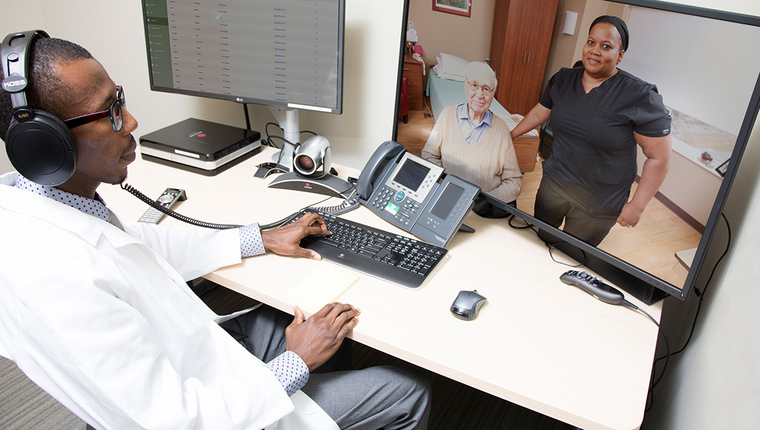
SHS will establish a rural telehealth site in Stephenson County to offer state-of-the-art remote clinical services that residents can easily access (Photo provided)

With a boost from donors, researchers and clinical faculty in the Department of Speech and Hearing Science are collaborating to introduce a new speech and hearing healthcare option for residents in rural areas of northern Illinois. 

Partnering with the Illinois Extension, the department will establish a rural telehealth site in Stephenson County to offer state-of-the-art remote clinical services that residents can easily access. Upon successful testing and initiation, the department will be ready to expand these services to other counties.

The Speech and Hearing Science Rural Health and Telehealth Initiative was developed on a charge from new department head, Professor Georgia Malandraki, after a generous donation for the cause from David Shockey, attorney and two-time University of Illinois graduate from Freeport, Illinois. 

“Our department has a strong history of leading telehealth research and advancing evidence-based practice in our field. I am deeply grateful for the support that made this initiative possible, allowing us to extend our impact and deliver high-quality speech, language, cognitive and hearing care to those who need it most,” Malandraki said.

“By building on our faculty’s expertise, we are also strengthening student training and preparing future clinicians and scientists to serve rural communities.”

Of 102 counties in Illinois, 82 are classified as rural by the state’s Department of Public Health. About 15 percent of Illinois residents reside in rural areas of the state, which are more likely to face healthcare staff shortages and limited access to specialty services. 

“Part of what we’re trying to investigate right now is just what are the needs of the community, and how does that fold in with the opportunities and what we’re already offering,” said SHS Associate Professor Dan Fogerty, who researches speech perception and hearing loss. “With telehealth and remote services, you need to have the platform and infrastructure in order to provide those.” 

For faculty at the Department of Speech and Hearing Science, these telehealth sites will be a chance to implement their ongoing research, outreach and clinical practices around telehealth in a new region. 

The rural health initiative is steered by a task force of research and clinical faculty at Speech and Hearing Science, including Fogerty; Professor Raksha Mudar; Clinical Associate Professor Clarion Mendes, a speech-language pathologist; and Clinical Assistant Professor Sadie Braun, an audiologist. 

“We have a flagship campus with a commitment to our communities. This is a way we can demonstrate that our services extend beyond our campus alone,” said Mudar, who directs the Aging and Neurocognition Lab. “We have built the evidence base—we have the expertise, so now it’s just bringing it all together to offer a more cohesive way to extend that to the community.”

For SHS students, the telehealth sites will provide opportunities to serve individuals in under-resourced areas using the latest remote care technology, broadening their hands-on experience before they become full-time clinicians. 

The project is still early in development, but a crowd-funded campaign helped raise another $2,000 to support the establishment of both telehealth sites. The initiative will build on the teamwork from previous collaborations across the department, including a grant-funded project to create more accurate hearing tests.  

“The nice thing about Speech and Hearing Science at Illinois is that the education, the research and the clinical practice are all integrated,” Fogerty said. “This is an excellent project to demonstrate that.”  

Editor’s note:

To reach Ethan Simmons, email ecsimmon@illinois.edu.

 

Related news

Illinois researchers aim to develop more realistic hearing tests to improve clinical outcomes


Sadie Braun, left, is working to develop more accurate and meaningful hearing assessments (Photo by Brian Stauffer)

Imagine sitting in a busy café, struggling to follow a conversation as voices and background clatter blend together. For many people with hearing loss, this is a daily challenge—yet traditional hearing tests, conducted in silent rooms with isolated tones, fail to reflect these real-world difficulties. At the University of Illinois, a team of researchers is working to bridge that gap by developing more accurate and meaningful hearing assessments that simulate everyday listening environments. 

Sadie Braun, an audiologist and clinical assistant professor in the Department of Speech and Hearing Science in the College of Applied Health Sciences, is the team’s primary investigator and recently received a $30,000 pilot grant from the Center for Health, Aging, and Disability. She is working with Dan Fogerty, an SHS associate professor, on a project titled “Creation of Speech-in-Noise Profiles for Clinical Fitting of Hearing Technologies.” 
 
The project has two goals, the first being to analyze and better understand speech-in-noise testing results from clinical environments. 

“Instead of simply pressing a button when you hear a tone, we’re trying to get more out of tests that already exist which mirror real-world scenarios,” Braun said. “For example, it is fairly common now to play full sentences while background voices are talking at the same time—more like what someone might hear at a party or in a restaurant. We want to use these results to help understand the nuances in what causes understanding-in-noise difficulties on an individual basis.” 

The second goal of the project goes a step further: not just measuring how many mistakes a person makes during a hearing test, but understanding what kind of mistakes—and why they happen. 

“Right now, clinical hearing tests can tell you that someone misunderstood a sentence, but not how they misunderstood it,” Fogerty said. “Our approach focuses on the types of errors people make and the conditions under which those errors occur.” 

By analyzing these mistakes—called error profiles—the team hopes to gain new insights into what’s actually causing the difficulty. For example, one person might confuse similar sounds, like saying “cat” instead of “cats,” which could suggest a problem with sound clarity. Another person might only repeat the second half of a sentence, pointing to a possible cognitive issue like memory or processing speed. 

“We’re identifying patterns across different types of errors,” Braun said. “Then we compare those patterns with results from standard hearing tests to see if there are connections. That could help us predict which patients need which kinds of interventions.” 
 
Data collection will begin in the fall and participants will come from patients who come to the Audiology & Speech-Language Pathology Clinic and have consented to their audio recordings being used for this study. Braun said the tests focus more on adults, primarily those in their 50s and upward. 
 
With those error profiles, the team hopes to use those to improve hearing aid fittings and outcomes for patient satisfaction.  
 
“Different types of errors can have different real-life consequences,” Fogerty said. “Identifying the reasons why someone misunderstands speech will help the clinician identify recommendations to address those specific difficulties.” 

With support from CHAD, the pilot grant will allow Braun and Fogerty to gather foundational data, refine their testing protocols and begin developing detailed error profiles. Their ultimate goal is to translate this information into better hearing aid fittings, more accurate diagnoses and improved quality of life for patients. 

Looking ahead, the team plans to apply for additional funding to expand the project and validate their findings across broader patient populations. 

Braun emphasized the strength of the partnership at the core of this work. 

“This is a true collaboration between research and clinical practice,” she said. “Dr. Fogerty brings deep expertise in auditory research, while I bring the day-to-day clinical experience. Together, we’re approaching the same problem from different angles—and that’s what gives this project real potential to move the field forward.” 

Related news

Study: Hearing aids may slow cognitive decline for at-risk adults


Long-term speech understanding can improve the earlier a patient uses hearing aids, Sadie Braun said. (Photo by Brian Stauffer)

study published in the medical journal The Lancet found that hearing aids might slow cognitive decline for at-risk older adults with hearing loss.

Sadie Braun, audiologist and clinical assistant professor in the Department of Speech and Hearing Science in the College of Applied Health Sciences at the University of Illinois, said she’ll incorporate these findings into her counseling with patients.

“For people who have any sort of high risk for cognitive decline such as dementia [or] Alzheimer’s, this study tells us that those individuals should get hearing aids as soon as they need them,” Braun said. “The average person waits 5 to 7 years or more to get hearing aids once they know they have a hearing loss.”

The study, co-led by Dr. Frank Lin of Johns Hopkins University School of Medicine and the Bloomberg School of Public Health, analyzed cognitive performance for groups of older adults (ages 70 to 84) with untreated hearing loss.

Participants were randomly assigned to either the control group that received counseling on disease prevention, or to the intervention group, which received regular audiology treatment and hearing aids.

Researchers followed up with participants every six months for three years. For participants at lower risk of cognitive decline, hearing aid interventions showed no significant effect on cognitive function. But for participants with high risk for dementia, cognitive decline slowed by 48 percent over the three-year period.

“That’s a pretty amazing statistic to me,” Braun said. “We’ve known there was a correlation between hearing loss and cognitive decline, but there were a lot of unknowns regarding the exact nature of that correlation as well as whether hearing aids or other treatments could have a positive impact.”

The connection between hearing loss and dementia is well-documented, but the “why” is still up for research inquiry, Braun said. Regardless, the finding adds to the growing list of reasons for adults to check their hearing sooner rather than later.

Long-term speech understanding can improve the earlier a patient uses hearing aids, Braun said.

“Cognitive health is something that people really care about,” Braun said. “I think this is going to cause more people to be more concerned about a mild or moderate hearing loss.”

For at-risk adults and anyone interested in checking their hearing, Braun recommends a visit to an audiologist.

The Audiology and Speech-Language Pathology Clinic at 2001 S. Oak Street in Champaign is open to all patients, regardless of affiliation to the University of Illinois and accepts some insurance plans. It is operated by the College of Applied Health Sciences’ Department of Speech and Hearing Science.

New patients are required to schedule an appointment by calling 217-333-2205 or emailing shsclinic@illinois.edu.

Editor’s note:

To reach Ethan Simmons, email ecsimmon@illinois.edu.
 

Related news

Study: Hearing aids may slow cognitive decline for at-risk adults


A new study published in the medical journal The Lancet found that hearing aids might slow cognitive decline for at-risk older adults with hearing loss.

Sadie Braun, audiologist and clinical assistant professor in the Department of Speech and Hearing Science in the College of Applied Health Sciences at the University of Illinois, said she’ll incorporate these findings into her counseling with patients.

“For people who have any sort of high risk for cognitive decline such as dementia (or) Alzheimer’s, this study tells us that those individuals should get hearing aids as soon as they need them,” Braun said. “The average person waits 5 to 7 years or more to get hearing aids once they know they have a hearing loss.”

The study, co-led by Dr. Frank Lin of Johns Hopkins University School of Medicine and the Bloomberg School of Public Health, analyzed cognitive performance for groups of older adults (ages 70 to 84) with untreated hearing loss.

Participants were randomly assigned to either the control group that received counseling on disease prevention, or to the intervention group, which received regular audiology treatment and hearing aids.

Researchers followed up with participants every six months for three years. For participants at lower risk of cognitive decline, hearing aid interventions showed no significant effect on cognitive function. But for participants with high risk for dementia, cognitive decline slowed by 48 percent over the three-year period.

“That’s a pretty amazing statistic to me,” Braun said. “We’ve known there was a correlation between hearing loss and cognitive decline, but there were a lot of unknowns regarding the exact nature of that correlation as well as whether hearing aids or other treatments could have a positive impact.”

The connection between hearing loss and dementia is well-documented, but the “why” is still up for research inquiry, Braun said. Regardless, the finding adds to the growing list of reasons for adults to check their hearing sooner rather than later.

Long-term speech understanding can improve the earlier a patient uses hearing aids, Braun said.

“Cognitive health is something that people really care about,” Braun said. “I think this is going to cause more people to be more concerned about a mild or moderate hearing loss.”

For at-risk adults and anyone interested in checking their hearing, Braun recommends a visit to an audiologist.

The Audiology and Speech Language Pathology Clinic at 2001 S. Oak Street in Champaign is open to all patients, regardless of affiliation to the University of Illinois and accepts some insurance plans. It is operated by the College of Applied Health Sciences’ Department of Speech and Hearing Science.

New patients are required to schedule an appointment by calling 217-333-2205 or emailing shsclinic@illinois.edu.

Editor’s note:

To reach Ethan Simmons, email ecsimmon@illinois.edu.
 

Related news

SHS audiologist ‘hopeful’ about hearing aid ruling


After a recent FDA decision, hearing aids are now available over the counter.

A decision by the Food and Drug Administration that permits hearing aids to be sold without consulting a medical professional could be a positive development, Speech and Hearing Science audiologist Sadie Braun said.

But, as she’s fond of saying, consumers might have to “play it by ear”.

The FDA ruling, which was finalized in August and took effect on Oct. 17, allows adults with mild or moderate hearing loss to purchase a hearing aid without prescription. The ruling will create more competition and lead to quick technology advancements and lower device costs, but without FDA approval a company cannot classify its product as a “hearing aid.” Per the FDA, the devices covered are air-conduction hearing aids, which fit either in the ear canal or sit behind the ear. Other types of hearing  devices include cochlear implants or bone-anchored systems.

While there are plenty of positives to the new rule, it is important to stress that hearing aids are not a one-size-fits-all proposition, Braun said.

“I am a little nervous about the idea that some people who are self-diagnosing may not actually have a mild-to-moderate hearing loss,” she said. “They might be getting hearing aids that are not ideal for them. More importantly, I’m worried that by removing audiologists and ear, nose, and throat doctors from that process altogether, that patients might not get the care that they need for some of those more significant auditory and medical conditions that can be related to the ears and can be very serious if left untreated, such as acoustic neuromas, and Meniere’s disease, to name a couple.”

Given those concerns, Braun recommends that anyone who is considering trying an over-the-counter device make an appointment with an audiologist for an initial hearing test.

That said, Braun believes the ruling will end up being a good thing for “our patients, for audiology, and for the hearing aid industry on the whole.”

“I think that this legislation definitely opens the door for some of our traditionally underserved and underrepresented populations and communities so that they can obtain devices that can help them hear better that they might not have otherwise been able to obtain,” she said, citing the cost of hearing aids. 

The average price for a pair of prescription hearing aids is $4,600, but OTC hearing aids are expected to cost far less. The federal government estimates Americans could save up to $3,000 on hearing aids by choosing OTC brands rather than prescription devices. If that’s the case, the average cost for a pair of OTC hearing aids would be around $1,600. One wrinkle is that there are now several different devices that can be used to amplify sound for a multitude of purposes: hearing aids and Personal Sound Amplification Products, better known as PSAPs, and it can be difficult for consumers to differentiate them.

“The big difference with PSAPs is that they are not meant to treat hearing loss,” Braun said. “They are actually for normal-hearing individuals only. And they’re therefore not classified as medical devices. Instead, they’re considered electronic products. Because of this, they are not regulated at all by the FDA. One example of something the FDA determines with medical devices is age limitations and requirements, and they have stated that OTC aids are ‘not intended for use by individuals who are younger than 18’.  However, while they say that in the rules and regulations, they do not require age verification before over-the-counter hearing aid purchase. But on PSAPs, for example, there’s no recommended requirement.”

Another benefit of the FDA OTC rules, Braun believes, is they will go a long way toward ensuring safety standards for OTC devices.

“The rules and regulations that took years to develop and fine-tune are critical pieces in this OTC legislation,” she said. “We really have to have those built-in safety mechanisms to protect the consumer, to make sure the consumer does not get injured. Also, we have to make sure that these devices meet a set of standards, a set of criteria, to be sure that they do what they claim they will do, or what they are intended to do. Without those regulations in place, I would be much more wary of recommending OTC hearing aids as an option for some of my patients who have mild-to-moderate hearing loss.”

Still, Braun cautions that in the early stages of the aftermath of the rules, much is yet to be determined, and she stresses the need for professional guidance.

“Each person has a different and unique set of needs,” she said. “Some individuals can navigate that process, on their own and potentially be successful with over-the-counter devices. I think that other individuals really need that guidance of a professional to help them through the entire process from start to finish and to be there for support and assistance the entire way. Over-the-counter hearing aids cut out the service component, and that professional service component is what a lot of patients really rely heavily on.”

One way to access that professional service is through SHS’s Audiology & Speech-Language Pathology Clinic. You can reach clinicians by calling 217-333-2205 or emailing shsclinic@illinois.edu.
 

Editor’s note:

To reach Sadie Braun, email svojak@illinois.edu.
 

Related news

External placements vital to students’ development


All SHS students are required to take part in external placements, which are essentially internships with an external organization (Photo by Brian Stauffer)

Students in the Department of Speech and Hearing Science in the College of Applied Health Sciences expect excellent instruction in the classroom. When they venture off campus, however, is when they get a better sense of the career paths they might choose.

All SHS students are required to take part in external placements, which are essentially internships with an external organization. For some students in the master’s program for Speech-Language Pathology, external placements might begin as early as their second semester, said Noa Hannah, director of the audiology and speech-language pathology clinic in SHS. On the audiology side, said Clinical Assistant Professor Sadie Braun, students are given external placements in the summer after their first year in the four-year program.

“I think that our external placements are really the first place that our students get a sense of what audiology is like in the real world,” Braun said. “I think that’s when a lot starts to gel between what they’re learning in their academic classes and what they’re doing in clinic—that starts to come together when they get to their external placements.”

Hannah, who joined the university in 2019 and became clinic director in 2020, agreed, calling external placements “pivotal.”

“They’re pivotal in their learning because there’s only so much we can teach within the clinic,” Hannah said. “Going out on these externals is about professionalism, but … it’s really about understanding different cultures—different cultures of schools, different cultures of hospitals, different supervisory styles than what we have here at the university. So it’s pivotal in their learning how to apply their skills to new patient populations as well as new environments.”

Braun said audiology students gain experience in environments that we just can’t simulate within the SHS clinic environment.

“For example, we send them to a hearing aid manufacturer to get experience with the manufacturer side of things, or to a private practice or a big hospital so they get to see different environments audiologists can practice in and figure out where they might want to start in their first job,” she said.

Hannah said external placements give students the opportunity to deal with different patient populations, such as patients with dementia or traumatic brain injuries, or patients who have had strokes.

Braun said the external placements also help students to increase their independence and competence in using their skills.

There are also benefits for the organizations, such as hospitals and clinics, in which the students are placed.

“I think a lot of professionals just appreciate having some input in shaping the future of our field,” Braun said. “And when we send our students who have more experience, like a third-year audiology student, sometimes they can utilize that student who can be more independent to get a little bit of extra work done themselves.”

Braun said the external placements can also be a job “pipeline,” as some students are hired right out of their fourth-year placements.

For some UIUC alumni, it is a chance to give back, Hannah said.

“I have heard that they want input into teaching the next generation and I think the other thing is, people like teaching. People like sharing their knowledge … a lot of professionals enjoy that part of their profession and maybe don’t get that opportunity as often as they would like. This is a way to give back to a program that’s helped them to be successful.”

Any organization that is willing to act as an external placement for students in the Department of Speech and Hearing Science is encouraged to email Noa Hannah.

Editor’s note:

To reach Vince Lara-Cinisomo, email vinlara@illinois.edu.
 

Related news

Department of Speech and Hearing Science
901 South Sixth Street
M/C 482
Champaign, IL 61820
217-333-2230