Rural Health Initiative will bring department’s speech and hearing health expertise to rural Illinois


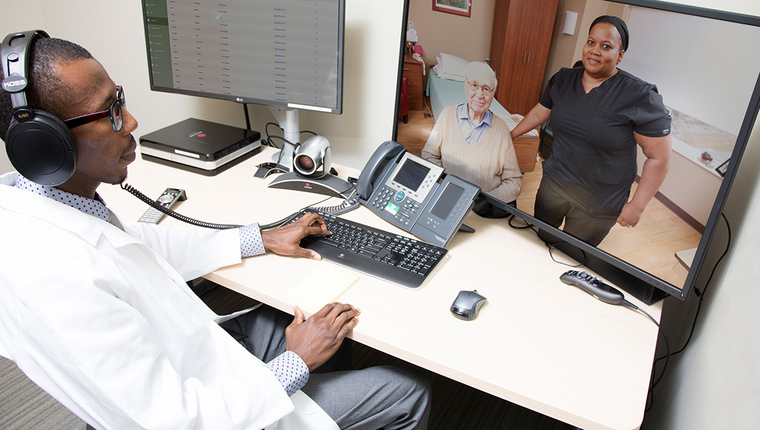
SHS will establish a rural telehealth site in Stephenson County to offer state-of-the-art remote clinical services that residents can easily access (Photo provided)

With a boost from donors, researchers and clinical faculty in the Department of Speech and Hearing Science are collaborating to introduce a new speech and hearing healthcare option for residents in rural areas of northern Illinois. 

Partnering with the Illinois Extension, the department will establish a rural telehealth site in Stephenson County to offer state-of-the-art remote clinical services that residents can easily access. Upon successful testing and initiation, the department will be ready to expand these services to other counties.

The Speech and Hearing Science Rural Health and Telehealth Initiative was developed on a charge from new department head, Professor Georgia Malandraki, after a generous donation for the cause from David Shockey, attorney and two-time University of Illinois graduate from Freeport, Illinois. 

“Our department has a strong history of leading telehealth research and advancing evidence-based practice in our field. I am deeply grateful for the support that made this initiative possible, allowing us to extend our impact and deliver high-quality speech, language, cognitive and hearing care to those who need it most,” Malandraki said.

“By building on our faculty’s expertise, we are also strengthening student training and preparing future clinicians and scientists to serve rural communities.”

Of 102 counties in Illinois, 82 are classified as rural by the state’s Department of Public Health. About 15 percent of Illinois residents reside in rural areas of the state, which are more likely to face healthcare staff shortages and limited access to specialty services. 

“Part of what we’re trying to investigate right now is just what are the needs of the community, and how does that fold in with the opportunities and what we’re already offering,” said SHS Associate Professor Dan Fogerty, who researches speech perception and hearing loss. “With telehealth and remote services, you need to have the platform and infrastructure in order to provide those.” 

For faculty at the Department of Speech and Hearing Science, these telehealth sites will be a chance to implement their ongoing research, outreach and clinical practices around telehealth in a new region. 

The rural health initiative is steered by a task force of research and clinical faculty at Speech and Hearing Science, including Fogerty; Professor Raksha Mudar; Clinical Associate Professor Clarion Mendes, a speech-language pathologist; and Clinical Assistant Professor Sadie Braun, an audiologist. 

“We have a flagship campus with a commitment to our communities. This is a way we can demonstrate that our services extend beyond our campus alone,” said Mudar, who directs the Aging and Neurocognition Lab. “We have built the evidence base—we have the expertise, so now it’s just bringing it all together to offer a more cohesive way to extend that to the community.”

For SHS students, the telehealth sites will provide opportunities to serve individuals in under-resourced areas using the latest remote care technology, broadening their hands-on experience before they become full-time clinicians. 

The project is still early in development, but a crowd-funded campaign helped raise another $2,000 to support the establishment of both telehealth sites. The initiative will build on the teamwork from previous collaborations across the department, including a grant-funded project to create more accurate hearing tests.  

“The nice thing about Speech and Hearing Science at Illinois is that the education, the research and the clinical practice are all integrated,” Fogerty said. “This is an excellent project to demonstrate that.”  

Editor’s note:

To reach Ethan Simmons, email ecsimmon@illinois.edu.

 

Related news

Illinois Speech and Hearing Science at ASHA 2025

Assistant Professor Meaghan McKenna won the 2025 ASHA Early Career Contributions in Research Award. (Provided)

The American Speech-Language Hearing Association (ASHA) held the 2025 ASHA Convention from Nov. 20–22 in Washington, D.C.

Our Department of Speech and Hearing Science at Illinois was well-represented: several SHS faculty and graduate students were in attendance to accept awards and present seminars on their research and teaching contributions.

SHS faculty and students’ ASHA Awards

  • Assistant Professor Meaghan McKenna is being awarded the 2025 ASHA Early Career Contributions in Research Award
  • Ph.D. student Tracy Preza is being awarded an ASHFoundation Student Research Grant in Early Childhood Language Development
  • Ph.D. student Eliza Baby and mentor Professor Raksha Mudar are being awarded a Research Mentoring-Pair Travel Award
  • Ph.D. student Daniela Fanta Alarco is selected for the ASHA Student Leadership Program
  • M.A. student Raina Harpalani is being awarded an ASHFoundation Graduate Scholarship

SHS faculty and students’ talks

Thursday, Nov. 20

12:30 p.m.—Poster: “Examining the Effectiveness and Feasibility of a WebBased First Grade Writing Intervention”
McKenna, M.
Location: CC/Poster (Hall D); Screen #: 134

4:30 p.m.—Poster: “Measuring Functional Communication in Mild Cognitive Impairment”
Lydon, E., Wallace, N., Mudar, R.
Location: CC/Poster (Hall D); Screen #: 134

6 p.m.—One-hour seminar (Invited): “The Speech Accessibility Project: Reflections on Technological Innovation & Visions for Communication Empowerment”
Mendes, C.
Location: CC/151B (Lvl 1)

Friday, Nov. 21

8 a.m.—One-hour seminar: “Building on Legacy, Transforming Practice: Tools to Support SLP Engagement with Multi-Tiered Systems of Support”
Sylvan, L., McKenna, M., Ireland, M.
Location: CC/202A (Lvl 2)

11 a.m.—One-hour seminar: “Imitation and Lexical Overlap in Toddlers with Language Delays: Automated Coding and Sequential Analysis”
Harrington, E., Hadley, P.
Location: Marr/Independence Salon F/G/H (Mtg Lvl 4, LL)

1:30 p.m.—One-hour seminar (Invited): “Research Symposium on Hearing: The Utility of Extended High-Frequency Hearing and Assessment for Speech Communication”
Monson, B., Calandruccio, L.
Location: CC/151B (Lvl 1)

5:30 p.m.—Technical/Research Presentation: “Practice improvement in swallowing management: Using skill-based training in hospitalized post-stroke patients with dysphagia”
Bahia, M.M., Rogers, K., Carpenter, J., Cherney, L.R.
Location: Marr/Liberty Salon K (Mtg Lvl 4, LL)

Speech and Hearing Science faculty and students gathered at this year’s ASHA conference. (Provided)

Saturday, Nov. 22

11 a.m.—One-hour seminar: “Addressing Elementary Writing When Delivering Intervention: Preparing Young Children for Success in School and Life”
McKenna, M.
Location: CC/204B (Lvl 2)
** Designated as a Centennial Session!

Three SHS doctoral students have plans to make an impact on their fields


Lizzy Lydon (Photo provided)

By ANNA FLANAGAN

Under the mentorship of world-renowned scholars, doctoral students make significant contributions to the advancement of theory and practice in speech and hearing science through their dissertation research, as they prepare to assume leadership roles in clinical, industrial and academic settings.

Below, three of our outstanding SHS doctoral students discuss their research, and the impact they hope to have on the field.

Conflict monitoring

Mentored by Department of Speech and Hearing Science Professor Raksha Mudar in the Aging and Neurocognition Lab, Lizzy Lydon is focusing her doctoral research on communication abilities in older adults with mild cognitive impairment (MCI). Her specific focus is on the cognitive construct called conflict monitoring, which helps individuals detect and resolve competing information in the environment. Lydon uses electroencephalography to examine alterations in brain waves when people with MCI perform different conflict monitoring tasks.

Before beginning her Ph.D. studies, Lydon worked as a speech-language pathologist with patients with MCI, many of whom reported communication challenges. “I often found it difficult to determine what type of treatment was the best choice for these individuals,” she said. “After looking through research, I realized there was a lack of evidence-based treatments for communication challenges in populations that experience mild changes to their cognition and language.”

Previous research had focused on understanding memory changes in adults with MCI. An emerging body of literature suggests that other cognitive functions such as conflict monitoring are affected. In using EEG in her research, Lydon may be able to identify neurophysiological markers that can be used for early diagnosis of MCI Research has shown that people with MCI are at a significantly greater risk of developing dementia than typically aging peers, Lydon noted, so it’s important not only to identify MCI earlier but also to better characterize the changes they experience.

“This can help to inform the development of interventions that have the potential to slow the progression to dementia and allow people to maintain independence and quality of life as long as possible,” she said.

In the fall, Lydon will join the faculty of the Department of Speech Pathology and Audiology at Miami University in Ohio as an assistant professor. She plans to continue to investigate how MCI affects different aspects of communication, as well as how these changes impact the ability to engage socially with others. “I am looking forward to this next adventure,” Lydon said, “and I’m so thankful for all the training I received here at Illinois.”

Listening effort

Silvia Murgia also plans to pursue an academic position after completing her degree this summer. For her dissertation, she is evaluating the impact of background noise and dysphonia, a voice disorder, on the mental energy needed to listen, or listening effort, of children performing a speech comprehension task. She is taking a comprehensive approach to her study, using subjective and objective measures of listening effort, including EEG analysis, as well as assessments of cognitive function to explain individual differences.

Murgia is mentored by SHS Associate Professor Pasquale Bottalico in the Speech Accommodation to Acoustics Lab. Understanding listening effort in children is crucial, Murgia said, as they spend a significant amount of time in school learning through communication activities. It is essential to minimize the amount of mental energy children use to listen in order to optimize the resources available for cognitive tasks such as memorization, comprehension and evaluation. Studies show that children’s cognition is affected by the speaker’s voice quality, the presence of background noise and the complexity of the listening task. Research also suggests that individual differences in executive function may be associated with variations in listening comprehension under adverse conditions. Her research addresses both external factors affecting listening effort and internal cognitive mechanisms that help children to cope with external challenges.

“My dissertation aims to provide a more nuanced understanding of how these adverse conditions impact listening effort and comprehension,” she said. “This could have significant implications for educational practices, especially in designing interventions and strategies to support children with different listening and cognitive profiles.”

In her academic career, Murgia plans to expand her research to include children with hearing loss and special needs. Her goal is to improve the academic outcomes and overall well-being of all children by identifying effective ways to reduce listening effort and optimize learning environments.

“I hope that my research empowers children by advocating for their communication needs and ensuring that they have access to the resources and support they require to succeed academically and socially,” she said. “I want to contribute to creating inclusive environments where all children can thrive.”

Vocal intensity

December 2023 graduate Simin Soleimanifar’s dissertation research investigated how using two cochlear implants, known as bilateral cochlear implantations, affected the ability of users to control variations in vocal intensity, or the volume of their voice, as compared to users with a unilateral cochlear implantation.

Soleimanifar noted that the challenges faced by bilateral cochlear implant users in controlling vocal intensity have not been widely researched. Through her study, she hoped to identify the underlying factors contributing to the challenges, with a specific focus on how differences in the perception of loudness growth between the two ears affect vocal performance.

“Vocal performance plays a crucial role in effective communication, and difficulties in controlling vocal intensity can lead to social and emotional consequences for the individuals affected,” Soleimanifar said. “By shedding light on the specific auditory perceptions that influence these difficulties, this research has the potential to lead to better-tailored cochlear implant programming and rehabilitation strategies, ultimately improving the communication outcomes for bilateral cochlear implantation users as well as their overall quality of life.”

Mentored by SHS Associate Professor Justin Aronoff in the Binaural Hearing Lab, Soleimanifar currently is a clinical research associate at the University of Illinois Urbana-Champaign and is pursuing a career that bridges research and clinical practice. In addition to providing empirical evidence on the impact of bilateral cochlear implantation on vocal intensity control and identifying the role that mismatched loudness growth perception between ears plays in vocal performance, she hopes to inform clinical practice by highlighting the need for individualized implant programming and rehabilitation approaches that consider the auditory perceptions specific to bilateral cochlear implantations. Soleimanifar is particularly interested in applying her research findings within a multidisciplinary team to develop innovative implant technologies and rehabilitation strategies.

Related news

SHS Fall 2023 Promotions and Tenure


Raksha Mudar

Raksha Mudar, who joined the faculty of the Department of Speech and Hearing Science in 2011, was promoted to full professor in 2023. Mudar, who earned her Ph.D. from the University of Texas at Dallas, is the director of the Aging and Neurocognition Lab. 

Mudar investigates the effects of normal cognitive aging and brain diseases including mild cognitive impairment, Alzheimer’s disease and frontotemporal dementia on higher order semantic functions. She uses a combination of behavioral methods, event-related potentials and functional magnetic resonance imaging in her research.

“I am deeply honored to be promoted to full professor at such an esteemed institution of higher education and research,” Mudar said. “My path to full has been very rewarding. I chose academia because both research and teaching bring so much joy to me. Looking back, I know I chose right, and am excited for what lies ahead.”

Mudar was elected as a fellow of the American Speech-Language-Hearing Association at the ASHA Convention 2022—one of the highest forms of recognition given by ASHA. Mudar has been involved in several federally funded grants and is currently the primary investigator on an R01 titled “Digital Technology to Support Adherence to Hypertension Medications for Older Adults with Mild Cognitive Impairment.”

Brian Monson

Brian Monson, who joined the faculty of the Department of Speech and Hearing Science in 2017, was promoted to associate professor in 2023. Monson, who received his Ph.D. from the University of Arizona, is the director of the Auditory Neuro Experience Lab. His field of research is in auditory neuroscience. 

Monson holds degrees in electrical engineering, acoustics and speech/language/hearing science, with further specialization in neuroscience and music. With this background, he takes an interdisciplinary approach to auditory research, interfacing with clinicians, scientists, engineers and musicians. His research interests center around auditory neurodevelopment and speech/voice perception.

Monson is the principal investigator on an R01 grant from NIH-NIDCD for his project titled, “The ecological significance of extended high-frequency hearing in humans,” and the PI on an R21 from the NIH-NIDCD as well as the co-PI on another R21.

“I’m quite honored to become a tenured faculty member at such a reputable institution as the University of Illinois,” Monson said. “I very much look forward to continuing to serve our students and our community with my colleagues in Speech and Hearing Science and in Applied Health Sciences.”

Pasquale Bottalico

Pasquale Bottalico, who joined the faculty of the Department of Speech and Hearing Science in 2017, was promoted to associate professor in 2023. Bottalico earned his bachelor’s degree in telecommunications engineering from Univeristà Mediterranea di Reggio Calabria (Italy), while simultaneously pursuing a degree in opera singing at the F. Cilea Music Academy of Reggio Calabria (Italy). 

In 2005, he moved to Turin where he earned his master’s degree in telecommunications engineering from Politecnico di Torino (Italy). Bottalico earned his Ph.D. in metrology, studying acoustics with particular attention to the uncertainty of measurements and statistical analysis of data. Bottalico is particularly interested in the professional voice user and singer techniques, as well as the definition and the quantification of vocal load. Other fields he is interested in are speech intelligibility, room acoustics and musical acoustics.

Bottalico is also a professional chorister, having performed under such prestigious directors as Rafael Frühbeck De Burgos, Yuri Ahronovitch, Jeffrey Tate, Juanio Mena, Gianandrea Noseda, Ottavio Dantone, Wayne Marshall, Helmuth Rilling, Christopher Hogwood, Robert King and Ivor Bolton.

“Attaining tenure and rising to the role of associate professor is a profound validation of my dedication to enlightening minds, pushing the boundaries of knowledge and contributing to the ever-evolving academic landscape,” Bottalico said. “It signifies not just personal achievement but the faith others place in my ability to continually inspire students and illuminate the paths of intellectual exploration.”

Related news

Mudar honored by ASHA Fellowship


In the summer of 2022, Speech and Hearing Science Associate Professor Raksha Mudar was elected a Fellow of the American Speech-Language-Hearing Association (ASHA). Fellowship is one of the highest forms of recognition given by ASHA and is a public declaration of an individual’s outstanding contributions to the discipline of communication sciences and disorders.

The significance of that recognition was not lost on Dr. Mudar.

“I am delighted to receive this honor from the association. To get recognized by the association for these efforts is really personally and professionally fulfilling,” said Mudar, who joined the University of Illinois in 2011. “My journey as a faculty in communication sciences and disorders has been so much fun. I enjoy what I get to do each day, from training the next generation of clinicians and scientists to conducting research examining intriguing questions about the aging brain and neuroplasticity.”

For Dr. Mudar, the ASHA appointment serves as validation for her research agenda, which was inspired by a personal experience.

“When I was an undergraduate student in speech and hearing science (at the University of Mysore in India), a family friend got diagnosed with early onset Alzheimer’s dementia,” she said. “This person was an eloquent storyteller. To watch his cognitive communication abilities deteriorate quickly was difficult to watch. His family struggled to understand his needs and wishes and got little help from his doctors on how to deal with these challenges. I was surprised to find that speech-language pathologists rarely worked with individuals with Alzheimer’s dementia at that time and this inspired me to pursue research on cognitive-communication issues in aging and neurodegenerative disorders.”

According to Dr. Mudar, an ASHA Fellow is expected to support and promote scientific and clinical leadership, interdisciplinary services, and an inclusive culture committed to supporting the needs of those with communication and swallowing disorders.
 
ASHA is the national professional association that sets the standard for professional practice in speech-language pathology  and audiology and serves as an accrediting body. To Dr. Mudar—who was also the AHS recipient of the Excellence in Graduate Student Mentoring award—it represents something more than that.

“(ASHA) offers a great community for members to connect with each other, learn, and build scientific and clinical excellence,” she said. “Furthermore, ASHA’s advocacy in promoting the needs of individuals and families with communication disorders is critical to supporting communication as a basic human right.”

Related news

Rogers, Mudar receive $4.6M grant to establish center focused on older adults with cognitive impairment


The University of Illinois is part of a team receiving a $4.6 million grant aimed at helping adults with cognitive disabilties deal with challenges associated with everyday activities.

The grant from the National Institute on Disability, Independent Living, and Rehabilitation Research runs from Sept. 30, 2019 to Sept. 29, 2024 and is a collaborative effort with Weill Cornell Medicine and Florida State University, with Illinois’ share amounting to approximately $1.4 million.

Kinesiology and Community Health professor Wendy Rogers and Speech and Hearing Science associate professor Raksha Mudar are the principle investigators on the research for Illinois. Harshal Mahajan, assistant research professor of Kinesiology and Community Health, is also an investigator on the project.

The funding is for a Rehabilitation Engineering Research Center entitled ENHANCE (Enhancing Neurocognitive Health, Abilities, Networks, and Community Engagement).

Rogers and Mudar said the primary research aims are to understand challenges adults with cognitive disability deal with every day, and to identify existing and emerging technology that can help. Three segments of the population are part of the study group: Adults 60 and older with mild cognitive impairment, cognitive impairments due to stroke and those who have sustained a traumatic brain injury.

“What we’re trying to do is understand the challenges that they experience in their daily activities,” Rogers said. “In one study, we’ll be interviewing them about what they do outside the home, what they do around the home; shopping, transportation, health, finances and then just basic daily activities, such as mobility and medication regimen.”

Rogers said the study’s participants will include both the the individuals with cognitive disability as well as their family members who provide support and care. They will be exploring whether needs change over time, with interviews repeated across the five-year project.

“Really, we’re trying to get an understanding in general of people with cognitive disability on an everyday basis, what kind of challenges are they experiencing and how might we design technology to support that.”

Another goal is understanding what this population uses in terms of current technology to mitigate their impairments.

One of the projects, Rogers said, involves helping adults with cognitive disability use Google Maps and rideshare apps, through additional instructions and support, which could include an app on their phone that walks them through steps, or a video that illustrates what to do and helps them as they learn.

Mudar explained that they also plan to engage healthcare providers and the technology industry in hopes of developing partnerships.

Editor’s note:

To reach Vince Lara-Cinisomo, email vinlara@illinois.edu.
 

Related news

Department of Speech and Hearing Science
901 South Sixth Street
M/C 482
Champaign, IL 61820
217-333-2230