“I welcome perspectives from everyone (…) because the future we create together will be stronger for it.“
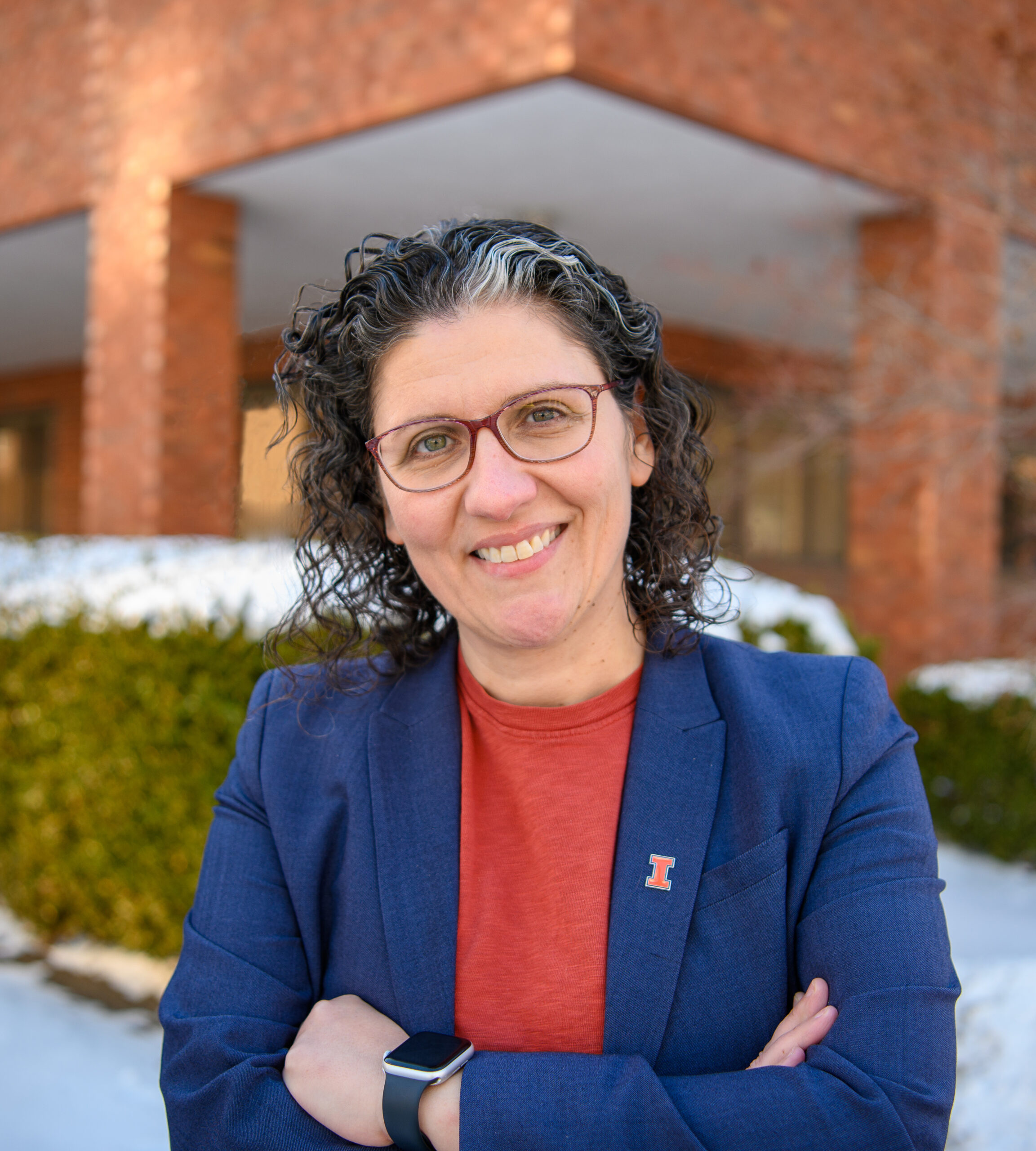
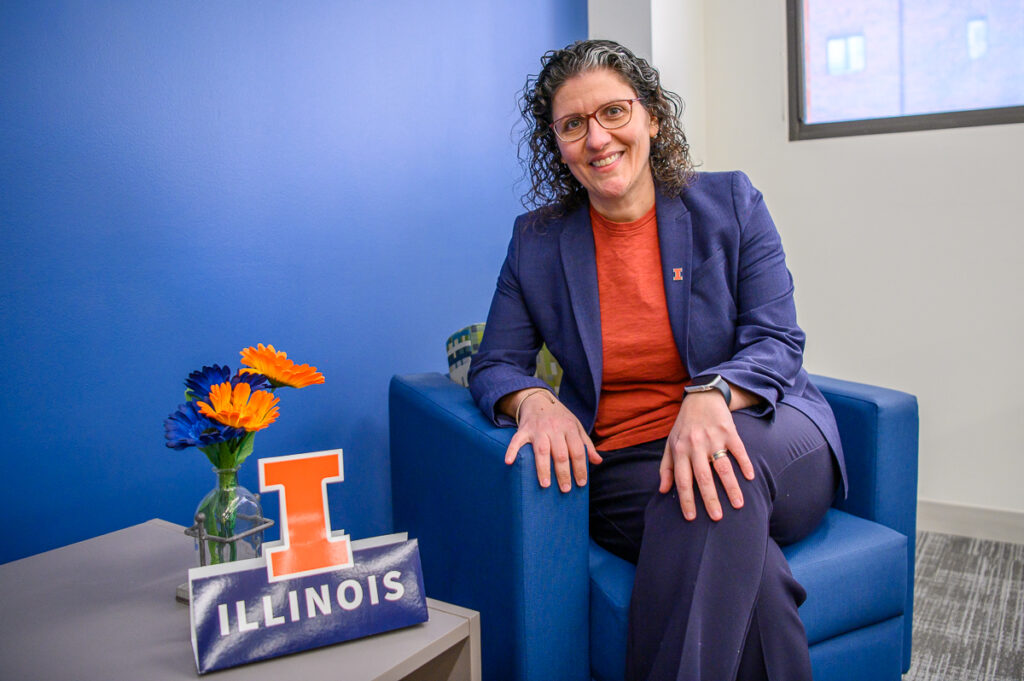
Georgia Malandraki, professor and department head of Speech and Hearing Science, has begun her second month as department head. (Ethan Simmons/College of AHS)
Dear Speech and Hearing Science community,
It is with pride and a deep sense of responsibility that I begin my role as Head of the Department of Speech and Hearing Science. Returning to Illinois, where I completed my Ph.D. and where many of our distinguished faculty shaped my early career, feels like coming home. It is both humbling and exciting to now have the opportunity to give back to the community that supported me from the start.
Over the past several months, I have begun to learn the many stories, strengths, and aspirations that make SHS such a vibrant community. Every conversation with faculty, staff, and students has reminded me of something I have known since I was a student here: SHS is a community where excellence and compassion go hand in hand, and where people genuinely care about making an impact. I am grateful to join you as we continue building on that foundation together.
I am thankful to be joining the department at a time of remarkable momentum, built under the leadership of former Head and Professor Pamela Hadley and Dean Cheryl Hanley Maxwell. The shared governance model, the selfless and dedicated service of faculty, the collective passion for impactful research and clinical training, and the strong commitment to inclusion that I have witnessed during this transition are outstanding.
Equally impressive is the work ethic and dedication of our faculty, staff, and students, clear indicators of the remarkable potential ahead. Importantly, the support and enriching environment provided by the College of Applied Health Sciences and the University as a whole foster collaboration, innovation, and sustained excellence, creating the conditions for SHS to grow and continue its legacy as one of the leading departments in the state and the country.
As we look toward the future, I see a department that not only sustains this legacy but continues to grow its reach locally, nationally, and globally. Together, we will focus on our shared goals:
Strengthening our position as a global leader in research and clinical training in communication sciences and disorders
Empowering students through exceptional and forward-thinking education
Expanding our engagement with communities and partners who rely on our expertise
Growing the resources and support needed to enhance discovery, education, and service
These are meaningful goals, and I am confident we can achieve them. The talent, commitment, and heart I see within SHS are truly remarkable.
In the coming months, I look forward to hearing your ideas, learning from your experiences, and working with you to shape the next chapter of SHS. I welcome perspectives from everyone—students, alumni, faculty, staff and friends—because the future we create together will be stronger for it.
Thank you for the very warm welcome. I am inspired by this department, energized by its potential, and honored to walk forward with you.
With warmest regards, Georgia A. Malandraki, Ph.D., CCC-SLP, BCS-S, ASHA Fellow Professor and Head
Assistant Professor Meaghan McKenna won the 2025 ASHA Early Career Contributions in Research Award. (Provided)
The American Speech-Language Hearing Association (ASHA) held the 2025 ASHA Convention from Nov. 20–22 in Washington, D.C.
Our Department of Speech and Hearing Science at Illinois was well-represented: several SHS faculty and graduate students were in attendance to accept awards and present seminars on their research and teaching contributions.
SHS faculty and students’ ASHA Awards
Assistant Professor Meaghan McKenna is being awarded the 2025 ASHA Early Career Contributions in Research Award
Ph.D. student Tracy Preza is being awarded an ASHFoundation Student Research Grant in Early Childhood Language Development
Ph.D. student Eliza Baby and mentor Professor Raksha Mudar are being awarded a Research Mentoring-Pair Travel Award
Ph.D. student Daniela Fanta Alarco is selected for the ASHA Student Leadership Program
M.A. student Raina Harpalani is being awarded an ASHFoundation Graduate Scholarship
SHS faculty and students’ talks
Thursday, Nov. 20
12:30 p.m.—Poster: “Examining the Effectiveness and Feasibility of a WebBased First Grade Writing Intervention” McKenna, M. Location: CC/Poster (Hall D); Screen #: 134
4:30 p.m.—Poster: “Measuring Functional Communication in Mild Cognitive Impairment” Lydon, E., Wallace, N., Mudar, R. Location: CC/Poster (Hall D); Screen #: 134
6 p.m.—One-hour seminar (Invited): “The Speech Accessibility Project: Reflections on Technological Innovation & Visions for Communication Empowerment” Mendes, C. Location: CC/151B (Lvl 1)
Friday, Nov. 21
8 a.m.—One-hour seminar: “Building on Legacy, Transforming Practice: Tools to Support SLP Engagement with Multi-Tiered Systems of Support” Sylvan, L., McKenna, M., Ireland, M. Location: CC/202A (Lvl 2)
11 a.m.—One-hour seminar: “Imitation and Lexical Overlap in Toddlers with Language Delays: Automated Coding and Sequential Analysis” Harrington, E., Hadley, P. Location: Marr/Independence Salon F/G/H (Mtg Lvl 4, LL)
1:30 p.m.—One-hour seminar (Invited): “Research Symposium on Hearing: The Utility of Extended High-Frequency Hearing and Assessment for Speech Communication” Monson, B., Calandruccio, L. Location: CC/151B (Lvl 1)
5:30 p.m.—Technical/Research Presentation: “Practice improvement in swallowing management: Using skill-based training in hospitalized post-stroke patients with dysphagia” Bahia, M.M., Rogers, K., Carpenter, J., Cherney, L.R. Location: Marr/Liberty Salon K (Mtg Lvl 4, LL)
Speech and Hearing Science faculty and students gathered at this year’s ASHA conference. (Provided)
Saturday, Nov. 22
11 a.m.—One-hour seminar: “Addressing Elementary Writing When Delivering Intervention: Preparing Young Children for Success in School and Life” McKenna, M. Location: CC/204B (Lvl 2) ** Designated as a Centennial Session!
Photo Charles and Kay Stenberg Professor and SHS Department Head Pamela Hadley (Photo by Bradley Leeb)
Dear Students, Faculty, Alumni and Friends of the Department of Speech and Hearing Science,
As we step into the energy of spring 2025, I’m excited to share the latest updates from our department. It’s been a remarkable year, and we have so much to celebrate!
Our commitment to advancing the field of communication sciences and disorders continues to grow. In this edition, we highlight the inspiring achievements of our faculty, students and alumni. We have stories on a newly established aphasia group, multiple grants on understanding and improving hearing in noise, how our research translates to the lives of friends and family and an introduction to one of our new faculty members.
Take a moment to explore the stories in this newsletter and reflect on the incredible work in SHS. Together, we’re pushing boundaries, advancing new approaches to treatment, and improving lives of children and adults.
A heartfelt thank you to our dedicated faculty, staff and students—your passion and perseverance are the heart of our success.
Wishing you a vibrant and inspiring spring season!
Sincerely, Pamela Hadley, Ph.D. Charles and Kay Stenberg Professor and Head
Dear students, faculty, alumni, and friends of the Department of Speech and Hearing Science,
As we enjoy the spring colors across campus, I welcome you to the latest departmental newsletter. It fills me with great pride to share the progress we’ve made in recent months and provide a glimpse into the prospects on our horizon.
Our dedication to advancing the fields of audiology and speech-language pathology remains steadfast. In this edition, we showcase the stories of faculty, students and alumni making significant contributions across various facets of our field. These narratives underscore the strength of our community and the profound impact we have on enhancing quality of life.
I invite you all to explore the contents of this newsletter, celebrate our successes and envision the limitless possibilities ahead. Together, we will continue to empower individuals facing communication challenges, pioneer groundbreaking research and shape the trajectory of communication sciences and disorders.
Lastly, I extend my heartfelt gratitude to SHS faculty, staff and students for your unwavering dedication. Your tireless efforts are the cornerstone of our achievements, and your enthusiasm propels us forward.
Warm regards for a restful and reinvigorating summer.
Georgia Malandraki earned her Ph.D. from the University of Illinois in 2008. (Photo provided)
The College of Applied Health Sciences at the University of Illinois Urbana-Champaign is pleased to announce the appointment of Dr. Georgia A. Malandraki as the new head of the Department of Speech and Hearing Science, effective January 2026. Dr. Malandraki brings with her an exceptional record of scholarly achievement, clinical innovation and academic leadership that will advance the department’s mission in education, research and service.
Dr. Malandraki succeeds Dr. Pamela Hadley as department head, who was appointed department head in 2020. Dr. Hadley will continue serving as the Charles and Kay Stenberg Endowed Professor in Disability Research.
“Since earning my Ph.D. in Speech and Hearing Science from Illinois in 2008, I have been fortunate to have a deeply fulfilling career—one that has been profoundly shaped by the training and mentorship I received during my doctoral years,” Malandraki said. “It is an incredible honor to return to my alma mater to serve as head of SHS. As I step into this role, I am beyond humbled and filled with excitement.
“I follow in the footsteps of professor and current head, Dr. Pamela Hadley, whose compassionate leadership and dedication have strengthened the department through growth and challenges, including during the pandemic. I first met Dr. Hadley during my final year as a doctoral student, and her warmth and generosity have left a lasting impression—one she has carried into her impactful tenure as head. I am deeply grateful for her example and the foundation that she, along with her distinguished predecessors, has built. As I take on this role, I do so with humility, gratitude, and a strong commitment to inclusive excellence, innovation, and collaboration. I look forward to working alongside the exceptional SHS faculty, students, and staff, and under the inspiring leadership of AHS Dean Cheryl Hanley-Maxwell, as we continue to advance impactful research, education, and service in the field of communication sciences and disorders at the University of Illinois Urbana-Champaign. Go Illini!”
Dr. Malandraki joins the University of Illinois from Purdue University, where she served as a professor in the Department of Speech, Language and Hearing Sciences, with a courtesy appointment in the Weldon School of Biomedical Engineering. At Purdue, she directed the I-EaT Swallowing Research Laboratory and Clinic and played a pivotal role in interdisciplinary research and education focused on the neural mechanisms of swallowing function.
Dr. Malandraki earned her Ph.D. at the University of Illinois in 2008 after earning her master’s at Ohio University and her undergraduate degree from the Technological Educational Institute of Patras, Greece.
An internationally recognized expert in dysphagia, Dr. Malandraki is a certified speech-language pathologist, a board-certified specialist in swallowing and swallowing disorders, and a Fellow of the American Speech-Language-Hearing Association (ASHA). Her groundbreaking work has focused on the development of neurophysiologically driven interventions and telehealth solutions to expand access to care for individuals with swallowing disorders, particularly in underserved populations.
Dr. Malandraki is a founding member of the Purdue CEREBBRAL Center and a faculty associate with the Purdue Center for Aging and the Life Course. Her contributions to the field have earned her numerous accolades, including the NIH NIBIB R21 Trailblazer Award in 2019, the Purdue Early Career Research Achievement Award, and the 2021 ASHA Fellowship. Her team also received the 2021 Editor’s Award from the Journal of Speech, Language, and Hearing Research (JSLHR), and she was honored with the 2022 Honors of the Indiana Speech-Language-Hearing Association.
In addition to her research accomplishments, Dr. Malandraki is widely respected for her commitment to excellence in teaching. Since joining Purdue in 2014, she has been recognized with eight departmental teaching awards and received the 2018 Patsy J. Mellott Teaching Innovation Award from Purdue’s College of Health and Human Sciences.
“We are thrilled to welcome Dr. Malandraki to the University of Illinois,” said Cheryl Hanley-Maxwell, dean of the College of Applied Health Sciences. “Her visionary leadership, collaborative spirit and unwavering dedication to advancing the science and practice of communication and swallowing disorders make her an ideal choice to lead our Department of Speech and Hearing Science into its next chapter.”
Dr. Pamela Hadley joined the Department of Speech and Hearing Science in AHS in 2007 and has been department head since 2021. A tireless advocate for the groundbreaking work of SHS colleagues past and present, Dr. Hadley somehow found the time for an energetic interview on a sunny September afternoon.
‘We have such a great group of remarkable scientists who are really committed to rigor in their research,’ Department Head Pamela Hadley said. (Photo by Ethan Simmons)
Q: This year’s deeper dives into the history of the Department of Speech and Hearing Science at the University of Illinois have been fascinating. Was there anything in any of these explorations that surprised you, even in your role as the department’s head?
A: Oh, absolutely. For example, I didn’t know how instrumental faculty at the University of Illinois had been in the development of the ASHA [American Speech-Language-Hearing Association] journals. The field continues to grapple, even today, with how to disseminate scientific findings.
There also are many discussions about opening up access to science, especially those things that are federally funded by taxpayer dollars. The internet and social media have fundamentally changed the number of options for sharing scientific findings and clinical resources with the public. That’s something that, looking forward, we will continue to work through. With regard to the SHS at 50 stories, it was really important for me to appreciate the role that Illinois faculty had in the development of those early journals at the very beginning.
Q: What are some topics you would have liked to explore for this series if we’d had more time?
A: Something we talked about early on was exploring paradigm shifts in the field. There are individuals from Illinois who were responsible for changing the way in which our field approached clinical practice. Some of those researchers include Dean Emerita Tanya Gallagher and Carol Prutting, who were mentored by Tom Shriner Jr. in the 1970s. Together they were responsible for bringing the pragmatics revolution into the field of speech-language pathology and establishing the subfield of clinical pragmatics, focused on how language is used in conversational interactions.
Another example: Elaine Paden and Ph.D. student Barbara Hodson contributed to a paradigm shift in how we treat young children’s speech-sound disorders. They were instrumental in shifting the field toward treating classes of sounds to improve the intelligibility of young children’s speech more efficiently. That was a huge paradigm shift.
Professor Emerita Adrienne Perlman was an advocate for expanding the speech-language pathology scope of practice to include dysphagia, or swallowing disorders. When I was a clinical student, swallowing wasn’t part of our scope of practice yet! Now it’s such a fundamental aspect of medical SLPs’ role in hospitals and skilled nursing facilities in particular.
Finally, it would have been wonderful to highlight major research projects throughout the history of the department, such as the Illinois International Stuttering Research Project that was led by Professor Emeritus Ehud Yairi.
Q: What’s impressed you the most about the department’s growth and development since you joined the faculty?
A: I’m so impressed with my faculty colleagues. We have such a great group of remarkable scientists who are really committed to rigor in their research. They hold themselves and their students to high standards, and at the same time, they’re just truly wonderful people who’ve been so committed to delivering high-quality instruction through some really unprecedented times. I admire their resilience. I enjoy their company. In short, I’m just really proud to lead this department.
Q: What are some new areas in this field that recent graduates, current students, and students who will join you in the next few years have, or will have, the expertise to address as they move into their careers?
A: Telehealth is a professional area that has really expanded rapidly in the last three years. Prior to COVID-19, students weren’t trained to assess or treat via telehealth at all. It was considered to be an advanced clinical skill and not something that students would be expected to learn until they had years of clinical practice under their belt.
During the stay-at-home mandates, telehealth became a lifeline, and it caused our professional bodies to reconsider whether this was an essential skill that all our students in training needed to have. We also had many research projects that were required to pivot to remote data collection. Students today are far more advanced in their knowledge and skills in this area, and they are better prepared to conduct research and deliver clinical services remotely than prior graduates.
Q: Let’s talk a bit more about the department’s Audiology and Speech-Language Pathology Clinic. You’ve referred to it as the “crown jewel” of the department’s community outreach efforts. How would you like to see the clinic evolve?
A: This summer we had a public meeting as part of a follow-up, in-person site visit from our accreditation body, and a number of individuals who received services from our clinic and their family members attended the meeting. They just raved to the site visitors about the services that they were receiving and the impact of those services on their well-being and quality of life. To hear that kind of feedback from the families that we serve just means everything—it’s so essential to what we’re trying to accomplish in terms of our public engagement and outreach, and it’s testimony to how critically important communication skills are to participation in everyday activities. That encapsulates why I’ve referred to the clinic as a “crown jewel.”
I’d really like to see the clinic expand its sphere of influence beyond the Urbana-Champaign community. My dream for the clinic would be for it to be a center of excellence, particularly for families in rural communities that may not have access to state-of-the-science resources in their local communities. Also, it would be my hope that we could bring individuals here for comprehensive assessments and develop the types of support those families might need for ongoing care, and then maintain that contact through telehealth with educators or health care providers in their local communities. I think that that could be really powerful.
Q: We’ve established through these stories that the SHS faculty at Illinois have been pioneers in the research, and they’ve been leaders in their profession since the beginning. Will these stories serve as inspiration for future activities? Where do you think this department can lead your disciplines in the future?
A: I think these stories helped us bring history alive and explored some topics in a more conversational way than reading a review of the history of the department. What I most hope, though, is that these stories provide our students and faculty with a strong sense of where they come from and, really, a deeper appreciation of the fact they’re standing on the shoulders of giants—pioneers who really established the profession and were influential from the beginning.
Where do I think SHS will lead the discipline in the future? I envision SHS faculty and students contributing to innovations in health technology, including the use of that technology to improve treatment options, and evaluating how different design features might promote people’s use of those technologies and what new technologies are desired. Those health technologies could include how we are designing and developing hearing aids, which treatments best fit an individual’s cognitive profiles and communication needs, how we interact with augmentative and alternative communication devices, how we use speech recognition devices, or how we use different kinds of technologies to age in place successfully. Technology has moved really quickly just in the last year. So the next 50 years? It’s hard to imagine where we’ll be!
For more on the 50th anniversary of SHS at Illinois, check out our stories at shs.illinois.edu/shs-50.
Pamela Hadley, center, with faculty and staff of the Department of Speech and Hearing Science (Photo by Craig Pessman)
The daughter of a farmer in rural Illinois, Pamela Hadley had no “schema” for becoming a university professor. But a high school career filled with self-expression helped guide her toward an illustrious academic career that was culminated with a top honor.
Hadley, the head of the Department of Speech and Hearing Science and a professor, was appointed as the inaugural Charles and Kay Stenberg Endowed Professor in Disability Research in a ceremony on April 30.
The appointment is a testament to Hadley’s decades-long dedication to advancing the science of language development in young children, particularly those with developmental language disorder, said Cheryl Hanley-Maxwell, dean of the College of Applied Health Sciences.
“Pam Hadley has made significant contributions to language science through highly regarded translational research, mentored numerous students into clinical and academic careers, and benefitted the department, university and profession at large through a variety of service activities,” Hanley-Maxwell said.
The named professorship “is an honor that is accorded to outstanding scholars who have well-established records of excellence in research, teaching, and public engagement,” Hanley-Maxwell added.
The professorship was made possible by a generous endowment from Charles and Kay Stenberg, both Illinois alumni who experienced firsthand the challenges of navigating life with disabilities in an era before the Americans with Disabilities Act. Though they have passed, their legacy lives on through their commitment to disability research and through the continued support of Kay’s brother, Hugh Wishart.
“Chuck and Kay were passionate about accessibility and believed deeply in supporting research that improves the lives of people with disabilities,” Hanley-Maxwell said. Hadley also expressed deep gratitude to the Stenberg family, colleagues, students, and family members who shaped her journey.
“This is rightfully a shared honor,” she said. “I’m profoundly humbled to be named the Charles and Kay Stenberg Professor. The Stenbergs faced and overcame many barriers, and they endowed this professorship to help others do the same.”
Hadley reflected on a life shaped by both personal experience and professional purpose. Raised in rural Henry County, Illinois, she credited her parents for instilling in her a love for inquiry and compassion. Her father, a farmer, encouraged her to solve story problems at dinner. Her mother, a nurse, brought her along on Saturday visits to residents in a skilled nursing facility. “We’d call that volunteering as a conversational partner today,” she joked, noting it was her first exposure to the impact of communication in caregiving.
Her academic journey took her from Augustana College, where she experienced immersive clinical training, to the University of Kansas, where she joined a research preschool program that would shape her scholarly trajectory.
“It was in that preschool that I first noticed how children with communication disorders were not socially integrated,” she said. That observation led to a research assistantship, publications, and ultimately a Ph.D. in child language under the mentorship of Professor Mabel Rice.
Pam Hadley has made significant contributions to language science through highly regarded translational research, mentored numerous students into clinical and academic careers, and benefitted the department, university and profession at large through a variety of service activities.
Cheryl Hanley-Maxwell
Dean, College of Applied Health Sciences
Over her career, Hadley has led pioneering longitudinal studies that have reshaped how clinicians and researchers understand early language development. Her work has focused on early identification and intervention for children with Developmental Language Disorder (DLD)—a condition that affects 7 to 10 percent of school-aged children and often goes undiagnosed until it has already begun to impact learning and social development.
She led a groundbreaking multi-site clinical trial, supported by the National Institute on Deafness and Other Communication Disorders, evaluating a parent-implemented language intervention.
“I’m thrilled to report that the caregiver-implemented intervention resulted in positive effects on vocabulary and grammar,” she said, noting that the professorship would play a critical role in disseminating these findings to clinicians and families.
As head of the Department of Speech and Hearing Science, Hadley led with empathy and pragmatism during the COVID-19 pandemic. She established virtual check-ins, championed remote accessibility, and helped the department resume clinical services quickly and safely. Her leadership style, she said, is grounded in the deep respect she holds for her colleagues and their shared mission: “to promote improved communication and health for individuals with disabilities across the lifespan.”
Throughout the ceremony, attendees were reminded of Hadley’s enduring commitment to education. Undergraduate and graduate students alike benefit from her guidance, both in the classroom and in the lab. As one of the few national experts on early grammatical assessment and intervention, her work translates directly into tools and strategies used by speech-language pathologists and parents.
In concluding her remarks, Hadley acknowledged her most personal source of support—her family. Her husband, Matt Rispoli, a retired SHS faculty member, and their daughters have shared in the journey.
“They’ve always graciously shared me with my students and my work,” she said, adding that the family’s shared love of hiking serves as a cherished escape from her many professional responsibilities.
As Dean Hanley-Maxwell presented the medallion that accompanies a named professorship, she emphasized what the moment represented: a celebration of achievement, but also a reaffirmation of the university’s mission to foster research that has real-world impact.
“Pam, your outstanding work has added to the prestige of this college and university,” she said. “We are grateful for and proud of your commitment to helping children with language disabilities get a better start in life.”
Dear students, faculty, alumni, and friends of the Department of Speech and Hearing Science,
As we embrace the vibrant colors of fall on campus, I am thrilled to welcome you to the latest edition of our departmental newsletter. It is a pleasure to share news of recent accomplishments and to offer a glimpse into the exciting developments on our horizon.
Our efforts to advance the field of communication sciences and disorders grow more impactful each year. In this edition, we highlight the inspiring stories of our faculty, students and alumni who are making significant strides in different areas. Additionally, we are proud to announce that the Audiology & Speech-Language Pathology Clinic is now Medicare certified. This enables the clinic to serve an even broader segment of our population, particularly older adults and those with disabilities, to ensure that everyone has access to the services they need.
I encourage you to delve into the newsletter, celebrate our collective achievements, and imagine the boundless opportunities that lie ahead. Together, we will keep pushing the boundaries of research, supporting individuals with communication challenges, and shaping the future of communication sciences and disorders.
Finally, I extend my deepest gratitude to our SHS faculty, staff, and students for your unwavering dedication. Your hard work and enthusiasm are the foundation of our success and drive us forward.
Wishing you all a wonderful and inspiring fall season.
Welcome to the Spring 2023 issue of the SHS E-News! As we come to the end of another academic year, I am happy to report that students and faculty in the Department of Speech and Hearing Science continue to thrive, to provide outstanding clinical services to individuals in our local community and throughout the state, and to make important contributions to the advancement of knowledge in our field.
We have also begun celebrating our 50th anniversary. The Department of Speech and Hearing Science was formally established at the University of Illinois in 1973. Throughout this year, we will honor the people who formed the foundation of the department as well as contributions to pioneering research and leadership in the profession with a series of articles. We hope you’ll join in our celebration. Watch for new articles during the first week of each month and visit our 50th anniversary website for more information.
In this issue, we introduce you to three faculty who are doing important research in the area of speech perception in noise. Mary Flaherty, Dan Fogerty, and Ian Mertes are breaking new ground as they work to identify why children and adults have difficulty hearing in noisy backgrounds and how they can best be helped. I am so proud to lead a department in which innovative research is the norm. It not only advances the field, but also ensures that our students are on the cutting edge of knowledge.
We say goodbye to Associate Professor Matt Rispoli and congratulate him on his retirement after 16 years with the University of Illinois Urbana-Champaign. Matt devoted his career to the question of how children acquire language. His research focused on early verb learning, the learning of syntax, and the development of incremental sentence production in children. Matt was a recipient of the College of Applied Health Sciences’ Phyllis J. Hill Award, which recognizes outstanding mentoring of undergraduate students. He will be missed!
I also am impressed by the initiative shown by our students to position themselves as leaders within communication sciences and disorders. One of our undergraduate students, Holly Panfil, will spend the summer studying Augmentative and Alternative Communication (AAC) devices after earning a prestigious Fulbright Canada-Mitacs Globalink internship. She will work with Dr. Julie Bouchard at the University of Quebec on a study of AAC devices in the workplace.
In this newsletter, we also highlight the accomplishment of numerous undergraduate and graduate students who have received scholarships and awards this year in recognition of their academic, professional and personal excellence.
Please enjoy reading the newsletter and take pride in knowing that your alma mater is strong and growing!
The Department of Speech and Hearing Science concluded an outstanding academic year with the College of Applied Health Sciences Convocation on May 15. We proudly sent many new audiologists and speech-language pathologists into the world, as well as more than 80 bachelor degree recipients who will pursue many different ways of changing the world. It was a wonderful event, all the more so because we were able to celebrate in person for the first time since 2019. You will meet some of our graduates in this newsletter.
We also held our annual recognition of award and scholarship recipients in person in April. More than two-dozen graduate and undergraduate students benefited from the generous support of our donors. They were chosen because of their amazing academic, professional, and personal accomplishments. We were pleased to be joined by friends and families of our recipients, as well as two of the donors who make these awards and scholarships possible, Dr. Ehud Yairi and Mrs. Nanine Breon. It was a very special event, one that made us so proud of our remarkable students.
Our undergraduate students also made us proud with their participation in the 2022 Undergraduate Research Symposium, an event that showcases research excellence across the campus. SHS was represented by 25 students who presented research posters on such topics as factors that improve children’s speech-in-noise recognition, the implications of misophonia for college-age students, and the Lombard effect and speech intelligibility. You can read more about the symposium in this newsletter.
In talking about student achievement, one cannot overlook or overemphasize the importance of outstanding teaching and mentoring. I have always been proud to be a member of the SHS faculty, a committed and caring group of scholars and clinicians who are dedicated to student success. This year, Dr. Raksha Mudar, who serves as our Director of Graduate Studies, received the College of Applied Health Sciences’ Excellence in Graduate Student Mentoring Award, an honor of which she is richly deserving. You’ll learn more about Raksha in this issue of SHS E-News. She is highly valued by students and colleagues alike for her wisdom, patience, and calm demeanor.
SHS was proud to play an instrumental role in the planning and execution of World Voice Day in April, a virtual symposium that addressed vocal health through presentations by our own faculty as well as collaborators from the School of Music, Clarke University, the Mayo Clinic, Universita’ di Bologna, Italy, the New England Conservatory of Music, and the Illinois Applied Research Institute. This interesting and informative event drew a wide and diverse audience, who learned about the importance of the interaction between the voice and the acoustic environment.
We also present a roundup of clinic news in this issue of SHS E-News. We have exciting new programs and services for clients and are truly a one-stop shop for the diagnosis and treatment of communication-related problems.
I hope you enjoy receiving this semi-annual roundup of news from the Department of Speech and Hearing Science as much as we enjoy sharing it with you. Please let us know what you are doing so that we can share news of alumni accomplishments in future issues. You can reach us at alumni@ahs.illinois.edu. Be sure to include your year(s) of graduation and degree(s), as well as a brief description of your professional achievements.