Doctor of Audiology (Au.D.) Program Phasedown


Our History in Audiology Training

The Doctor of Audiology (AuD) Program at the University of Illinois Urbana-Champaign is nationally recognized for its excellence in clinical training and academic leadership. For decades, our program has prepared future audiologists to meet the evolving demands of healthcare addressing hearing and balance, consistently earning top rankings among peer institutions. Our alumni and current students continue to shape the field—advancing research, leading clinical innovation, and improving patient outcomes.
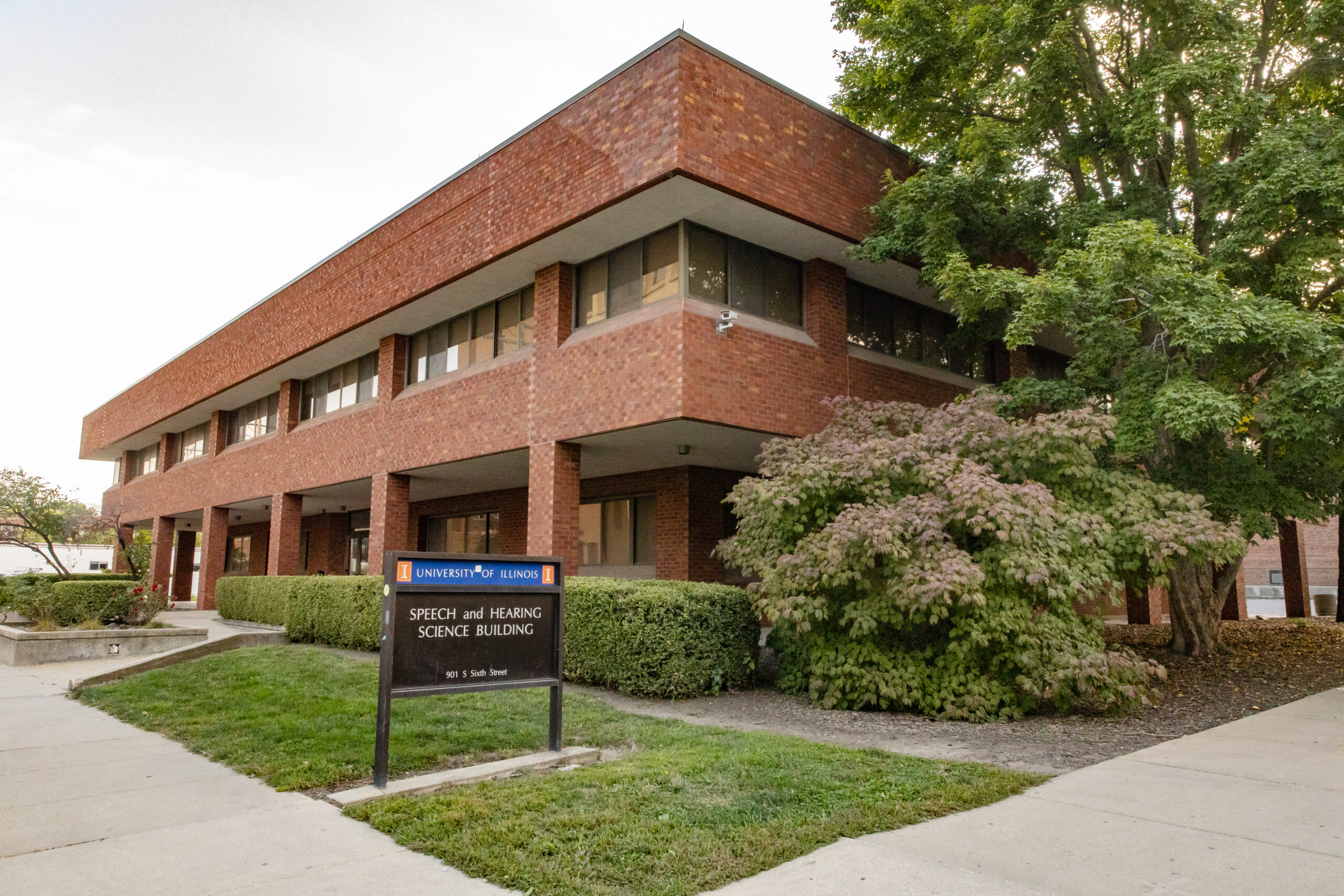
Speech and Hearing Science Building.

Today, the need for innovative models of hearing care is only increasing. With 48 million people in the United States and 477 million worldwide living with hearing loss, the demand for accessible, high-quality hearing care is growing rapidly. As a department, we are committed to supporting our students, alumni, partners, and community in addressing this global challenge.

Re-Envisioning Audiology Education at Illinois

Audiology education in general has experienced long-term challenges. Among these, a shortage of audiologists has contributed to a shortage of local clinical placement sites and clinical faculty, limiting the availability of supervised clinical training experiences. This is combined with limited applicants to our AuD program and competition from other AuD programs across the state and region. Over the past two years, the department engaged in a comprehensive review of the AuD program, assessed multiple models for long term sustainability, engaged in dialogue with statewide partners, and evaluated future trends in audiology education and clinical practice. As a forward-thinking department, we have decided to transition to new educational training models for supporting the future of hearing care.

After careful consideration, and with the best interests of our students, faculty, and the department in mind, we made the difficult decision to phase down the AuD program. As a result, we are no longer accepting applications to the AuD program.

A Continued Commitment to Hearing Health

We remain committed to educating future practitioners and leaders in hearing health. All currently enrolled AuD students will continue to receive full support from the faculty in meeting their educational and clinical requirements through the completion of their degrees. Our program continues to hold full accreditation status with the Council on Academic Accreditation in Audiology and Speech-Language Pathology (CAA). We are also designing new opportunities for students in our other degree programs to interface with our Audiology Clinic, collaborate with leaders in hearing science, and pursue interdisciplinary learning and innovation.

Our Audiology Clinic remains fully operational and continues to accept new patients and referrals without interruption. We are committed to serving the clinical needs of the university community and the public. Furthermore, we continue to pursue innovative models and partnerships as a leader in hearing throughout the state.

Designing the Future of Hearing Education and Research

Hearing science remains a core strength of our department, supported by a vibrant research community and ongoing investment in hearing innovation. Our faculty direct projects of national and international impact, to support children and adults across the lifespan with their hearing needs, and to improve clinical practice and technological solutions. With the growing influence of artificial intelligence, we are designing innovative undergraduate education opportunities that merge clinical practice with advancing computational methods, preparing students to thrive and lead in data-driven healthcare. We are building the future of hearing science and clinical practice, and we are training our PhD students to lead in this rapidly evolving field through our mentorship and interdisciplinary training.

We are deeply proud of our AuD program and the many accomplishments of our students, alumni, and faculty. We are also grateful for the valuable contributions of our adjunct faculty, emeriti faculty, and external clinical supervisors. We invite alumni, clinical partners, collaborators, and prospective students to join us in building the future of hearing science and advancing hearing care and education in Illinois and beyond.

Questions can be directed to Dr. Ian Mertes, the Director of the Audiology Program (imertes@illinois.edu).

Related News

SHS researchers bridge research and real life


Laura Mattie, left, and Meaghan McKenna exemplify how SHS researchers connect to community (Photo by Ethan Simmons)

The work at the College of Applied Health Sciences doesn’t stay in the lab—it transforms lives. Faculty such as Meaghan McKenna and Laura Mattie exemplify the college’s commitment to bridging research with community impact. Whether developing interventions for literacy in schools or building relationships with families of children with disabilities, they show how academic insights can create tangible benefits.

Mattie joined the faculty in the Department of Speech and Hearing Science in 2015. Now an associate professor, she has spent the past nine years working on research with her colleagues in SHS as the principal investigator in the Development in Neurogenetic Disabilities Lab. She said her time spent at the department has led to close relationships, both personal and professional.

“The interdisciplinary nature of the department, the university and the college really has helped me to build more collaborations, and I think that’s one of the key things to being successful in my field,” Mattie said. “Some of my collaborators are my closest friends.”

Mattie’s fall semester class, titled Children with Neurodevelopmental Disorders Across Communication Contexts, covers the development of social and communication skills in children with various neurodevelopmental disorders that her research is focused on as well. Her current research, which primarily concerns children with fragile X syndrome and Down syndrome involves longitudinal studies that require a level of personal connection with families of children partaking in her studies. 

For Mattie, being a new mom to two young girls has offered a fresh perspective on her research.

“As we’re getting closer to the end of the project and thinking of what to do next, the mom in me led to the thought, ‘How do we get information to moms and clinicians quicker?”’

Mattie said building relationships with families really allowed researchers to value their thoughts and experiences.

“I want to partner with families and clinicians—and we found this evidence that we think is helpful—but how can we package the information so they can use it every day; how can we really make it accessible for them, and instead of getting it to them in 10-15 years (the current research-to-practice gap), get it back to them quicker?”

McKenna isn’t just one of the most recent additions to the SHS as an assistant professor. She also has years of experience as a speech-language pathologist and a passion for connecting with districts, schools and educational professionals about solving problems of practice corresponding to literacy and multi-tiered systems of support.

“Forming partnerships and relationships is the most important thing I do,” she said.

Working in SHS is a position that is far from stationary: McKenna’s work pulls her across not only campus, but into surrounding cities and school districts where she aims to narrow the gap between research and practice. She currently partners with her colleague Amber Ray in the Department of Special Education and Holy Cross School in Champaign on writing intervention research. 

McKenna has also joined three other schools and districts who connected with her about their mutual interest in solving problems of practice corresponding to writing. In Danville, she is collaborating with the curriculum department and classroom teachers as K-2 instructional guides are created that highlight daily writing activities aligned with the core curriculum and evidence-based practices. In Blue Ridge, Illinois, professional development sessions that address writing instructional priorities identified by classroom teachers are held monthly. In Chicago, a Pre-K-8 school formed an instructional leadership team committed to vertical alignment of how the writing process (cycle) is taught and student writing is evaluated.

“I think it’s important for us to bridge what we’re doing in research and think about how it translates into practice,” she said. “I don’t think it’s productive to be in a research lab all day or writing papers if it doesn’t have any impact on the community or individuals who are going to be applying the findings. The opportunity to co-learn with schools and districts across the state (who are) committed to prioritizing writing has been the highlight of my second year in Illinois.”

Editor’s note:

To reach Vince Lara-Cinisomo, email vinlara@illinois.edu.
 

Related news

Fogerty-led research team tackles hearing health disparities with innovative at-home assessment


An Illinois research team will work to implement an at-home assessment for hearing, including a smartphone app (Stock image)

Approximately 37.5 million adults in the United States experience hearing loss. A team from the University of Illinois is working to alleviate barriers in accessibility and affordability to hearing health care.

Dan Fogerty, an associate professor in the Department of Speech and Hearing Science in the College of Applied Health Sciences, recently received two grants to support his project, titled “Empowering Illinois Communities for Better Hearing Health.” The project is focused on improving access to hearing screening through an at-home assessment and focusing on a primary hearing complaint: difficult hearing in noisy environments. 

One grant is from the Chancellor’s Call to Action Research Program. This program aims to empower the university community to address the greatest challenges facing our society and seek new solutions. The second grant, from Campus Research Board, supports the work done to create the self-administered hearing assessment. Total funding from the grants amounts to just under $100,000.

“Current hearing screening methods, which consist of detecting simple tones in quiet, often fail to address real-world challenges,” Fogerty said. “Hearing screening can be improved by more accurately assessing the listening difficulties that people complain about and may be more motivated to address.”

Research for this gap in treatment for hearing in noisy environments has been active for decades, Fogerty said. 

“It involves both technology-focused solutions, such as advanced hardware and signal processing to reduce noise and enhance speech, as well as aural rehabilitative strategies involving education and training,” Fogerty said. “The focus of this project is to help identify the specific challenges that an individual might have when listening in noisy environments in order to customize the collection of strategies that might be most useful for them.”

A team consisting of researchers from the Audiology and Speech-Language Pathology Clinic, the College of Agricultural, Consumer and Environmental Sciences and the Office of the Vice Chancellor of Research and Innovation will develop and implement an at-home assessment, including a smartphone app. Over the course of the project, they will also examine implementation in the lab, the audiology clinic and in communities across the state.

Fogerty said this combined interdisciplinary approach will help them tackle accessibility and affordability issues.

Hearing screening can be improved by more accurately assessing the listening difficulties that people complain about and may be more motivated to address.

Dan Fogerty

Associate Professor

“Our partnership with the audiology clinic ensures the translation of this research into clinical practice. ACES brings expertise in community engagement, specifically through the Illinois Extension offices which will facilitate public education and access,” Fogerty said. “OVCRI contributes research infrastructure and computational expertise through NCSA.”

NCSA, the National Center for Supercomputing Applications, will support the development of a hearing app that will expand access to the innovative hearing assessment. The high prevalence of smartphones allows online and app-based testing to be possible.

Fogerty said addressing hearing disparities is a priority because untreated hearing loss has widespread medical, social and economic consequences. Adults in underserved communities can be far away from hearing centers and often face shortages in hearing services with healthcare providers. Economic barriers, such as travel costs or time away from work, may also interfere with affordability.

“Mobile self-administered hearing assessments, downloadable to a smartphone, will literally put personalized hearing health information at our fingertips,” Fogerty said.

At-home hearing assessments are innovative because they enable advanced hearing care remotely, removing barriers and costs associated with in-person clinic visits.

“These tests can be conducted anywhere at any time,” Fogerty said. “This also increases the likelihood of patient follow-up and compliance with testing recommendations due to the convenience and flexibility of the assessment.”

Hearing aid use has been reported as low as 8.6% among adults with some hearing handicap. Fogerty said there are a variety of reasons for this statistic. 

“Gaps in insurance coverage and perceived social stigma may contribute,” Fogerty said.  “Underestimating hearing difficulties, limited awareness of potential treatment options, or difficulty accessing services are other common reasons. Our self-assessment is designed to address some of these factors.”

Even with some over-the-counter hearing aid options, OTCs are still relatively new and many barriers remain.

“Limited awareness of hearing difficulty or treatment, stigma, out-of-pocket costs [are still factors],” Fogerty said. “OTCs are also only intended for use by adults with perceived mild to moderate hearing loss without other medical conditions.”

The funding for this project will start in July and last one year, with the home-based assessments planned to start in early 2026.  Fogerty anticipates recruiting 200 adults across all study phases, which will include testing in the laboratory, audiology clinic and community.

Related news

The science of sound: Understanding how the brain helps us hear in noise


Ian Mertes has been interested in how the brain influences the inner ear since he was a graduate student. (Photo provided)

For millions of people worldwide, hearing loss is not simply a matter of volume but clarity—especially in noisy environments. Struggling to distinguish a single voice in a crowded restaurant, a busy office or even a family gathering is a common report among those with hearing difficulties. Researchers at the forefront of auditory science are investigating an essential but often overlooked aspect of hearing: the brain’s role in processing sound.

A study led by Department of Speech and Hearing Science Associate Professor Ian Mertes, titled “Olivocochlear Efferent Function: Associations with Hearing in Noise and Listening Effort,” aims to deepen our understanding of how the brain influences our ability to distinguish speech amid background noise. The project, supported by a three-year, $570,000 grant from the National Institutes of Health, will examine the neurological mechanisms that contribute to hearing in noise and the effort required to listen under challenging conditions.

Mertes has been interested in how the brain influences the inner ear since he was a graduate student.

Hearing is often thought of as a passive process: sound waves enter the ear, are converted into neural signals, and are sent to the brain for interpretation. However, the reality is far more complex. The auditory system has a top-down control mechanism that influences how the ear processes incoming sounds. This system, known as the medial olivocochlear efferent system, acts as a neural feedback loop that modulates auditory input.

But Mertes said there are still unanswered questions about how this system contributes to listening in everyday life. Efferent pathways originate in the brainstem and extend to the cochlea, the inner ear’s sensory organ responsible for converting sound waves into electrical signals. These pathways play a crucial role in adjusting how we hear in noisy environments. By selectively dampening background noise and enhancing speech signals, the medial olivocochlear system may improve our ability to focus on important sounds while ignoring irrelevant ones.

“My study also examines if the medial olivocochlear reflex is involved in listening effort,” he said. “Even if the medial olivocochlear reflex does not improve someone’s performance on a speech-in-noise task, it may reduce the mental resources needed to listen in background noise.”

Investigating Speech-in-Noise Recognition

The study aims to explore how variations in this top-down control contribute to an individual’s ability to understand speech in noisy settings. Researchers will work with adults who report varying levels of difficulty in hearing amid background noise. By measuring their auditory responses under controlled conditions, the team hopes to uncover patterns that link efferent function to speech recognition abilities. Mertes said that in addition to people with hearing loss, it’s estimated that up to 44 million U.S. adults have clinically normal hearing and yet report that they have difficulty hearing in noisy situations. 

“We are still trying to understand the underlying reasons for these difficulties,” he said.

Beyond understanding speech in noise, the study will also explore the cognitive effort required to listen in difficult auditory environments

Participants will undergo a series of tests assessing their ability to discern speech against different levels of background noise. These assessments will be paired with physiological measurements of inner ear and auditory brainstem activity, allowing the researchers to determine how the brain’s feedback mechanisms influence perception. By comparing individuals with and without self-reported hearing difficulties, the research team aims to identify specific deficits in the olivocochlear system that may contribute to these challenges.

“We hypothesize that medial olivocochlear reflex function will be reduced in the group that reports having significant difficulties because they have less noise reduction happening at the level of their inner ear,” Mertes said.

Measuring Listening Effort

Beyond understanding speech in noise, the study will also explore the cognitive effort required to listen in difficult auditory environments. Listening effort is a critical but often subjective aspect of hearing. Even if two individuals achieve similar results on a hearing test, one may expend significantly more mental energy to achieve the same level of comprehension.

Implications for Future Research and Interventions

The findings from this study could have significant implications for hearing health care. Currently, hearing aids and assistive devices primarily amplify sound, but they do not always enhance speech clarity in noisy environments. By better understanding the brain’s role in modulating auditory input, researchers may pave the way for new treatments or hearing aid technologies that target neural mechanisms rather than just the mechanical aspects of hearing loss.

For example, future hearing aids might be designed to simulate the brain’s natural medial olivocochlear efferent control system, selectively amplifying relevant sounds while suppressing background noise more effectively. Additionally, clinicians could use diagnostic tests based on medial olivocochlear efferent function to personalize treatment strategies, ensuring that interventions are tailored to an individual’s specific auditory processing profile.

A Step Toward Better Hearing Solutions

This study represents an important step in bridging the gap between neuroscience and audiology. By shedding light on the intricate relationship between the brain and the ear, researchers hope to improve outcomes for individuals struggling with speech-in-noise recognition.

“I’m currently focused on understanding the physiology that is involved in hearing in background noise,” Mertes said. “I’m hopeful that my work will help contribute to improved diagnosis and treatment of listening difficulties, especially for people with clinically normal hearing.”

Editor’s note:

To reach Vince Lara-Cinisomo, email vinlara@illinois.edu.
 

Related news

Q&A: Pamela Hadley, SHS Department Head


‘We have such a great group of remarkable scientists who are really committed to rigor in their research,’ Department Head Pamela Hadley said. (Photo by Ethan Simmons)

Q: This year’s deeper dives into the history of the Department of Speech and Hearing Science at the University of Illinois have been fascinating. Was there anything in any of these explorations that surprised you, even in your role as the department’s head?

A: Oh, absolutely. For example, I didn’t know how instrumental faculty at the University of Illinois had been in the development of the ASHA [American Speech-Language-Hearing Association] journals. The field continues to grapple, even today, with how to disseminate scientific findings. 

There also are many discussions about opening up access to science, especially those things that are federally funded by taxpayer dollars. The internet and social media have fundamentally changed the number of options for sharing scientific findings and clinical resources with the public. That’s something that, looking forward, we will continue to work through. With regard to the SHS at 50 stories, it was really important for me to appreciate the role that Illinois faculty had in the development of those early journals at the very beginning.

Q: What are some topics you would have liked to explore for this series if we’d had more time?

A: Something we talked about early on was exploring paradigm shifts in the field. There are individuals from Illinois who were responsible for changing the way in which our field approached clinical practice. Some of those researchers include Dean Emerita Tanya Gallagher and Carol Prutting, who were mentored by Tom Shriner Jr. in the 1970s. Together they were responsible for bringing the pragmatics revolution into the field of speech-language pathology and establishing the subfield of clinical pragmatics, focused on how language is used in conversational interactions. 

Another example: Elaine Paden and Ph.D. student Barbara Hodson contributed to a paradigm shift in how we treat young children’s speech-sound disorders. They were instrumental in shifting the field toward treating classes of sounds to improve the intelligibility of young children’s speech more efficiently. That was a huge paradigm shift.

Professor Emerita Adrienne Perlman was an advocate for expanding the speech-language pathology scope of practice to include dysphagia, or swallowing disorders. When I was a clinical student, swallowing wasn’t part of our scope of practice yet! Now it’s such a fundamental aspect of medical SLPs’ role in hospitals and skilled nursing facilities in particular.

Finally, it would have been wonderful to highlight major research projects throughout the history of the department, such as the Illinois International Stuttering Research Project that was led by Professor Emeritus Ehud Yairi.

Q: What’s impressed you the most about the department’s growth and development since you joined the faculty?

A: I’m so impressed with my faculty colleagues. We have such a great group of remarkable scientists who are really committed to rigor in their research. They hold themselves and their students to high standards, and at the same time, they’re just truly wonderful people who’ve been so committed to delivering high-quality instruction through some really unprecedented times. I admire their resilience. I enjoy their company. In short, I’m just really proud to lead this department.

Q: What are some new areas in this field that recent graduates, current students, and students who will join you in the next few years have, or will have, the expertise to address as they move into their careers?

A: Telehealth is a professional area that has really expanded rapidly in the last three years. Prior to COVID-19, students weren’t trained to assess or treat via telehealth at all. It was considered to be an advanced clinical skill and not something that students would be expected to learn until they had years of clinical practice under their belt.

During the stay-at-home mandates, telehealth became a lifeline, and it caused our professional bodies to reconsider whether this was an essential skill that all our students in training needed to have. We also had many research projects that were required to pivot to remote data collection. Students today are far more advanced in their knowledge and skills in this area, and they are better prepared to conduct research and deliver clinical services remotely than prior graduates.

Q: Let’s talk a bit more about the department’s Audiology and Speech-Language Pathology Clinic. You’ve referred to it as the “crown jewel” of the department’s community outreach efforts. How would you like to see the clinic evolve?

A: This summer we had a public meeting as part of a follow-up, in-person site visit from our accreditation body, and a number of individuals who received services from our clinic and their family members attended the meeting. They just raved to the site visitors about the services that they were receiving and the impact of those services on their well-being and quality of life. To hear that kind of feedback from the families that we serve just means everything—it’s so essential to what we’re trying to accomplish in terms of our public engagement and outreach, and it’s testimony to how critically important communication skills are to participation in everyday activities. That encapsulates why I’ve referred to the clinic as a “crown jewel.” 

I’d really like to see the clinic expand its sphere of influence beyond the Urbana-Champaign community. My dream for the clinic would be for it to be a center of excellence, particularly for families in rural communities that may not have access to state-of-the-science resources in their local communities. Also, it would be my hope that we could bring individuals here for comprehensive assessments and develop the types of support those families might need for ongoing care, and then maintain that contact through telehealth with educators or health care providers in their local communities. I think that that could be really powerful.

Q: We’ve established through these stories that the SHS faculty at Illinois have been pioneers in the research, and they’ve been leaders in their profession since the beginning. Will these stories serve as inspiration for future activities? Where do you think this department can lead your disciplines in the future?

A: I think these stories helped us bring history alive and explored some topics in a more conversational way than reading a review of the history of the department. What I most hope, though, is that these stories provide our students and faculty with a strong sense of where they come from and, really, a deeper appreciation of the fact they’re standing on the shoulders of giants—pioneers who really established the profession and were influential from the beginning. 

Where do I think SHS will lead the discipline in the future? I envision SHS faculty and students contributing to innovations in health technology, including the use of that technology to improve treatment options, and evaluating how different design features might promote people’s use of those technologies and what new technologies are desired. Those health technologies could include how we are designing and developing hearing aids, which treatments best fit an individual’s cognitive profiles and communication needs, how we interact with augmentative and alternative communication devices, how we use speech recognition devices, or how we use different kinds of technologies to age in place successfully. Technology has moved really quickly just in the last year. So the next 50 years? It’s hard to imagine where we’ll be!

For more on the 50th anniversary of SHS at Illinois, check out our stories at shs.illinois.edu/shs-50.

Related news

Pamela Hadley honored with Stenberg Endowed professorship


Pamela Hadley, center, with faculty and staff of the Department of Speech and Hearing Science (Photo by Craig Pessman)

The daughter of a farmer in rural Illinois, Pamela Hadley had no “schema” for becoming a university professor. But a high school career filled with self-expression helped guide her toward an illustrious academic career that was culminated with a top honor.

Hadley, the head of the Department of Speech and Hearing Science and a professor, was appointed as the inaugural Charles and Kay Stenberg Endowed Professor in Disability Research in a ceremony on April 30.

The appointment is a testament to Hadley’s decades-long dedication to advancing the science of language development in young children, particularly those with developmental language disorder, said Cheryl Hanley-Maxwell, dean of the College of Applied Health Sciences.  

“Pam Hadley has made significant contributions to language science through highly regarded translational research, mentored numerous students into clinical and academic careers, and benefitted the department, university and profession at large through a variety of service activities,” Hanley-Maxwell said.  

The named professorship “is an honor that is accorded to outstanding scholars who have well-established records of excellence in research, teaching, and public engagement,” Hanley-Maxwell added.

The professorship was made possible by a generous endowment from Charles and Kay Stenberg, both Illinois alumni who experienced firsthand the challenges of navigating life with disabilities in an era before the Americans with Disabilities Act. Though they have passed, their legacy lives on through their commitment to disability research and through the continued support of Kay’s brother, Hugh Wishart. 

“Chuck and Kay were passionate about accessibility and believed deeply in supporting research that improves the lives of people with disabilities,” Hanley-Maxwell said.
Hadley also expressed deep gratitude to the Stenberg family, colleagues, students, and family members who shaped her journey. 

“This is rightfully a shared honor,” she said. “I’m profoundly humbled to be named the Charles and Kay Stenberg Professor. The Stenbergs faced and overcame many barriers, and they endowed this professorship to help others do the same.”

Hadley reflected on a life shaped by both personal experience and professional purpose. Raised in rural Henry County, Illinois, she credited her parents for instilling in her a love for inquiry and compassion. Her father, a farmer, encouraged her to solve story problems at dinner. Her mother, a nurse, brought her along on Saturday visits to residents in a skilled nursing facility. “We’d call that volunteering as a conversational partner today,” she joked, noting it was her first exposure to the impact of communication in caregiving.

Her academic journey took her from Augustana College, where she experienced immersive clinical training, to the University of Kansas, where she joined a research preschool program that would shape her scholarly trajectory. 

“It was in that preschool that I first noticed how children with communication disorders were not socially integrated,” she said. That observation led to a research assistantship, publications, and ultimately a Ph.D. in  child language under the mentorship of Professor Mabel Rice.

Pam Hadley has made significant contributions to language science through highly regarded translational research, mentored numerous students into clinical and academic careers, and benefitted the department, university and profession at large through a variety of service activities.

Cheryl Hanley-Maxwell

Dean, College of Applied Health Sciences

Over her career, Hadley has led pioneering longitudinal studies that have reshaped how clinicians and researchers understand early language development. Her work has focused on early identification and intervention for children with Developmental Language Disorder (DLD)—a condition that affects 7 to 10 percent of school-aged children and often goes undiagnosed until it has already begun to impact learning and social development.

She led a groundbreaking multi-site clinical trial, supported by the National Institute on Deafness and Other Communication Disorders, evaluating a parent-implemented language intervention. 

“I’m thrilled to report that the caregiver-implemented intervention resulted in positive effects on vocabulary and grammar,” she said, noting that the professorship would play a critical role in disseminating these findings to clinicians and families.

As head of the Department of Speech and Hearing Science, Hadley led with empathy and pragmatism during the COVID-19 pandemic. She established virtual check-ins, championed remote accessibility, and helped the department resume clinical services quickly and safely. Her leadership style, she said, is grounded in the deep respect she holds for her colleagues and their shared mission: “to promote improved communication and health for individuals with disabilities across the lifespan.”

Throughout the ceremony, attendees were reminded of Hadley’s enduring commitment to education. Undergraduate and graduate students alike benefit from her guidance, both in the classroom and in the lab. As one of the few national experts on early grammatical assessment and intervention, her work translates directly into tools and strategies used by speech-language pathologists and parents.

In concluding her remarks, Hadley acknowledged her most personal source of support—her family. Her husband, Matt Rispoli, a retired SHS faculty member, and their daughters have shared in the journey. 

“They’ve always graciously shared me with my students and my work,” she said, adding that the family’s shared love of hiking serves as a cherished escape from her many professional responsibilities.

As Dean Hanley-Maxwell presented the medallion that accompanies a named professorship, she emphasized what the moment represented: a celebration of achievement, but also a reaffirmation of the university’s mission to foster research that has real-world impact. 

“Pam, your outstanding work has added to the prestige of this college and university,” she said. “We are grateful for and proud of your commitment to helping children with language disabilities get a better start in life.”

Editor’s note:

To reach Vince Lara-Cinisomo, email vinlara@illinois.edu.
 

Related news

Department of Speech and Hearing Science
901 South Sixth Street
M/C 482
Champaign, IL 61820
217-333-2230