From the lab to the concert hall, virtual reality plays a growing role in acoustics studies


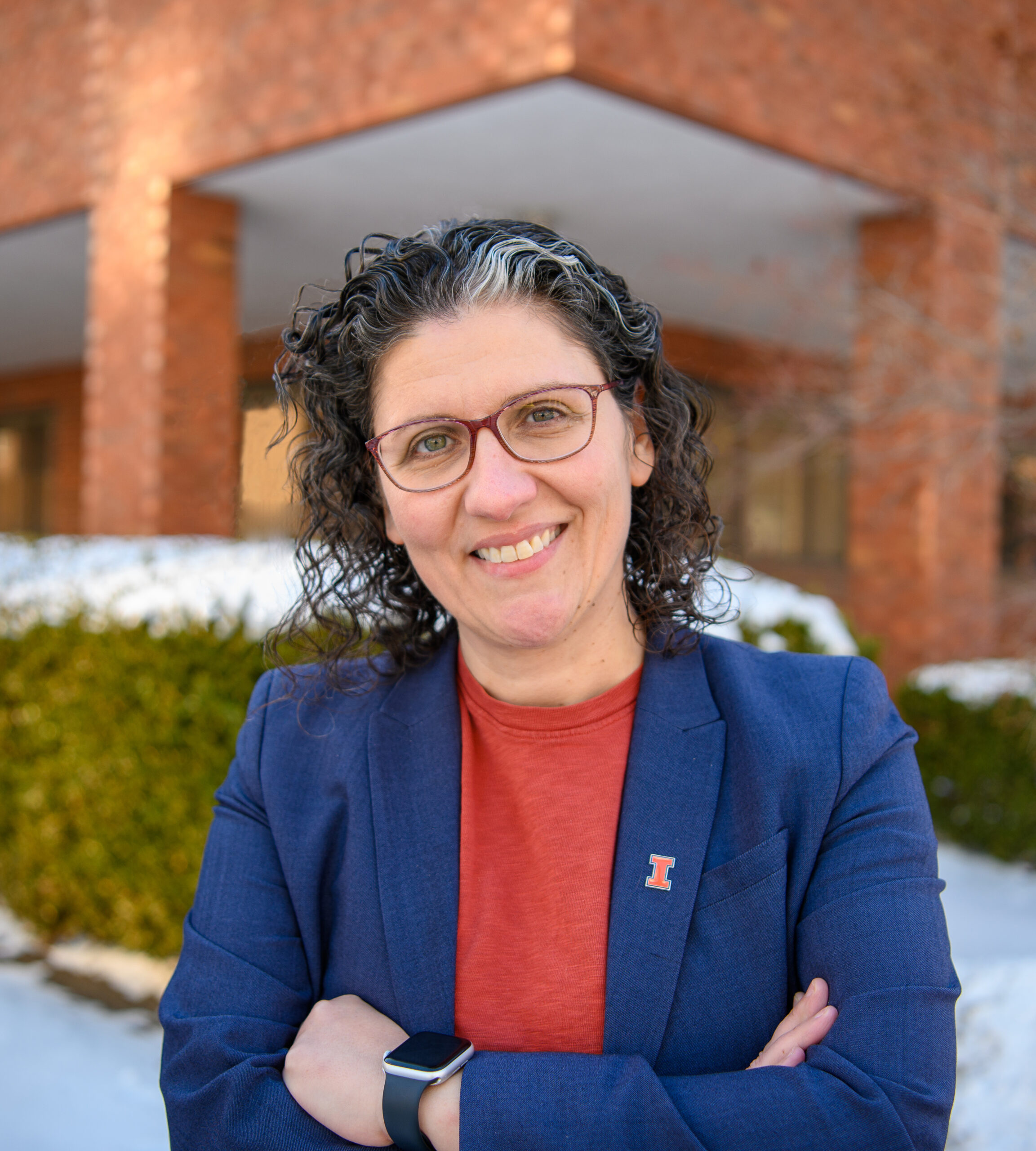
To simulate classrooms, performance halls and other indoor environments, the Speech Accommodation to Acoustics Lab uses virtual reality and “auralization” techniques in controlled settings. (Photo provided)

At the Speech Accommodation to Acoustics Lab, researchers are trying to solve a common problem for teachers and vocal performers. How can they be heard and understood without straining their voices? 

Pasquale Bottalico, associate professor of speech and hearing science, runs the Speech Accommodation to Acoustics Lab, which investigates the acoustical conditions of rooms—classes, restaurants and concert halls alike—that lend themselves to intelligible speech with minimal vocal effort from the speakers. 

Over the last 5 years, the lab’s research has steered toward virtual reality and auralization, a technique to replicate the sound conditions of different spaces, to simulate these indoor conditions and make their studies more applicable to real-life scenarios. Here, Bottalico expands on his SpAA Lab’s recent projects and VR experiments.

When did your lab begin using virtual reality? What compelled you about this type of technology for your area of research?

Our lab began working with virtual reality (VR) in 2020 as part of our broader research on how acoustic environments influence voice production and communication. In many traditional speech and voice studies, experiments are conducted in quiet laboratory settings that do not fully represent the complex environments people encounter in everyday life.

VR provides a powerful way to bridge that gap. It allows us to recreate realistic environments—such as classrooms, concert halls, or social settings—while still maintaining precise experimental control. For example, VR makes it possible to manipulate room acoustics, background noise and visual cues independently and observe how speakers adapt their voice. Research has shown that both auditory and visual environmental information can influence voice production and perception, highlighting the importance of studying communication in multisensory contexts rather than purely auditory ones.  

For virtual reality studies you’ve worked on, could you describe what these experiences look, feel, and sound like for participants?

Participants wear a virtual reality headset and headphones that immerse them in a simulated environment. For example, someone might find themselves standing in a classroom, a concert hall or a restaurant while speaking or singing. The visual environment allows them to look around the space, while spatialized audio reproduces how their voice would sound in that particular room.

This means participants hear realistic acoustic effects such as reverberation, reflections and background noise. Studies using these methods have shown that speakers and singers naturally adjust their vocal production depending on the acoustic properties of the environment, even when those environments are simulated.  

What equipment or tools do you use to simulate these experiences?

To create these simulations, we combine several technologies. 

Participants typically use a VR headset for the visual environment and high-quality headphones to deliver spatial audio that reproduces realistic room acoustics.

Behind the scenes, we use auralization techniques, which allow us to simulate how sound propagates in real spaces such as classrooms, concert halls or lecture halls. We use real measurements to simulate the acoustics of the environments, like a University of Illinois classroom, or venues at the Krannert Center for the Performing Arts. 

Microphones and acoustic analysis tools are also used to measure vocal parameters such as sound pressure level, pitch, and vocal effort while participants interact with the virtual environment.

Because virtual reality can replicate the sensory conditions of real communication environments, it may help improve the transfer of therapeutic strategies from the clinic to everyday life.

Pasquale Bottalico

Associate Professor Speech and Hearing Science

Tell us more about VR as a training or therapy tool. How might virtual reality benefit professional voice users and individuals with voice disorders?

VR has enormous potential as a training and therapy tool, especially for professional voice users such as teachers, singers and public speakers. These individuals often need to communicate in demanding environments for long periods of time, which can lead to vocal fatigue or voice disorders.

One challenge in voice therapy is that exercises performed in a quiet clinic may not transfer easily to real-life environments. VR can help address this problem by allowing people to practice communication in realistic scenarios—such as teaching in a noisy classroom or speaking in a crowded social setting—while still being in a safe and controlled therapeutic environment.

Because VR can replicate the sensory conditions of real communication environments, it may help improve the transfer of therapeutic strategies from the clinic to everyday life.

What are some examples of virtual reality studies you’ve performed? What did you learn?

Our lab has been exploring VR applications for voice and speech research through several projects and doctoral dissertations.

For example, the doctoral work of Charles Nudelman, Ph.D., supported by the Raymond H. Stetson Scholarship, examined how visual aspects of an environment—such as room size and occupancy—affect voice production using immersive virtual reality. His research demonstrated that visual characteristics of a room can influence acoustic voice parameters and self-perceived vocal fatigue and discomfort, highlighting the importance of visual cues in voice production.  

Similarly, the doctoral research of Ümit Daşdöğen (now at CSD University of Delaware), funded through an NIH R21 grant, investigated how auditory, visual and audiovisual sensory inputs influence voice perception and production in immersive VR environments. This work showed that multisensory factors can significantly affect vocal loudness, vocal effort, and acoustic voice parameters, helping establish a scientific foundation for the use of VR in voice training and therapy.  

Another related project is the doctoral research of Carly Wingfield at the Illinois School of Music in collaboration with Professor Yvonne Gonzales Redman, which was supported by the prestigious Kate Neal Kinley Fellowship. Her work explored the use of VR simulations to help singers rehearse in virtual replicas of performance venues. The results suggested that practicing in VR environments allowed singers to better adapt to the acoustics of the real performance space and feel more confident when performing in unfamiliar venues.  

We also currently have a new project underway in the lab focusing on virtual reality–based voice therapy and communication training. This study involves Giulia Fusari, a visiting scholar from the Politecnico di Milano, and Mariah Bates, a master’s student in Health Technology at the University of Illinois completing her capstone project with our lab.

The project is developing a human-centered VR platform designed to simulate realistic conversational environments, such as social interactions in restaurants or other everyday communication settings. Participants complete weekly sessions over several weeks, and we evaluate usability, communication effort, realism of the environment and overall user experience. The goal is to better understand how immersive environments can support communication training and voice therapy in ecologically valid contexts.

In future developments, these types of VR environments could also be adapted to support individuals with neurological conditions that affect speech and voice, such as Parkinson’s disease, where patients often struggle to generalize speech therapy skills from the clinic to real-world communication settings.

If there are studies open to participants, how can they reach out?

Individuals interested in participating in research studies in our lab can contact us directly at pb81@illinois.edu. We regularly recruit participants for studies involving speech perception, voice production and immersive communication environments.

Editor’s note:

To learn more about the Speech Accommodation to Acoustics Lab, visit their website.



Related news

Two AHS faculty members recognized for excellence in instruction


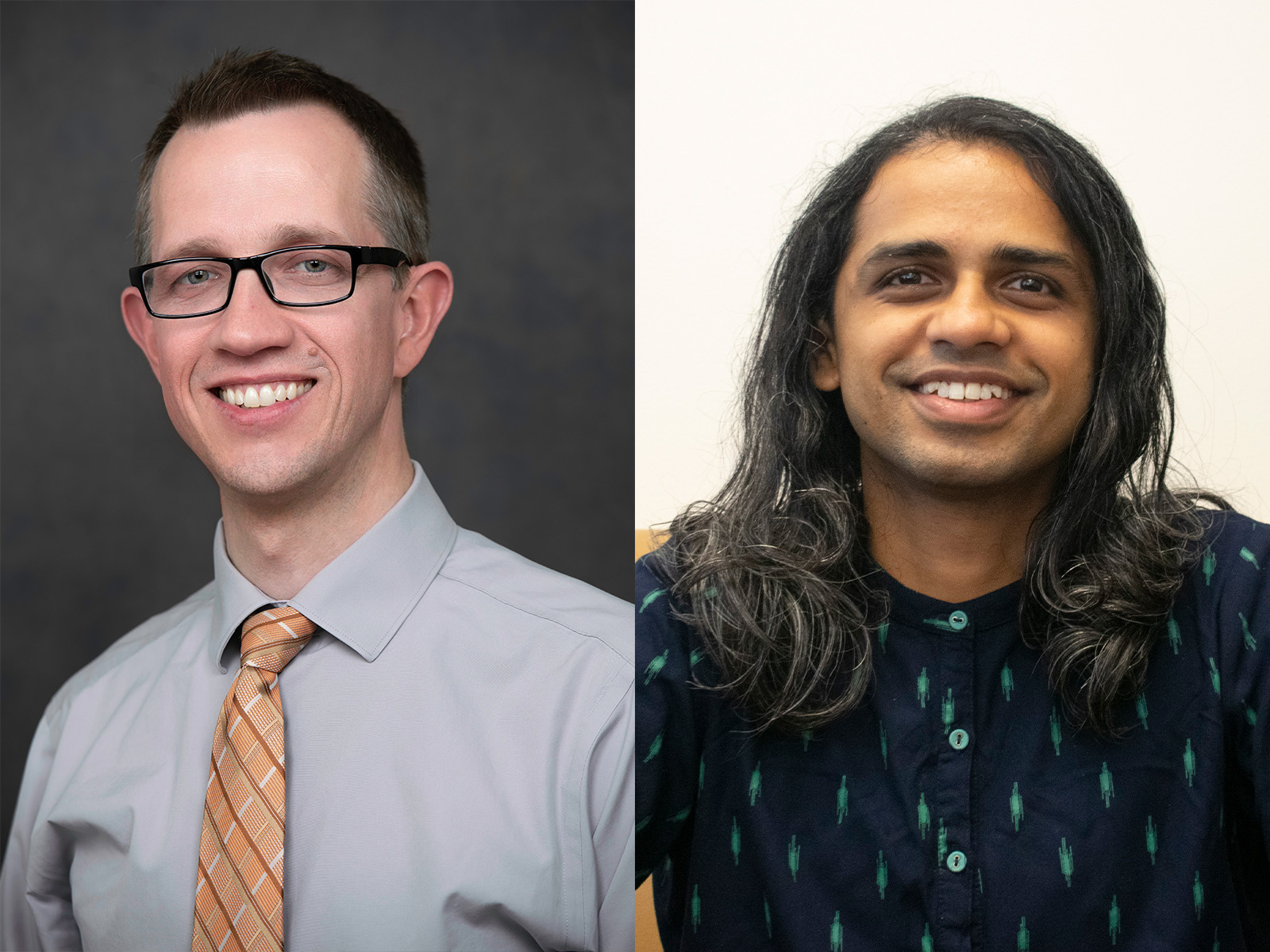
SHS Associate Professor Mary Flaherty (left) and HK Adjunct Instructor Christy Bazan were recognized for excellence in instruction.

Every year, the University of Illinois Office of the Provost recognizes faculty members for excellence in instruction, who are nominated by committees of faculty, staff and students at each college.

This year, two Applied Health Sciences faculty members won campus awards for their teaching and mentorship in the classroom: Speech and Hearing Science Associate Professor Mary Flaherty won for Excellence in Undergraduate Teaching, and Health and Kinesiology Adjunct Instructor Christy Bazan won for Excellence in Online Teaching.

Both instructors will be recognized at the university’s Celebration of Academic Excellence on Wednesday, March 25, at the Krannert Center for the Performing Arts.

On top of mentoring student researchers through her Child Speech Research Lab, Flaherty teaches undergraduate- and graduate-level courses in Speech and Hearing Science, such as SHS 358: Understanding Research Methods in Communications Sciences and Disorders and SHS 352: Hearing Health and Society, along with advanced SHS 552: Pediatric Audiology and SHS 570: Evidence-Based Practice for SLPs and AuDs.

Bazan, a licensed environmental health practitioner, teaches several community health-oriented classes in the college and Department of Health and Kinesiology, including AHS 199: Applied Data Solutions in Health Sciences, HK 204: Drug Use and Misuse—a subject she co-authored a book on—HK 207: Introduction to Epidemiology and HK 408: Environmental Health.

The College of Applied Health Sciences asked them about what this recognition means to them, and what they’d like to say to students past and present.

What does this recognition mean to you?

Bazan: I am honored and grateful to receive this online teaching award.  With support from AHS and my colleagues, many doors were opened to me that allowed me to grow in teaching in online environments.  From course redesign, Open Education development, video recoding lectures and developing online content, I have placed emphasis in my courses that shows how important it is to ensure students learn and have experiences just like they might when taking an in-person course.

Flaherty: This recognition means a great deal to me because my undergraduate teaching is centered on helping students learn how to evaluate information responsibly and use evidence thoughtfully in real-world decisions. Many students encounter an overwhelming amount of health and science information online, and a core goal of my teaching is to help them distinguish credible evidence from oversimplified or misleading claims. I aim to make research feel accessible and relevant, while also supporting students as individuals through structure, feedback, and mentorship. Being recognized for this work affirms the importance of teaching students not just what to learn, but how to think, question and apply evidence with care.

Anything you’d like to say to past and current students?

Bazan: My goal as an educator is to cultivate learners who are critical thinkers, empathetic communicators and lifelong learners. I want students to leave my courses not only with knowledge of content but with the confidence and tools to apply that knowledge ethically and creatively in their own lives and in their own communities. Keep learning, learn things in new ways, connect with your professor and your peers in your online classes and engage thoughtfully in an increasingly interconnected world.

Flaherty: This award belongs to my students. I love teaching, and I care deeply about undergraduates and their growth, both inside and outside the classroom. My students show up with curiosity, honesty and a willingness to engage deeply, and they continually remind me why this work matters. Their questions, perspectives and trust shape how I teach, and their commitment to learning pushes me to be a better instructor every year. I am grateful to every student who has shared their time, effort and openness with me. This recognition reflects what we have built together.

Editor’s note:

To reach Mary Flaherty, email maryflah@illinois.edu.
To reach Christy Bazan, email cbazan3@illinois.edu.
 

Related news

A message to Speech and Hearing Science, from Department Head Georgia Malandraki


Georgia Malandraki, professor and department head of Speech and Hearing Science, has begun her second month as department head. (Ethan Simmons/College of AHS)

Dear Speech and Hearing Science community,

It is with pride and a deep sense of responsibility that I begin my role as Head of the Department of Speech and Hearing Science. Returning to Illinois, where I completed my Ph.D. and where many of our distinguished faculty shaped my early career, feels like coming home. It is both humbling and exciting to now have the opportunity to give back to the community that supported me from the start.

Over the past several months, I have begun to learn the many stories, strengths, and aspirations that make SHS such a vibrant community. Every conversation with faculty, staff, and students has reminded me of something I have known since I was a student here: SHS is a community where excellence and compassion go hand in hand, and where people genuinely care about making an impact. I am grateful to join you as we continue building on that foundation together.

I am thankful to be joining the department at a time of remarkable momentum, built under the leadership of former Head and Professor Pamela Hadley and Dean Cheryl Hanley Maxwell. The shared governance model, the selfless and dedicated service of faculty, the collective passion for impactful research and clinical training, and the strong commitment to inclusion that I have witnessed during this transition are outstanding.

Equally impressive is the work ethic and dedication of our faculty, staff, and students, clear indicators of the remarkable potential ahead. Importantly, the support and enriching environment provided by the College of Applied Health Sciences and the University as a whole foster collaboration, innovation, and sustained excellence, creating the conditions for SHS to grow and continue its legacy as one of the leading departments in the state and the country.

As we look toward the future, I see a department that not only sustains this legacy but continues to grow its reach locally, nationally, and globally. Together, we will focus on our shared goals:

  • Strengthening our position as a global leader in research and clinical training in communication sciences and disorders
  • Empowering students through exceptional and forward-thinking education
  • Expanding our engagement with communities and partners who rely on our expertise
  • Growing the resources and support needed to enhance discovery, education, and service

These are meaningful goals, and I am confident we can achieve them. The talent, commitment, and heart I see within SHS are truly remarkable.

In the coming months, I look forward to hearing your ideas, learning from your experiences, and working with you to shape the next chapter of SHS. I welcome perspectives from everyone—students, alumni, faculty, staff and friends—because the future we create together will be stronger for it.

Thank you for the very warm welcome. I am inspired by this department, energized by its potential, and honored to walk forward with you.

With warmest regards,
Georgia A. Malandraki, Ph.D., CCC-SLP, BCS-S, ASHA Fellow
Professor and Head

Related news

SHS researchers patent method to extract speech from noise using high frequencies


Associate Professor Brian Monson and Speech and Hearing Science Ph.D. student Rohit Ananthanarayana.

When we speak, the air moving through our vocal cords generates soundwaves vibrating at different frequencies: the higher the frequency, the higher the pitch. 

Most of our modern audio technology, including hearing aids, headphones, and phone conversations chop off the “top end” of these soundwaves to compress the information coming in while keeping speech understandable. 

But these extended high frequencies—8,000 Hz and above—contain important signals in the human voice, especially for comprehending speech in noisy environments. 

Two researchers in the Department of Speech and Hearing Science at the University of Illinois Urbana-Champaign, Associate Professor Brian Monson and doctoral student Rohit Ananthanarayana, have patented an algorithm to identify and extract speech signals from noise by using extended high-frequency information. 

The technique is novel, and with some investment, could be mapped onto existing modern hearing aids, earbuds and more. 

Where are these high frequencies useful? Picture a restaurant date where you’re trying to pay attention to your partner speaking on the other end of the table, and voices of other customers are bouncing all around you. 

“In those noisy settings in particular, that’s when these higher frequencies become valuable,” Monson said. “All the background noise masks out and interferes with those low frequencies, whereas these really high frequencies tend to stay pretty stable and unmasked, undegraded by the background noise.” 

Humans can hear frequencies vibrating from 20 Hz all the way up to 20,000 Hz. Most modern hearing aids capture frequencies up to 6,000 Hz, which covers most everyday sounds. Most clinical hearing tests don’t test subjects’ hearing above this range. 

Consonant sounds called “voiceless fricatives,” such as “s,” “sh,” “f” and “ph” sounds, contain energy above 8,000 Hz. Through grant-funded experiments, the researchers have shown the usefulness of these high-end frequencies—such as determining whether someone is facing you and speaking, or if they’re facing a different direction. 

In those noisy settings in particular, that’s when these higher frequencies become valuable.

Brian Monson

Associate Professor, Department of Speech and Hearing Science at Illinois

One experiment conducted by Monson and Ananthanarayana asked participants to listen to another person speaking, with and without the high-frequency range, and determine whether the speech was directed at them or not. 

“If you test listeners’ ability to perform this task, to determine whether someone’s looking at you or looking away, they do quite a bit better at that task if they have access to those really high frequencies,” Monson said.

While performing high-frequency research, the algorithm became an interesting side project to work on. The algorithm was developed to be retrofitted as well: the listening benefits could be implemented on existing tech with a firmware update. 

“We wanted to find some way to utilize the information in those extended high frequencies to enhance the target speech signal,” said Ananthanarayana, who began his Ph.D. at Illinois in 2021. “We identified a way that was novel but also feasible to try out with the resources and time that we had.” 

The patent itself was four years in the making; Monson filed the provisional patent in December 2021, and the two researchers used their backgrounds in electrical engineering to test, code and strengthen the algorithm further. 

To test its efficacy, they ran the algorithm on simulated speech recordings, where the “target talker” uttered short sentences in a noisy environment. The algorithm was judged for its ability to enhance the target signal’s clarity while suppressing background noise. 

Together with the Office of Technology Management, Ananthanarayana and Monson put together their patent application to safeguard their idea, which was awarded in October. 

“Ideally, someone would take interest in this—whether that’s us or someone else—and run with it to see if it’s implementable in hearing aid technology or other assistive listening device tech, like over-the-counter hearing aids, earbuds, headphones,” Monson said. “We think there’s potential there.”

Editor’s note:

The patent “Speech Identification and Extraction from Noise Using Extended High Frequency Information” was approved in October 2025. 

To reach Brian Monson, email monson@illinois.edu 
To reach Rohit Ananthanarayana, email rohitma2@illinois.edu
 

Related news

Doctor of Audiology (Au.D.) Program Phasedown


Our History in Audiology Training

The Doctor of Audiology (AuD) Program at the University of Illinois Urbana-Champaign is nationally recognized for its excellence in clinical training and academic leadership. For decades, our program has prepared future audiologists to meet the evolving demands of healthcare addressing hearing and balance, consistently earning top rankings among peer institutions. Our alumni and current students continue to shape the field—advancing research, leading clinical innovation, and improving patient outcomes.

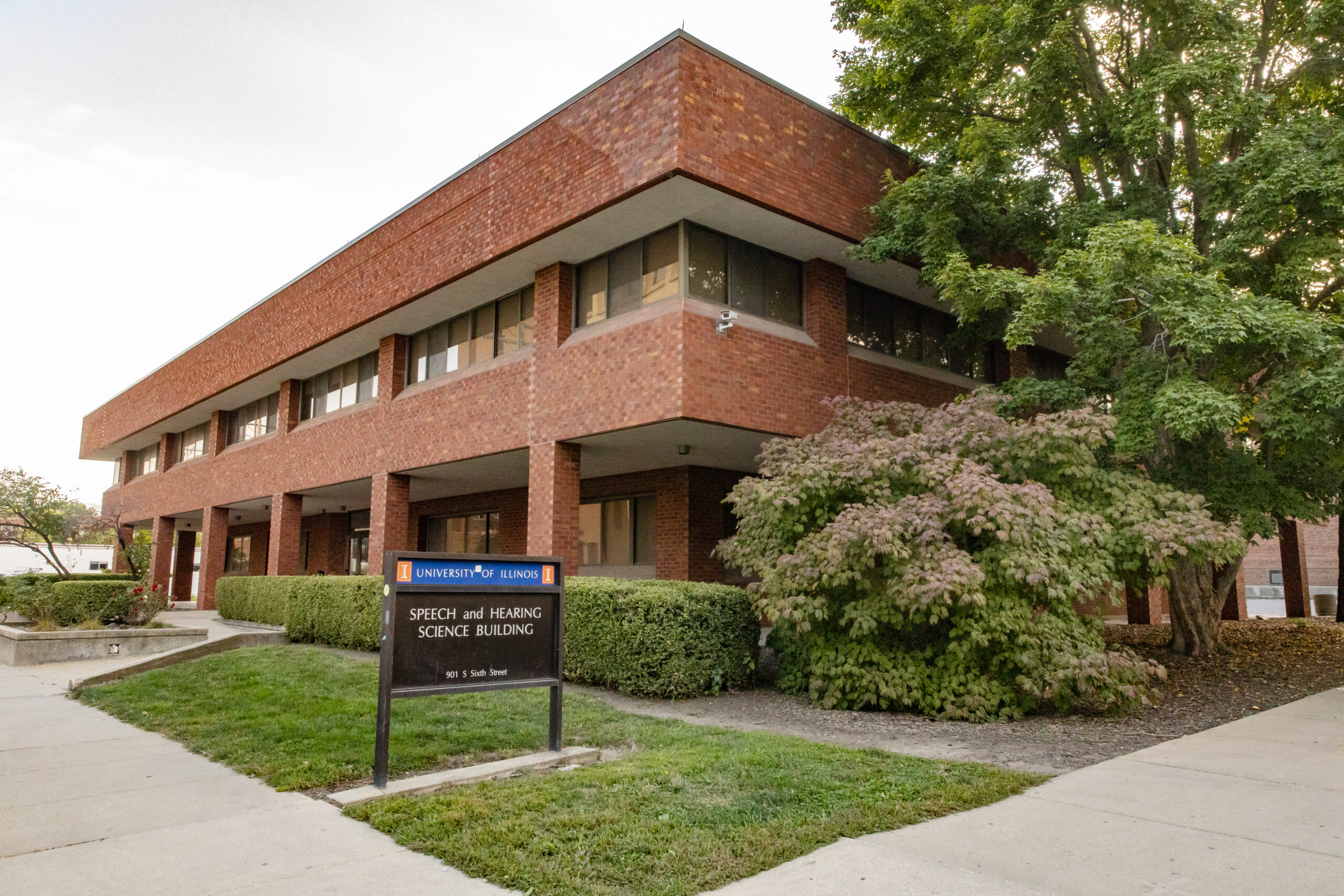
Speech and Hearing Science Building.

Today, the need for innovative models of hearing care is only increasing. With 48 million people in the United States and 477 million worldwide living with hearing loss, the demand for accessible, high-quality hearing care is growing rapidly. As a department, we are committed to supporting our students, alumni, partners, and community in addressing this global challenge.

Re-Envisioning Audiology Education at Illinois

Audiology education in general has experienced long-term challenges. Among these, a shortage of audiologists has contributed to a shortage of local clinical placement sites and clinical faculty, limiting the availability of supervised clinical training experiences. This is combined with limited applicants to our AuD program and competition from other AuD programs across the state and region. Over the past two years, the department engaged in a comprehensive review of the AuD program, assessed multiple models for long term sustainability, engaged in dialogue with statewide partners, and evaluated future trends in audiology education and clinical practice. As a forward-thinking department, we have decided to transition to new educational training models for supporting the future of hearing care.

After careful consideration, and with the best interests of our students, faculty, and the department in mind, we made the difficult decision to phase down the AuD program. As a result, we are no longer accepting applications to the AuD program.

A Continued Commitment to Hearing Health

We remain committed to educating future practitioners and leaders in hearing health. All currently enrolled AuD students will continue to receive full support from the faculty in meeting their educational and clinical requirements through the completion of their degrees. Our program continues to hold full accreditation status with the Council on Academic Accreditation in Audiology and Speech-Language Pathology (CAA). We are also designing new opportunities for students in our other degree programs to interface with our Audiology Clinic, collaborate with leaders in hearing science, and pursue interdisciplinary learning and innovation.

Our Audiology Clinic remains fully operational and continues to accept new patients and referrals without interruption. We are committed to serving the clinical needs of the university community and the public. Furthermore, we continue to pursue innovative models and partnerships as a leader in hearing throughout the state.

Designing the Future of Hearing Education and Research

Hearing science remains a core strength of our department, supported by a vibrant research community and ongoing investment in hearing innovation. Our faculty direct projects of national and international impact, to support children and adults across the lifespan with their hearing needs, and to improve clinical practice and technological solutions. With the growing influence of artificial intelligence, we are designing innovative undergraduate education opportunities that merge clinical practice with advancing computational methods, preparing students to thrive and lead in data-driven healthcare. We are building the future of hearing science and clinical practice, and we are training our PhD students to lead in this rapidly evolving field through our mentorship and interdisciplinary training.

We are deeply proud of our AuD program and the many accomplishments of our students, alumni, and faculty. We are also grateful for the valuable contributions of our adjunct faculty, emeriti faculty, and external clinical supervisors. We invite alumni, clinical partners, collaborators, and prospective students to join us in building the future of hearing science and advancing hearing care and education in Illinois and beyond.

Questions can be directed to Dr. Ian Mertes, the Director of the Audiology Program (imertes@illinois.edu).

Related News

Announcing our faculty promotions for 2025-26


Seven faculty at the College of Applied Health Sciences received promotions prior to the 2025-26 Academic Year. Here are their new faculty titles.

Professor

Nicholas Burd, Health and Kinesiology

Andiara Schwingel, Health and Kinesiology

Associate Professor

Susan Aguiñaga, Health and Kinesiology

Jacob Allen, Health and Kinesiology

Mary Flaherty, Speech and Hearing Science

Sharon Zou, Recreation, Sport and Tourism

Teaching Associate Professor

Kristen DiFilippo, Health and Kinesiology

Related news

New SHS faculty member advancing communication for individuals with disabilities


Savanna Brittlebank first became interested in AAC after working with children who had trouble communicating (Photo provided)

By ADELYN MUI

Savanna Brittlebank has dedicated her academic career to improving communication for individuals with complex needs. As a new faculty member in the Department of Speech and Hearing Science in the College of Applied Health Sciences, she brings knowledge and experience to the field of augmentative and alternative communication, or AAC.

AAC refers to a range of methods that people use to communicate, other than spoken language. It includes gestures, symbols, pictures, writing or use of electronic devices to express thoughts, needs and wants.

Brittlebank first became interested in AAC after working with children who had trouble communicating. She initially majored in psychology but worked extensively with individuals with disabilities. One of the reasons she decided to come to the University of Illinois is that she values the robust resources that the university has.

“There’s a lot of opportunity as well for expansion of my research because there is just a strength across different disciplines of the research that’s going on,” Brittlebank said. “The university really values that and has a lot of support to kind of push that growth as well, which drew me here. I keep learning more and more.”

Brittlebank recalled a time when she worked with a 3-year-old girl who was hearing-impaired and blind. The child also had an intellectual and developmental disability and no speech. 

“She was still developing language, and I didn’t know what to do,” Brittlebank said. “I didn’t know how to best support her communication. Whenever I spoke to my supervisors and when I looked in the research, there really wasn’t anything. I realized I wasn’t the only one who didn’t know how to help this population. I realized that’s more where my passion was, and so I went back and studied further, and I’ve focused on research on that ever since.”

Brittlebank grew up in Zimbabwe and completed her BSc Hons (comparable to a U.S. bachelor’s degree) at University of York in England before coming to the United States to complete her M.S. at Pennsylvania State University. After her M.S., she worked clinically in Wisconsin as a speech-language pathologist, then returned to Penn State for her Ph.D. From there, she made her way to Illinois as an assistant professor in SHS.

“University of Illinois is one of the most disability-friendly campuses,” Brittlebank said. “There’s so many different resources available for individuals with disabilities, and there’s so much accessibility, more so than I’ve seen in a lot of other places. That was really encouraging considering I often work with people with disabilities who have limited speech.”

Since joining the university in fall 2024, Brittlebank has been in the process of getting new projects up and running and finishing old ones. She said one of her goals is to expand the accessibility of these interventions in lower-resource communities. In late April, Brittlebank received an award from the Campus Research Board for her project titled “Communication Partner Training to Support Language Outcomes in Children with Significant Disabilities.” This intervention research will investigate the effectiveness of training communication partners (e.g., paraprofessionals, direct support staff) of young children with significant challenges in both speech and motor abilities (i.e., multiple disabilities) in an evidence-based strategy to enhance child language outcomes. 

In addition to access for lower-resource communities, Brittlebank also said that AAC is still moving forward in terms of representation for different cultures and different languages.

“AAC can be particularly challenging. I think one of the biggest barriers is access to technology,” Brittlebank said. “We can definitely support communication with photographs or with writing, but a lot of what’s out there as well is access to these computer- or tablet-like systems where you can access the internet. Families might not have it readily in the home as it’s a more costly system.”

AAC can be particularly challenging. I think one of the biggest barriers is access to technology.

Savanna Brittlebank

Assistant Professor

Brittlebank has worked on projects such as Transition to Literacy or T2L, a software that provides dynamic speech and text output upon selecting a graphic symbol. She said that traditional systems can be limiting—if every single word is not programmed, an individual cannot say everything that they want. However, the T2L feature helps support literacy by teaching individuals. 

“It’s the idea that it’s an additional support to direct literacy instruction, but it’s a great way that it can be embedded and someone can get exposure to literacy learning throughout the day,” Brittlebank said.

Brittlebank said literacy is powerful: if an individual has the alphabet, they can say anything they want. 

“Literacy, in this day and age as well—it really enables social communication and building friendships. If someone has trouble with speech, and then they have trouble with communication, that has a series of impacts from not being able to engage in education or limiting employment opportunities and limiting the ability to make friendships,” Brittlebank said. “It’s really important to make sure that individuals have access to language and communication and have appropriate access to language and communication.”

Related news

Three SHS doctoral students have plans to make an impact on their fields


Lizzy Lydon (Photo provided)

By ANNA FLANAGAN

Under the mentorship of world-renowned scholars, doctoral students make significant contributions to the advancement of theory and practice in speech and hearing science through their dissertation research, as they prepare to assume leadership roles in clinical, industrial and academic settings.

Below, three of our outstanding SHS doctoral students discuss their research, and the impact they hope to have on the field.

Conflict monitoring

Mentored by Department of Speech and Hearing Science Professor Raksha Mudar in the Aging and Neurocognition Lab, Lizzy Lydon is focusing her doctoral research on communication abilities in older adults with mild cognitive impairment (MCI). Her specific focus is on the cognitive construct called conflict monitoring, which helps individuals detect and resolve competing information in the environment. Lydon uses electroencephalography to examine alterations in brain waves when people with MCI perform different conflict monitoring tasks.

Before beginning her Ph.D. studies, Lydon worked as a speech-language pathologist with patients with MCI, many of whom reported communication challenges. “I often found it difficult to determine what type of treatment was the best choice for these individuals,” she said. “After looking through research, I realized there was a lack of evidence-based treatments for communication challenges in populations that experience mild changes to their cognition and language.”

Previous research had focused on understanding memory changes in adults with MCI. An emerging body of literature suggests that other cognitive functions such as conflict monitoring are affected. In using EEG in her research, Lydon may be able to identify neurophysiological markers that can be used for early diagnosis of MCI Research has shown that people with MCI are at a significantly greater risk of developing dementia than typically aging peers, Lydon noted, so it’s important not only to identify MCI earlier but also to better characterize the changes they experience.

“This can help to inform the development of interventions that have the potential to slow the progression to dementia and allow people to maintain independence and quality of life as long as possible,” she said.

In the fall, Lydon will join the faculty of the Department of Speech Pathology and Audiology at Miami University in Ohio as an assistant professor. She plans to continue to investigate how MCI affects different aspects of communication, as well as how these changes impact the ability to engage socially with others. “I am looking forward to this next adventure,” Lydon said, “and I’m so thankful for all the training I received here at Illinois.”

Listening effort

Silvia Murgia also plans to pursue an academic position after completing her degree this summer. For her dissertation, she is evaluating the impact of background noise and dysphonia, a voice disorder, on the mental energy needed to listen, or listening effort, of children performing a speech comprehension task. She is taking a comprehensive approach to her study, using subjective and objective measures of listening effort, including EEG analysis, as well as assessments of cognitive function to explain individual differences.

Murgia is mentored by SHS Associate Professor Pasquale Bottalico in the Speech Accommodation to Acoustics Lab. Understanding listening effort in children is crucial, Murgia said, as they spend a significant amount of time in school learning through communication activities. It is essential to minimize the amount of mental energy children use to listen in order to optimize the resources available for cognitive tasks such as memorization, comprehension and evaluation. Studies show that children’s cognition is affected by the speaker’s voice quality, the presence of background noise and the complexity of the listening task. Research also suggests that individual differences in executive function may be associated with variations in listening comprehension under adverse conditions. Her research addresses both external factors affecting listening effort and internal cognitive mechanisms that help children to cope with external challenges.

“My dissertation aims to provide a more nuanced understanding of how these adverse conditions impact listening effort and comprehension,” she said. “This could have significant implications for educational practices, especially in designing interventions and strategies to support children with different listening and cognitive profiles.”

In her academic career, Murgia plans to expand her research to include children with hearing loss and special needs. Her goal is to improve the academic outcomes and overall well-being of all children by identifying effective ways to reduce listening effort and optimize learning environments.

“I hope that my research empowers children by advocating for their communication needs and ensuring that they have access to the resources and support they require to succeed academically and socially,” she said. “I want to contribute to creating inclusive environments where all children can thrive.”

Vocal intensity

December 2023 graduate Simin Soleimanifar’s dissertation research investigated how using two cochlear implants, known as bilateral cochlear implantations, affected the ability of users to control variations in vocal intensity, or the volume of their voice, as compared to users with a unilateral cochlear implantation.

Soleimanifar noted that the challenges faced by bilateral cochlear implant users in controlling vocal intensity have not been widely researched. Through her study, she hoped to identify the underlying factors contributing to the challenges, with a specific focus on how differences in the perception of loudness growth between the two ears affect vocal performance.

“Vocal performance plays a crucial role in effective communication, and difficulties in controlling vocal intensity can lead to social and emotional consequences for the individuals affected,” Soleimanifar said. “By shedding light on the specific auditory perceptions that influence these difficulties, this research has the potential to lead to better-tailored cochlear implant programming and rehabilitation strategies, ultimately improving the communication outcomes for bilateral cochlear implantation users as well as their overall quality of life.”

Mentored by SHS Associate Professor Justin Aronoff in the Binaural Hearing Lab, Soleimanifar currently is a clinical research associate at the University of Illinois Urbana-Champaign and is pursuing a career that bridges research and clinical practice. In addition to providing empirical evidence on the impact of bilateral cochlear implantation on vocal intensity control and identifying the role that mismatched loudness growth perception between ears plays in vocal performance, she hopes to inform clinical practice by highlighting the need for individualized implant programming and rehabilitation approaches that consider the auditory perceptions specific to bilateral cochlear implantations. Soleimanifar is particularly interested in applying her research findings within a multidisciplinary team to develop innovative implant technologies and rehabilitation strategies.

Related news

Message from Professor Pamela Hadley, head


Pamela Hadley (Photo by Bradley Leeb)

Dear students, faculty, alumni, and friends of the Department of Speech and Hearing Science,

As we enjoy the spring colors across campus, I welcome you to the latest departmental newsletter. It fills me with great pride to share the progress we’ve made in recent months and provide a glimpse into the prospects on our horizon.

Our dedication to advancing the fields of audiology and speech-language pathology remains steadfast. In this edition, we showcase the stories of faculty, students and alumni making significant contributions across various facets of our field. These narratives underscore the strength of our community and the profound impact we have on enhancing quality of life.

I invite you all to explore the contents of this newsletter, celebrate our successes and envision the limitless possibilities ahead. Together, we will continue to empower individuals facing communication challenges, pioneer groundbreaking research and shape the trajectory of communication sciences and disorders.

Lastly, I extend my heartfelt gratitude to SHS faculty, staff and students for your unwavering dedication. Your tireless efforts are the cornerstone of our achievements, and your enthusiasm propels us forward.

Warm regards for a restful and reinvigorating summer.

Sincerely,

Pamela Hadley, Ph.D.
Professor and Head

Related news

Department of Speech and Hearing Science
901 South Sixth Street
M/C 482
Champaign, IL 61820
217-333-2230