Air Force Veteran Cole a steadying force in SHS


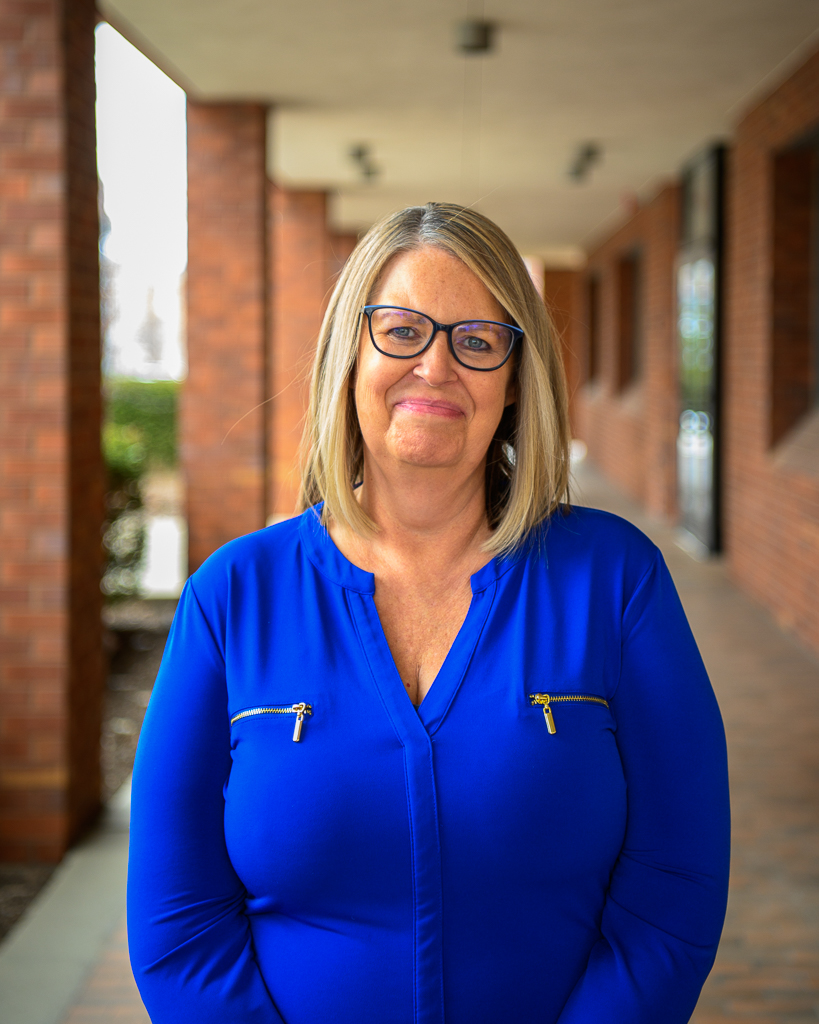
‘I love my job. I love my faculty,’ Stefanie Cole said. (Photo by Ethan Simmons)

At the University of Illinois Urbana-Champaign, where academic reputations are built on research breakthroughs and classroom innovation, much of the daily work that keeps departments moving forward happens quietly. In the Department of Speech and Hearing Science, that steady presence for more than a decade has been Stefanie Cole.

Cole did not set out to build a long career in higher education administration. Having just completed her service in the U.S. Air Force, she was working as a medical office assistant at the Carle Cancer Center. She was a new wife, a new mother and new to the Champaign-Urbana area. Raised in a university town, she understood the rhythm of campus life and was looking for broader options with greater flexibility and room to grow professionally.

“The University of Illinois seemed like a great fit,” she said, adding that it offered stability, opportunities to advance and a chance to build on the skills she had developed in the military and in healthcare settings.

Thirteen years into her campus career, the opportunity to join Speech and Hearing Science found her. “It was the perfect time to explore some new challenges,” she said.

At the outset, Cole imagined she might stay in the role for five years, long enough to see her son through high school. Instead, she found a professional home. “I love my job. I love my faculty,” she said. When health issues arose within her family, the predictability and support of her department made staying an easy decision.

During her tenure, SHS has seen significant change. This semester marks the arrival of the department’s fourth head since she joined. The unit has undergone an extensive building remodel, and its audiology clinic operations were relocated and combined with speech-language pathology into a shared facility at Research Park. Faculty members have come and gone, reflecting national searches and shifting research priorities.

Yet some things, she says, have remained constant.

“Although some faculty have left and new faculty have arrived, the collegiality and cohesiveness has always remained outstanding,” Cole said.

As administrative aide, she occupies a role that is at once central and largely invisible. She describes her job as ensuring that the department’s work runs as smoothly as possible. Budgets, faculty searches, promotion and tenure dossiers, award programs and the daily churn of academic paperwork all pass through her office.

Georgia Malandraki, who replaced Pamela Hadley as department head of SHS in January 2026, said Cole’s steadiness has been immeasurable in her transition.

“In just a short time, Stefanie has become one of the people I rely on most. Stepping into a new leadership role is never easy, but she welcomed me with warmth and immediately made me feel supported. Her calm presence, deep knowledge of the department and genuine care for the people here have been invaluable. I already can’t imagine navigating this transition without her. She is the quiet strength behind so much of what we do, and I feel incredibly lucky to work with her.”

There is no typical day, Cole said. The academic calendar dictates a certain ebb and flow—admissions cycles, graduation, the annual student awards program each spring—but any carefully constructed to-do list can be upended by last-minute requests or unexpected crises.

“I come in the morning with the best laid plans of a set agenda of tasks for my day,” she said. “But I usually leave having accomplished many different tasks than I had originally planned.”

I enjoy having a front-row seat to the growth within the department.”

Stefanie Cole

SHS administrative aide

When deadlines tighten or complications arise, Cole holds herself to high standards. “I expect more from myself than anyone else specifically expects,” she said. “When things don’t go as planned, I want the best for the department and I am willing to step in to fill whatever hole that I can, however I can.”

Though her primary interactions are with faculty, students remain a meaningful part of her work. Planning the department’s annual student awards program is, she said, “such a treat.” The ceremony offers a rare pause in the academic year and a chance to meet families and celebrate achievements that represent years of clinical training and research.

The department’s clinical graduate programs are complex and often stressful. Cole believes students know they can walk into the administrative office with questions and feel comfortable doing so. “If we don’t have the answer, we work hard to point them in the right direction,” she said.

One of the most consequential aspects of her role involves shepherding faculty through promotion and tenure. The process is detailed, exacting and often years in the making. Watching those efforts culminate in successful promotion milestones, she said, reaffirms the importance of her work.

“I enjoy having a front-row seat to the growth within the department,” Cole said.

Her years across multiple campus roles have also given her insight into how a large public university functions. Policies, approvals and budget decisions move more slowly than they might in private industry, she said, not because of inefficiency but because of the many moving parts involved.

“The wheels of the university turn slower than other places,” she said. “There are a lot of moving parts and pieces that make up the ‘how’ and the ‘why’ we do what we do. Please be patient.”

Institutional memory is another quiet responsibility she carries. When she first arrived at SHS, much of the department’s history and procedural knowledge was undocumented, passed along informally from one person to the next. Today, only a handful of faculty members remain from those early years.

“It was ‘learn as we go,’” she said. Over the next few years, she hopes to document as much departmental history and practice as possible, preserving traditions and unwritten rules for the next generation of staff and faculty.

Of all her accomplishments, Cole said she is most proud of the support she provides to her department head and faculty and of the streamlined processes that have taken shape during her tenure. With a new department head now at the helm, she looks forward to the department’s next chapter.

Through stressful or thankless stretches, she credits the people around her for keeping her motivated. “Our faculty, staff and students are always gracious and appreciative of the work that we do,” she said.

In a university environment where recognition often centers on those at the lectern or in the lab, Cole’s work underscores another truth: institutions run on dedication as much as distinction. For more than a decade at Illinois, she has made sure that when others succeed, the path behind them is clear.

Editor’s note:

To reach Vince Lara-Cinisomo, email vinlara@illinois.edu

Related news

Doctor of Audiology (Au.D.) Program Phasedown


Our History in Audiology Training

The Doctor of Audiology (AuD) Program at the University of Illinois Urbana-Champaign is nationally recognized for its excellence in clinical training and academic leadership. For decades, our program has prepared future audiologists to meet the evolving demands of healthcare addressing hearing and balance, consistently earning top rankings among peer institutions. Our alumni and current students continue to shape the field—advancing research, leading clinical innovation, and improving patient outcomes.

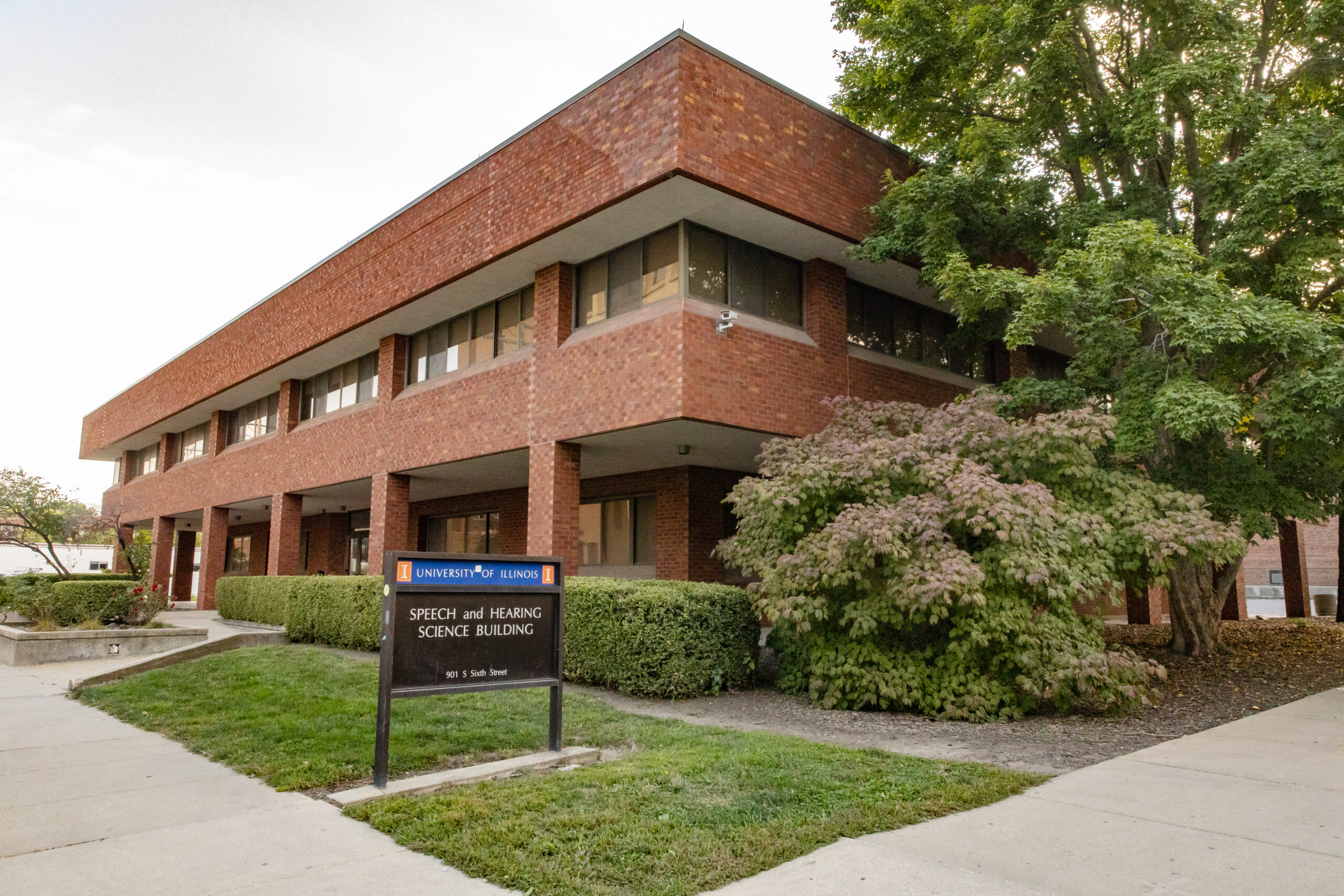
Speech and Hearing Science Building.

Today, the need for innovative models of hearing care is only increasing. With 48 million people in the United States and 477 million worldwide living with hearing loss, the demand for accessible, high-quality hearing care is growing rapidly. As a department, we are committed to supporting our students, alumni, partners, and community in addressing this global challenge.

Re-Envisioning Audiology Education at Illinois

Audiology education in general has experienced long-term challenges. Among these, a shortage of audiologists has contributed to a shortage of local clinical placement sites and clinical faculty, limiting the availability of supervised clinical training experiences. This is combined with limited applicants to our AuD program and competition from other AuD programs across the state and region. Over the past two years, the department engaged in a comprehensive review of the AuD program, assessed multiple models for long term sustainability, engaged in dialogue with statewide partners, and evaluated future trends in audiology education and clinical practice. As a forward-thinking department, we have decided to transition to new educational training models for supporting the future of hearing care.

After careful consideration, and with the best interests of our students, faculty, and the department in mind, we made the difficult decision to phase down the AuD program. As a result, we are no longer accepting applications to the AuD program.

A Continued Commitment to Hearing Health

We remain committed to educating future practitioners and leaders in hearing health. All currently enrolled AuD students will continue to receive full support from the faculty in meeting their educational and clinical requirements through the completion of their degrees. Our program continues to hold full accreditation status with the Council on Academic Accreditation in Audiology and Speech-Language Pathology (CAA). We are also designing new opportunities for students in our other degree programs to interface with our Audiology Clinic, collaborate with leaders in hearing science, and pursue interdisciplinary learning and innovation.

Our Audiology Clinic remains fully operational and continues to accept new patients and referrals without interruption. We are committed to serving the clinical needs of the university community and the public. Furthermore, we continue to pursue innovative models and partnerships as a leader in hearing throughout the state.

Designing the Future of Hearing Education and Research

Hearing science remains a core strength of our department, supported by a vibrant research community and ongoing investment in hearing innovation. Our faculty direct projects of national and international impact, to support children and adults across the lifespan with their hearing needs, and to improve clinical practice and technological solutions. With the growing influence of artificial intelligence, we are designing innovative undergraduate education opportunities that merge clinical practice with advancing computational methods, preparing students to thrive and lead in data-driven healthcare. We are building the future of hearing science and clinical practice, and we are training our PhD students to lead in this rapidly evolving field through our mentorship and interdisciplinary training.

We are deeply proud of our AuD program and the many accomplishments of our students, alumni, and faculty. We are also grateful for the valuable contributions of our adjunct faculty, emeriti faculty, and external clinical supervisors. We invite alumni, clinical partners, collaborators, and prospective students to join us in building the future of hearing science and advancing hearing care and education in Illinois and beyond.

Questions can be directed to Dr. Ian Mertes, the Director of the Audiology Program (imertes@illinois.edu).

Related News

SHS’ Rispoli retired from academia, but not done educating


It really should not surprise anyone that someone who grew up in Brooklyn, N.Y., had an interest in languages. After all, Brooklynese is its own special code, spoken by millions.

So, the fact that Matt Rispoli—Illinois professor by way of Marine Park (a neighborhood way at the south end of Flatbush Avenue and home of Nathan’s, Coney Island and Buddy’s Fairyland)—ended up as an academic researcher whose expertise is developmental psycholinguistics makes perfect sense.

Rispoli—who recently retired after four decades in academia—credited his teachers, starting with Judith Marcus, his Spanish teacher at Madison High, and primarily his professors at Hunter College in New York, for influencing his interest in linguistics.

“When I got to Hunter, they had a bunch of great teachers, and I remember them really well,” he said in an accent that gives away his birthplace. “A guy named Robert White, (and also) Tamara Green. They taught Greek and Latin. Best of all was Ralph Ward. The stuff he knew was incredible. I’m lucky I got a chance to study with the guy.

“Those were my influences. Their enthusiasm for language inspired me.”

After graduating from Hunter, Rispoli got his master’s degree in Library Science at Queens College and worked as a librarian for four years in New York, including at the Brooklyn Public Library from 1978-79. 

But his love for language kept calling and he answered, receiving a master’s degree in linguistics at Penn. He followed with a Ph.D. in developmental and educational psychology at Teachers College at Columbia University in New York, and then embarked on an academic career that wound from Cal-Berkeley through the Midwest—the University of Kansas, where he met future wife Pamela Hadley, now the department head of the Department of Speech and Hearing Science at Illinois—to Oklahoma State, Northern Arizona and Arizona State.

Family reasons brought Rispoli and Hadley to Northern Illinois in 1999, and it wasn’t long before the couple/colleagues ended up in Urbana-Champaign.

“It was only a matter of time before someone at Illinois noticed my wife’s career and said, ‘Gee, we’d love for you to come down here,” said Rispoli, who joined the SHS faculty in 2007 as a visiting assistant professor and became an associate professor in 2017.

“I was delighted to move down to a campus where they actually have a linguistics department and great psychology department, but most of all, a department where we get the brightest kids in the state.” 

Hadley and Rispoli have collaborated on dozens of projects and publications and Rispoli enjoyed the work, but at the end of 2022, he felt it was time to step away.

“I’m 70,” he said when asked why he retired. 

But he had no desire to sit on his couch all day or go play golf.

“After you retire you begin to say, ‘What can I give back?’ I have the time. I have the passion.”

With that time and passion, Rispoli expanded on the Sentence-Focused Framework project created by him and Hadley. The pair developed the Sentence-Focused Framework to build a bridge between early vocabulary and grammar interventions for toddlers and preschoolers with language disorders.

The Sentence-Focused Framework is an approach to language intervention that helps toddlers produce more diverse simple sentences, Rispoli said. 

“Then in retirement, I learned how to animate and create films,” he said. “Now I can actually give expression to these ideas, visualizations that I had while I was lecturing that never came through.”

Rispoli developed a YouTube channel also called the Sentence-Focused Framework, uploading a series of 24 videos that explore language, language development and language intervention. The intended audience is students of language development, parents of young children and professionals involved in early intervention. Rispoli encourages instructors to use the videos in class. 

“It (the YouTube channel) really comes off of my experiences teaching (SHS 320) which is language development. In 320, we couldn’t really be sure of the student’s background and how much they understood or knew. We knew we needed to augment. But I never had enough time as an instructor to augment, to really build up the teaching materials

Rispoli sees Sentence-Focused Framework as addition to the college curriculum, and has just finished a website that houses the videos and other tools.

Whatever the future for that project, it’s clear retirement hasn’t slowed Rispoli, who sees it as just another phase of life.

“First chapter I was a librarian,” he said with a laugh. “Second chapter I was a Ph.D. Third chapter I’m an educator of sorts. … who really speaks Adobe Premiere.”

Editor’s note:

To reach Vince Lara-Cinisomo, email vinlara@illinois.edu.
 

Related news

Message from Professor Pamela Hadley, Head


Welcome to the Spring 2023 issue of the SHS E-News! As we come to the end of another academic year, I am happy to report that students and faculty in the Department of Speech and Hearing Science continue to thrive, to provide outstanding clinical services to individuals in our local community and throughout the state, and to make important contributions to the advancement of knowledge in our field.

We have also begun celebrating our 50th anniversary. The Department of Speech and Hearing Science was formally established at the University of Illinois in 1973. Throughout this year, we will honor the people who formed the foundation of the department as well as contributions to pioneering research and leadership in the profession with a series of articles. We hope you’ll join in our celebration. Watch for new articles during the first week of each month and visit our 50th anniversary website for more information.  

In this issue, we introduce you to three faculty who are doing important research in the area of speech perception in noise. Mary Flaherty, Dan Fogerty, and Ian Mertes are breaking new ground as they work to identify why children and adults have difficulty hearing in noisy backgrounds and how they can best be helped. I am so proud to lead a department in which innovative research is the norm. It not only advances the field, but also ensures that our students are on the cutting edge of knowledge.

We say goodbye to Associate Professor Matt Rispoli and congratulate him on his retirement after 16 years with the University of Illinois Urbana-Champaign. Matt devoted his career to the question of how children acquire language. His research focused on early verb learning, the learning of syntax, and the development of incremental sentence production in children. Matt was a recipient of the College of Applied Health Sciences’ Phyllis J. Hill Award, which recognizes outstanding mentoring of undergraduate students. He will be missed!

I also am impressed by the initiative shown by our students to position themselves as leaders within communication sciences and disorders. One of our undergraduate students, Holly Panfil, will spend the summer studying Augmentative and Alternative Communication (AAC) devices after earning a prestigious Fulbright Canada-Mitacs Globalink internship. She will work with Dr. Julie Bouchard at the University of Quebec on a study of AAC devices in the workplace.

In this newsletter, we also highlight the accomplishment of numerous undergraduate and graduate students who have received scholarships and awards this year in recognition of their academic, professional and personal excellence.

Please enjoy reading the newsletter and take pride in knowing that your alma mater is strong and growing!

Pamela Hadley
Professor and Department Head
 

Related news

Threats’ career goal had family inspiration


Travis Threats was recently named one of the recipients of the Honors of Association from the American Speech-Language-Hearing Association (ASHA).

Travis Threats had a clear inspiration for what he wanted to study: his brother.

Threats, who earned his master’s degree from the Department of Speech and Hearing Science in 1984, said he first observed speech therapy when he was eight years old.

“My younger brother, three years younger than me, is autistic,” Threats said. “Autism directly affects communication. Now, some people think, when they hear this, that it’s some beautiful inspirational story, and all of the speech therapists were great, and that’s why I wanted to be like them. Well, it’s the opposite. All the speech therapy in its early years was bad. The social work was bad. The teachers were bad. Even though (my brother) didn’t have any overt behavior issues, my parents would go to the doctor’s office, fill out the information, and the (pediatrician’s) nurse would come out to the waiting room, saying ‘He doesn’t see autistic children.’”

That interaction led Threats to the conclusion that “there was a need. All of my work has been with people in their actual lives because I realized there’s been a disconnect between therapists, and what goals they achieved, and what people with disabilities actual lives are like. For me, it’s a clear-cut (reason to study speech pathology).”

For his work and dedication to the profession, Threats—now professor and department chair of Speech, Language, and Hearing Sciences at Saint Louis University—recently earned Honors of Association from the American Speech-Language-Hearing Association (ASHA). It is the national organization’s highest honor.

Threats got his undergraduate degree at Kansas State University before coming to the University of Illinois for his master’s. At Illinois, he met a man who would have a profound effect on his career.

“I did decide I wanted to work with adults with acquired disorders,” Threats said. “And the person who taught that wasn’t a researcher: Dr. Robert Simpson. He was a very humane man, and he did talk about aphasia and strokes and all that from that broader viewpoint of what they do to people’s lives.”

Simpson, who died in 2019 at 93, was a professor of speech and hearing science at the University of Illinois and also served as director of the department’s speech and hearing clinic. He served on the facial deformity team at Carle Foundation Hospital and eventually was employed by Carle as a speech pathologist after retiring from the university.

“He wasn’t a researcher in a traditional sense,” Threats said. “But his teachings were very much a positive influence on me.”

The ASHA award Threats received recognizes exceptional contributors whose work has enhanced or altered the course of research in the field of speech, language and hearing sciences. In an association of more than 218,000 professionals, only a select number of individuals each year receive this prestigious award.

He understands its significance.

“Three of my professors at U of I have honors from the association. I do remember—as a Ph.D. student (at) Northwestern—going to the first ASHA conference and going to the awards ceremony. And these were the people who wrote the books that I was studying from. These were some of my alums at Northwestern—three or so of those people eventually got honors, too. My own advisor got honors the year I graduated. … I certainly didn’t at the time think that I would be one of those people.”

Editor’s note:

To reach Vince Lara-Cinisomo, email vinlara@illinois.edu.
 

Related news

Department of Speech and Hearing Science
901 South Sixth Street
M/C 482
Champaign, IL 61820
217-333-2230