Health study involves adults with Down syndrome ‘every step of the way’


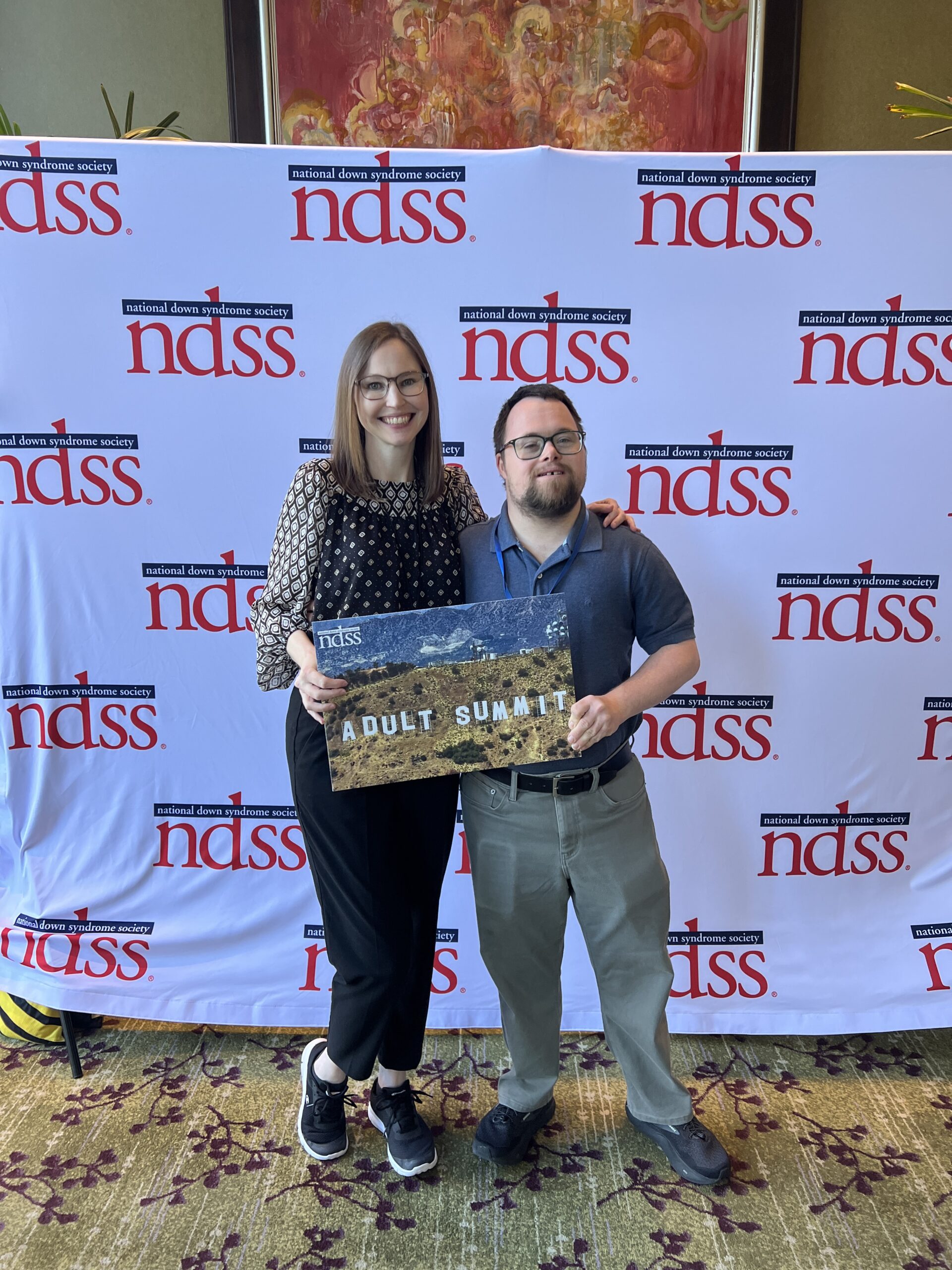
Marie Moore Channell and Joey Kane at the National Down Syndrome Society Adult Summit. (Provided)

The transition to adulthood can be a challenging phase for people with Down syndrome, as resources built to support them in their youth and in school begin to dry up.

Marie Moore Channell, associate professor of Speech and Hearing Science at the University of Illinois Urbana-Champaign, is the lead investigator on a new study funded by the National Institutes of Health, which will collect the direct perspectives of young adults with Down syndrome and develop community resources to support their social, mental and physical well-being.

Unlike any previous study on the topic, this one has a steering committee of adults with Down syndrome who’ve helped develop the direction of the study “every step of the way.”

“We realized that the research as a whole is missing that perspective from individuals with Down syndrome themselves,” Channell said. “It’s really a humbling experience as a researcher to take a step back and not say, ‘these are the topics missing in the literature.’ This time, we said, ‘you tell us.’”

Channell and her co-investigators, University of Nebraska-Lincoln’s Susan Loveall and Vanderbilt University’s Meghan Burke, have obtained a two-year, $446,096 grant from the National Institute of Child Health and Human Development for their study, titled “Developing and implementing community based participatory health research with young adults with Down syndrome.”

The research team will cast a wide net, conducting one-to-one Zoom interviews with adults with Down syndrome across the U.S. to better understand their health concerns, and how to best support them.

The study emerged from a separate survey the professors had sent out to caregivers of individuals with Down syndrome, which sought to identify the gaps in support that occur once they reached young adulthood. Adults with Down syndrome tend to live with a caregiver until age 50.

“Families tell us some version of the same thing, over and over: that the supports they were receiving when they were younger and in the schools, are taken away when they’re older,” Channell said.

They decided the topic warranted further investigation. But first, Channell and her team used their networks to form a steering committee with 12 young adults, all of whom have Down syndrome.

One of those steering committee members is Joey Kane, a 30-year-old from Seattle who met Channell at the National Down Syndrome Society Adult Summit a couple years ago. Channell described some of the participatory research she was interested in doing, and Joey was all ears.

“I like to help make a difference,” Kane said. “It’s giving my voice to be heard, and advocating not just for me, but for everyone else who has a disability.”

While the lead researchers have put the study in motion, the steering committee has met with them at least once a week over video calls, sometimes twice to accommodate members living in different time zones.

The health topics they’ve focused on, Channell said, have ranged from securing employment and community living, to improving physical health and self-advocacy skills.

All those priorities resonate with Kane. He lives in an apartment about a mile away from his parents’ house and has two jobs: he serves dinner at the cafeteria in a local nursing home and works the front desk at the Down Syndrome Center of Puget Sound, where he also helps teach in the center’s adult program.

Kane has enjoyed meeting the rest of the committee and learning about their perspectives on health topics. He credited Channell and the other study organizers for making sure everyone is represented.

“What’s really good about Marie and the people doing the study, is they can tell who hasn’t talked yet,” he said. “It makes me happy that everyone’s participating. If everyone participates, we’re going to have a good study.”

We realized that the research as a whole is missing that perspective from individuals with Down syndrome themselves.

Marie Moore Channell

Associate Professor, Speech and Hearing Science

Input from the steering committee has shaped the study in critical ways. For one, at the suggestion of the committee, the community resources will likely be geared for professionals who support individuals with Down syndrome, such as healthcare providers, case managers and job coaches.

The virtual interviews will be one-one-one video calls, rather than online surveys. Participants will be able to see questions ahead of time and bring pictures to illustrate their ideas.

“It is a technique we learned about in looking at the research, and that’s one the [steering committee] gravitated toward. It’s called ‘photovoice,’ and it’s been used in similar kinds of community participatory research methods,” Channell said.

The resources could take several forms, but what Channell knows for sure is she’ll be “working with this group every step of the way.” 

“I’ve never done this kind of work before, and it’s been a big learning curve, but really refreshing. Because it feels like we can make an impact a lot faster,” Channell said. “I still highly value the other kinds of research I’ve done, but this is something where it’s built into the project to implement into the community by the end.” 

The investigators will put together a “researcher’s toolkit,” compiling the successful practices and challenges of this participatory research. The team is currently hiring some of the steering committee members as co-researchers, who will be trained to help conduct the one-on-one interviews and take part in day-to-day research tasks.

“I’ve learned so much, and I see the value of connecting with the community, building a relationship and working with them before their research study is designed—not imposing your research questions on the community, we’re so used to doing that,” she said.

“It’s really challenging to change that, but I think it’s what we all should be doing more and more of as researchers.”

Editor’s note:

To reach Marie Channell, email channell@illinois.edu
Channell runs the Intellectual DisAbilities Communication Lab at Illinois. Visit their website.
 

Related news

AHS students present diverse projects for Undergrad Research Week


Kinesiology juniors Elizabeth Martinez, center, and Aubrey Cervantes, left, present their research at the AHS Undergrad Research Expo (Photo by Ethan Simmons)

For a freshman at the College of Applied Health Sciences, Saiesha Bollapragada’s research portfolio is impressive. 

At last week’s Undergraduate Research Symposium, the I-Health major got to present the results from her first research project, “Public Health Preparedness Among UIUC Students During Extreme Heat Conditions,” where she examined students’ awareness and handling of severe heat in the spring semester. 

She completed her study with a push from Students Pursuing Applications, Research and Knowledge, or SPARK, an AHS program that jump-starts incoming undergraduate students research experiences by pairing them with professors in the college. Bollapragada was placed with Recreation, Sport, and Tourism Associate Professor Mariela Fernandez, whose experience with urban environmental injustices fit her research topic perfectly. 

“Professor Fernandez motivated me to start this project on my own,” Bollapragada said. “There’s a lot more reading involved than I thought there was, it was a lot of work preparing for the symposium, but if it’s something you’re interested in it’s a fun process.” 

Students, faculty and staff got a taste of the findings from AHS’ budding student researchers during the AHS Undergraduate Research Expo at Huff Hall on Wednesday, April 24, where a roster of undergraduates gave poster presentations on a diverse range of research topics.

Many students spearheaded their own research projects with significant support and guidance from faculty and graduate students. Others, like a group of Speech and Hearing Science students from the Intellectual DisAbilities Communication Lab led by Associate Professor Marie Moore Channell, provided updates on long-range research projects they’ve assisted with on campus. 

Three SHS seniors, Emma Mueller, Abigail Keasler and Liz Gremer, presented initial findings from their glimpse into the Speech Accessibility Project, an ongoing research endeavor looking to make voice recognition software—such as Apple’s Siri or Amazon’s Alexa—more accessible for people with different speech patterns.

Each of the students has helped recruit participants with Down syndrome or aided vocal transcriptions from the samples they’ve collected. Under the leadership of Channell, the lab hopes to collect 240,000 voice samples from 400 participants. 

“Our poster looked into the recruiting process with that population and took a look at patterns of articulation differences exhibited by individuals with Down syndrome,” said Mueller, who transcribed vocal samples for the project. 

All three of the students met in Channell’s lab, and immediately found research responsibilities once the Down syndrome portion of the project came under Channell’s purview. 

“It’s been very rewarding, very interesting and very impactful,” Keasler said. “A lot of families in meetings or over the phone say, ‘Siri doesn’t really understand what we’re trying to say,’ so this is very important and I can’t wait to see the results of it.” 

Coming to a project affiliated with SHS with “so much publicity and so much money coming in is encouraging,” said Gremer, who has helped recruit participants and set up their first meetings for collecting voice samples. 

AHS student programs, such as the first-generation focused Mannie L. Jackson Illinois Academic Enrichment and Leadership Program (I-LEAP), were well represented in the research symposium. I-LEAP juniors Elizabeth Martinez and Aubrey Cervantes, both studying kinesiology, brought results from their research collaboration on high-intensity interval training. 

Working within KCH Professor Steve Petruzzello’s Exercise Psychophysiology Lab, the pair analyzed 25 participants’ emotional responses to high-intensity exercise, compared with their scores and symptoms of several mental health qualities: namely anxiety, depression and neuroticism. 

“We were looking at exercise adherence—how can we get more people to get more active—and we were really interested in HIIT exercise, so we put it all together in one research project,” Cervantes said. 

What they found: Participants with more symptoms of depression reported more negative affect responses during the HIIT exercise, while anxiety and neuroticism didn’t show significant predictive power, they said.

“This is my first hands-on [study] that I can call my own and Aubrey’s,” said Martinez, who’s applying to physical therapy schools. “My favorite part is meeting with the participants. It’s so fun getting to know everyone, even if there’s a lot more hours behind the desk just plugging and chugging data.” 

Editor’s note:

To reach Ethan Simmons, email ecsimmon@illinois.edu.
 

Related news

Improving clinical practice and quality of life


Speech and Hearing Science Associate Professors Marie Moore Channell and Laura Mattie have long been interested in the development of communication and life skills in individuals with neurodevelopmental and intellectual disabilities.

Channell directs the Intellectual DisAbilities Communication Lab, where her research team works toward a comprehensive understanding of skills that support day-to-day communication for people with Down syndrome in order to identify and develop strategies for supporting their social and academic success. In Mattie’s Development in Neurogenetic Disabilities Lab, research addresses the early development of individuals with Down syndrome and fragile X syndrome. She, too, aims toward promoting the developmental success and well-being of people with these neurogenetic disabilities.

The scholars’ shared interests have led to fruitful collaborations in the past. They led a team of researchers who used a large, national database developed by the Down Syndrome Cognition Project to characterize variability in IQ, executive functioning, adaptive and challenging behavior, and autism symptomatology among individuals with Down syndrome.

In a paper titled “Capturing cognitive and behavioral variability among individuals with Down syndrome: a latent profile analysis,” published in the Journal of Neurodevelopmental Disorders (2021, 13:16), Channell, Mattie and their co-authors describe three latent classes, or subtypes, of people with Down syndrome that emerged from their analyses.

Those in the “normative” group showed a profile of cognition and behavior that is typically represented in the literature on Down syndrome. Those in the “cognitive” group had lower cognitive scores and adaptive behaviors such as self-care and daily living skills than their peers with Down syndrome, along with high rates of autism symptoms.

Those in the “behavioral” group showed cognitive scores and adaptive behaviors similar to their peers with Down syndrome but had high rates of autism symptoms and challenging behaviors such as hyperactivity and conduct problems. Thus, with a large enough sample size, different patterns of autism symptoms and other characteristics can be seen across individuals with Down syndrome. The ultimate goal in precisely characterizing individual variability within Down syndrome is to optimize daily living through targeted treatments and interventions.

Overcoming diagnostic hurdles

Channell and Mattie currently are collaborating as principal and co-principal investigators on a study funded by the National Institutes of Health INCLUDE Project, which supports research related to the health and quality of life of individuals with Down syndrome. Working with researchers at Emory University, Johns Hopkins University and the Kennedy Krieger Institute, their study seeks to increase understanding of the co-occurrence of autism with Down syndrome to improve its diagnosis and treatment.

“There is a stereotype of people with Down syndrome as happy, social people who can’t have autism,” Channell said. “It’s more common than previously thought, but underdiagnosed.”

Interventions and therapies that people with autism receive could be a beneficial add-on to services offered to individuals with Down syndrome. Part of the problem in diagnosing autism in this population is that autism screening tools that were developed for the general population need to be adapted. To work toward the goal of developing better tools to screen for autism in people with Down syndrome, Channell, Mattie and their collaborators are conducting a nationwide survey of caregivers of youth with Down syndrome in which they are completing existing screening tools and other developmental questionnaires. The researchers will then examine and adapt the screening tools as needed so they can be used by practitioners to determine whom to refer for a full autism evaluation.

They are casting a wide net in hopes not only of representing all the varying abilities within Down syndrome, but also of including groups that are not well represented in the existing research.

“Underrepresentation is a big problem in research related to Down syndrome,” Mattie said. “We have a diverse board of stakeholders, are building relationships with the Black Down Syndrome Association, and targeting rural and Hispanic families as well.”

The questionnaires and other screening tools completed by caregivers are just one element of an autism diagnosis. There also is an in-person evaluation component, which is conducted by either developmental behavioral pediatricians or clinical psychologists who are specifically trained in autism diagnostics and assessment, as well as neuropsychological methods. The difficulty with this aspect of diagnosis is two-fold, Mattie said.

“First, the number of developmental behavioral pediatricians and clinical psychologists with this specialized training is limited, so there’s a bottleneck,” she said. “Also, while they may have expertise in autism, they don’t necessarily know about Down syndrome. So the ability to identify a true co-occurring condition is really lacking.”

Channell and Mattie may be conducting the first large-scale study using the broad screening measures doctors and clinicians give to families when autism is first suspected. Theirs may also be the first study that will explore the use of telehealth to conduct diagnostic evaluations of autism in children with Down syndrome.

“If we can figure out how to make that work, we can increase access to evaluations by specialists,” Channell said. They are working with a clinician at Kennedy Krieger, Natasha Ludwig, who will conduct the evaluations of autism in the telehealth sessions, and with Amy Cohen, director of the University of Illinois Autism Clinic, who will review and “score” the evaluations as well to ensure that evaluation tools will lead to consistent results when used by different clinicians.

With the dual focus on developing effective autism screening and diagnostic tools for individuals with Down syndrome and increasing access to specialists who are skilled in both autism and intellectual disability, Channell and Mattie intend to make a significant and lasting impact on improving the quality of life of a population that has historically been underdiagnosed and underserved. That’s good news for the individuals themselves and their caregivers, as well as the scores of clinicians who dedicate their professional lives to providing the best services possible to their clients.

Related news

Improving clinical practice and quality of life


Marie Moore Channell and Laura Mattie (Photo provided)

Speech and Hearing Science Associate Professors Marie Moore Channell and Laura Mattie have long been interested in the development of communication and life skills in individuals with neurodevelopmental and intellectual disabilities.

Channell directs the Intellectual DisAbilities Communication Lab, where her research team works toward a comprehensive understanding of skills that support day-to-day communication for people with Down syndrome in order to identify and develop strategies for supporting their social and academic success. In Mattie’s Development in Neurogenetic Disabilities Lab, research addresses the early development of individuals with Down syndrome and fragile X syndrome. She, too, aims toward promoting the developmental success and well-being of people with these neurogenetic disabilities.

The scholars’ shared interests have led to fruitful collaborations in the past. They led a team of researchers who used a large, national database developed by the Down Syndrome Cognition Project to characterize variability in IQ, executive functioning, adaptive and challenging behavior, and autism symptomatology among individuals with Down syndrome.

In a paper titled “Capturing cognitive and behavioral variability among individuals with Down syndrome: a latent profile analysis,” published in the Journal of Neurodevelopmental Disorders (2021, 13:16), Channell, Mattie and their co-authors describe three latent classes, or subtypes, of people with Down syndrome that emerged from their analyses.

Those in the “normative” group showed a profile of cognition and behavior that is typically represented in the literature on Down syndrome. Those in the “cognitive” group had lower cognitive scores and adaptive behaviors such as self-care and daily living skills than their peers with Down syndrome, along with high rates of autism symptoms.

Those in the “behavioral” group showed cognitive scores and adaptive behaviors similar to their peers with Down syndrome but had high rates of autism symptoms and challenging behaviors such as hyperactivity and conduct problems. Thus, with a large enough sample size, different patterns of autism symptoms and other characteristics can be seen across individuals with Down syndrome. The ultimate goal in precisely characterizing individual variability within Down syndrome is to optimize daily living through targeted treatments and interventions.

Overcoming diagnostic hurdles

Channell and Mattie currently are collaborating as principal and co-principal investigators on a study funded by the National Institutes of Health INCLUDE Project, which supports research related to the health and quality of life of individuals with Down syndrome. Working with researchers at Emory University, Johns Hopkins University and the Kennedy Krieger Institute, their study seeks to increase understanding of the co-occurrence of autism with Down syndrome to improve its diagnosis and treatment.

“There is a stereotype of people with Down syndrome as happy, social people who can’t have autism,” Channell said. “It’s more common than previously thought, but underdiagnosed.”

Interventions and therapies that people with autism receive could be a beneficial add-on to services offered to individuals with Down syndrome. Part of the problem in diagnosing autism in this population is that autism screening tools that were developed for the general population need to be adapted. To work toward the goal of developing better tools to screen for autism in people with Down syndrome, Channell, Mattie and their collaborators are conducting a nationwide survey of caregivers of youth with Down syndrome in which they are completing existing screening tools and other developmental questionnaires. The researchers will then examine and adapt the screening tools as needed so they can be used by practitioners to determine whom to refer for a full autism evaluation.

They are casting a wide net in hopes not only of representing all the varying abilities within Down syndrome, but also of including groups that are not well represented in the existing research.

“Underrepresentation is a big problem in research related to Down syndrome,” Mattie said. “We have a diverse board of stakeholders, are building relationships with the Black Down Syndrome Association, and targeting rural and Hispanic families as well.”

The questionnaires and other screening tools completed by caregivers are just one element of an autism diagnosis. There also is an in-person evaluation component, which is conducted by either developmental behavioral pediatricians or clinical psychologists who are specifically trained in autism diagnostics and assessment, as well as neuropsychological methods. The difficulty with this aspect of diagnosis is two-fold, Mattie said.

“First, the number of developmental behavioral pediatricians and clinical psychologists with this specialized training is limited, so there’s a bottleneck,” she said. “Also, while they may have expertise in autism, they don’t necessarily know about Down syndrome. So the ability to identify a true co-occurring condition is really lacking.”

Channell and Mattie may be conducting the first large-scale study using the broad screening measures doctors and clinicians give to families when autism is first suspected. Theirs may also be the first study that will explore the use of telehealth to conduct diagnostic evaluations of autism in children with Down syndrome.

“If we can figure out how to make that work, we can increase access to evaluations by specialists,” Channell said. They are working with a clinician at Kennedy Krieger, Natasha Ludwig, who will conduct the evaluations of autism in the telehealth sessions, and with Amy Cohen, director of the University of Illinois Autism Clinic, who will review and “score” the evaluations as well to ensure that evaluation tools will lead to consistent results when used by different clinicians.

With the dual focus on developing effective autism screening and diagnostic tools for individuals with Down syndrome and increasing access to specialists who are skilled in both autism and intellectual disability, Channell and Mattie intend to make a significant and lasting impact on improving the quality of life of a population that has historically been underdiagnosed and underserved. That’s good news for the individuals themselves and their caregivers, as well as the scores of clinicians who dedicate their professional lives to providing the best services possible to their clients.

Related news

Can you understand me, Siri?


The Speech Accessibility Project aims to amass a database of audio recordings from people with disabilities that affect their speech. (Getty Images)

Speech recognition software such as Alexa, Google Assistant, Amazon Echo, Cortana and Siri allow anyone to access information and use smart home technologies through spoken questions and commands. At least, that’s what they’re supposed to do. Unfortunately, these devices typically don’t recognize speech that is affected by a disability.

Mark Hasegawa-Johnson, professor of electrical and computer engineering at Illinois, wants to change that. He launched the Speech Accessibility Project (SAP), which aims to amass a database of audio recordings from people with disabilities that affect their speech. Volunteers with Parkinson’s disease, amyotrophic lateral sclerosis (ALS), stroke-related disabilities, cerebral palsy and Down syndrome record responses to three different types of prompts to capture commands, phonetically diverse speech such as one might produce when reading aloud, and conversational speech. 

SHS Associate Professors Laura Mattie and Marie Moore Channell are leading the Illinois Down Syndrome Team. “People with Down syndrome have intelligibility issues so it’s common for them to not be understood at all or to be misunderstood by voice recognition systems,” Mattie said. And it’s not just that it’s the hot new thing, as Channell observed. “These systems are among the strategies we put into place to make life easier for people with disabilities,” she said. One can imagine the frustration that results from being unable to use technologies that are supposed to improve your life.

Mattie said she and Channell put a lot of effort into developing the prompts for the recordings “…to make them representative of the kinds of things for which individuals would be using the software.” Added Channell, “It’s about making sure on the front end that the recordings are valuable and representative so that what goes into the database is relevant.”

The Speech Accessibility Project database initially will be available to the consortium of technology companies that are funding the project, including Amazon, Apple, Google, Meta and Microsoft, before becoming widely available to the public.

Related news

Podcast: A Few Minutes With … Marie Moore Channell


AHS media relations specialist Vince Lara speaks with Dr. Marie Moore Channell of the Speech and Hearing Science department to discuss her research on how language and communication skills develop in children with Down Syndrome and her plan to increase awareness of autism spectrum disorder in individuals with Down Syndrome.

Transcript

VINCE LARA: Hi, and welcome to another edition of A Few Minutes With, the podcast that showcases Illinois’ College of Applied Health Sciences. I’m Vince Lara, and today I’ll speak to Dr. Marie Moore Channell of the Speech and Hearing Science Department, who talks about her research on how language and communication skills develop in children with Down syndrome and her plans to increase awareness of autism spectrum disorder in individuals with Down syndrome.

All right, Dr. Channell, thank you for joining me on this edition of A Few Minutes With. And I typically ask all the guests on the show what led you to Illinois. So what led you here?

DR. MARIE MOORE CHANNELL: OK. Thanks for having me.

VINCE LARA: Sure.

DR. MARIE MOORE CHANNELL: Well, the goal of my research is to have a positive impact on the lives of individuals with disabilities. So for me the University of Illinois was a natural fit. This university and our College of Applied Health Sciences in particular has really paved the way for innovative strategies for supporting individuals with disabilities. So that was one reason.

And then, also within our department of speech and hearing science, the department is consistently one of the top speech language pathology programs in the country. So it has a great reputation. But also, the interdisciplinary approach to understanding and working with people with communication disorders, I thought that was really important. Because I think that our fields, our sort of subfields of expertise, really need to think about how we can work together to collectively have a stronger impact on the lives of people with disabilities.

VINCE LARA: Speaking of your research, typically there’s something in a researcher’s past that leads them– some sort of inspiration that led you to study what you study. What was it for you?

DR. MARIE MOORE CHANNELL: Oh, yes. For me, it was my brother. So my brother has a rare genetic disorder that causes intellectual disability. It’s not Down syndrome, but kind of like that, in that it causes intellectual disability and causes challenges with communicating. And so I think growing up with him and his peers really made me aware of the needs of individuals with different kinds of disabilities and their families. And so I knew I wanted to make a positive impact on their lives. And that’s really what led me to this field.

VINCE LARA: Now, when you started out, did you think about research first or teaching? Did you say to yourself, I want to be a teacher? Like, was there something about that profession?

DR. MARIE MOORE CHANNELL: I really didn’t think specifically about teaching or even research. I was really focused on the population that I wanted to work with.

VINCE LARA: OK.

DR. MARIE MOORE CHANNELL: And I was able to, as an undergraduate student, get involved in a research lab. And that’s where I realized that I liked research, and that I was good at it, and wanted to do it. And so, I realized that research was a way for me to help this population of children with disabilities. And I also got some teaching experience in graduate school and realized how much I really also like to shape the lives of students and future professionals and that teaching is a great avenue for that

VINCE LARA: Where’d you do your undergrad work and your grad work?

DR. MARIE MOORE CHANNELL: Oh, both actually at the University of Alabama.

VINCE LARA: Oh, OK. Great. Well, you mentioned that your research does focus primarily on development of language and other skills for people with Down syndrome, and you talked about your brother. One of your goals is to raise awareness of the autism spectrum disorder for people with Down syndrome. How do you propose to do that?

DR. MARIE MOORE CHANNELL: That’s a great question. So I think we can learn a lot from the greater autism community. So I think, as a whole, the autism community over the past several years has done a great job of advocating for the needs of individuals with autism and also for really raising public awareness of what autism looks like, some early signs and symptoms, so that people who may require more support can get services earlier and sort of the importance of early intervention. I think we can take that sort of as a model for what we need in Down syndrome.

What I think is a challenge in Down syndrome is that it carries this stereotype of people with Down syndrome are so social, and friendly, and always happy, and while certainly there are a lot of positive attributes to people with Down syndrome, I think that, just like all of us, people with Down syndrome have a range of emotions and a range of ability levels. And so they can also have autism. And so I think that’s going to be the challenge in sort of raising awareness and thinking about even understanding that someone with Down syndrome can have autism also.

And actually, the current research evidence suggests that autism is about at least five times more likely in someone with Down syndrome than in the general population.

VINCE LARA: That’s interesting. And you’ve said now, for individuals with Down syndrome, failing to provide early intervention for the autism spectrum disorder can have long-term consequences. I’m wondering what those would be.

DR. MARIE MOORE CHANNELL: Well, of course I’m going to say a lot more research is needed, but I would say that the current evidence points toward more cognitive difficulties, less developed language skills, and fewer adaptive skills, which is sort of skills that are needed to function independently in everyday life, in children who have Down syndrome and autism than in those who have Down syndrome only. And we know broadly, from developmental research, that the sooner you intervene and find learning strategies that work for a child, the more opportunities that child has to develop skills that will support their learning and their long-term sort of day-to-day function and independent living.

So if they have Down syndrome and they also have autism, they may need different strategies early on that kind of set them up for success long term.

VINCE LARA: You know, I’m curious about your intellectual disabilities communication lab. Tell me what projects you have going on there.

DR. MARIE MOORE CHANNELL: Sure. So my primary project right now examines how children with Down syndrome apply their cognitive, language, and social emotional knowledge to social interaction, specifically looking at how they understand and communicate their understanding of other people’s mental states. That’s how they understand, and interpret, and talk about people’s emotions, their thoughts, their intentions, et cetera. And that’s really something that we call mental state language.

And through a grant funded by the NIH while here at Illinois, I was actually able to collect samples of school-aged children with Down syndrome telling stories. And from those stories, we recorded the stories, and we can go back and sort of cull them for four content later, and we were able to see the different kinds of mental state language that they’re using in their stories. And that’s really important, because there’s so much variability from one child to the next, just like any child.

VINCE LARA: Sure.

DR. MARIE MOORE CHANNELL: But in kids with Down syndrome, you also see a lot of variability. So we are interested in finding out what may help explain why some kids with Down syndrome were using a lot of mental state language in telling these really engaging stories and others were not. And so far we’ve seen that it’s not about their IQ, and it’s not about how old they are. It is, of course, about, partially, at least, their general language abilities– so their other vocabulary and grammar skills– but also about their emotion knowledge.

So the kids who are more able to recognize other people’s emotions are also then able to talk about emotions and use mental state language in their conversations, and empathize with others, and use that kind of language in their narratives and their storytelling. So we have a lot to do. But the early results, I think, really do suggest that we should focus on emotion knowledge and not just sort of traditional language when working with this population to improve their communication.

VINCE LARA: Can you explain a little bit about what mental state language is?

DR. MARIE MOORE CHANNELL: Sure. So it’s really when we are able to talk about or discuss our emotions. And so when we’re able to basically put our emotions into words, instead of just maybe sort of acting out and not really completely articulating that, so able to articulate our own emotions, but also actually being able to recognize other people’s emotions, and sort of what they’re thinking, and we call it perspective taking sometimes– so being able to kind of put themselves in someone else’s mental shoes is also really important.

And we do that when we communicate– we empathize. I can tell you’re feeling really angry, can we talk about this, for instance. And that’s really what mental state language is.

VINCE LARA: Interesting. Now, as we are in R1 facility, so research is always top-of-mind. I’m sure you have projects going on. Are there any that you particularly want to talk about that are in the pipeline for you and maybe close to finished manuscript?

DR. MARIE MOORE CHANNELL: Sure. I have to choose which of those to discuss, right?

VINCE LARA: That’s usually what happens. Yeah.

DR. MARIE MOORE CHANNELL: I guess I’ll start going back to the mental state language study.

VINCE LARA: Sure.

DR. MARIE MOORE CHANNELL: So really those are preliminary findings that I talked about that are accepted for publication in the American Journal of Speech-Language Pathology. But I have some other papers in the pipeline. We actually– these were school-aged children with Down syndrome– in addition to getting samples of their storytelling, we also had them sit down with their mothers and go through a story book together and recorded how their interact and converse with them during that sort of shared storybook time. And so we have a lot to do with analyzing– we still need to analyze sort of what kinds of things a mother say and do that may help sort of facilitate mental state understanding and mental state language in their children. So that’s one.

And then I would say the other two kind of big projects that are stemming from this, one is– you already mentioned it earlier– this idea of raising awareness of autism and down syndrome. So with my research I’m always collecting measures of sort of autism symptoms in the individuals with Down syndrome that I’m studying, so that I can report on what they look like. And ideally, over time, we can figure out sort of what autism exactly looks like and what may be some signs of autism in individuals with Down syndrome. Because, like I mentioned earlier, it is challenging to identify when someone already has some communication difficulties.

VINCE LARA: Sure.

DR. MARIE MOORE CHANNELL: So that’s another line of research. And then, long term, really, all of this– if the goal of this research really is to not only improve communication but really improve sort of day-to-day functioning and independent living long term for this population, I’m really interested in looking sort of beyond the school age years that transition from high school to independent living in the community. That’s something that is really grossly understudied in Down syndrome.

And we do a lot in the schools to provide services for these individuals while they’re there and to kind of try to set them up for the next steps, but then we don’t really know what happens after that. And so I would also like to use my research to track that. And through that, actually, I’ve established a collaboration with Dr. Meghan Burke in the department a special education here on campus and Dr. Susan Loveall-Hague at the University of Nebraska-Lincoln, where we’ve put together a survey so that we can more broadly sort of describe what’s happening.

And we put together a survey for caregivers of young adults with Down syndrome who are in that transition phase, just to get sort of a first pass of what’s going on with these families. We know that caregivers do a lot to support their young adults during this time, and just to kind of represent their voice, and figure out where we need to go next with our research.

VINCE LARA: My thanks to Dr. Channell. For more podcasts on Illinois’ College of Applied Health Sciences, search A Few Minutes With on iTunes, Spotify, iHeart Radio, Radio.com. and other places you get your podcast fix. Thanks for listening, and see you next time.

Related news

Department of Speech and Hearing Science
901 South Sixth Street
M/C 482
Champaign, IL 61820
217-333-2230